


Views: 0 Author: Site Editor Publish Time: 2026-04-08 Origin: Site


A laboratory Dewar flask plays a critical role in modern scientific research facilities. It reliably preserves essential cryogens like liquid nitrogen and liquid helium. These specialized vessels also safeguard delicate, temperature-sensitive biological samples during crucial experiments. Selecting the wrong capacity or material accelerates cryogen boil-off rapidly. It instantly compromises sample viability and destroys months of meticulous research. Poor selection also introduces severe safety and compliance risks to your entire facility. We frequently see laboratories lose valuable operational budget daily. They simply mismatch their vessel size to their actual workflow demands. This article provides a strict, evaluation-driven framework for your lab. We will help you perfectly match dimensions, materials, and configurations to specific operational tasks. You will learn how to transition safely from benchtop handling to bulk facility storage.
Capacity dictates application: Small flasks (1L–50L) serve short-term, active benchtop tasks, while bulk units like a 210L laboratory Dewar flask are strictly for long-term, low-evaporation storage.
Material drives Total Cost of Ownership (TCO): Stainless steel offers high durability and wide temperature ranges (-196°C to +300°C), glass ensures extreme vacuum insulation ($10^{-5}$ torr), and high-density foam provides low thermal mass.
Geometry impacts thermodynamics: Neck diameter and container shape dictate the ratio of conductive to convective heat transfer, directly affecting static evaporation rates.
Safety is non-negotiable: Proper venting is required to prevent oxygen enrichment, ice plugs, and lethal over-pressurization.
Small capacity models focus entirely on portability and rapid daily access. Researchers rely heavily on them for active sample preparation. You will often see them utilized during Cryo-EM sample handling. They excel at immediate cryogen transfer between larger tanks and experimental stations. When evaluating these benchtop units, you must look closely at ergonomics. Check the handles and pouring lips for secure grip. Evaluate their physical footprint on a crowded lab bench. They should make pouring easy and safe. Heavy or awkwardly shaped vessels increase the risk of accidental spills.
These mid-sized units serve as a centralized distribution hub for multiple lab stations. A Vacuum-Insulated 175L Dewar Flask brilliantly balances footprint constraints alongside extended holding times. It holds enough liquid nitrogen to supply a busy floor seamlessly. It achieves this without consuming excessive valuable floor space. The primary evaluation metric here is the Static Evaporation Rate (SER). You also need to verify dispensing accessory compatibility. Liquid withdrawal devices must fit the neck perfectly. This tight integration prevents unnecessary atmospheric exposure and reduces ambient heat gain.
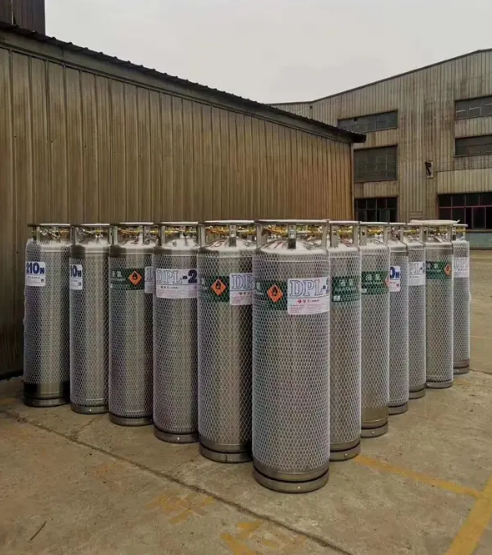
Bulk storage demands rigorous engineering focused on maximum thermal efficiency. These units require minimal human intervention during routine operations. A 210L Laboratory Dewar Flask acts as the ideal solution for institutional biobanking. It handles continuous-supply applications flawlessly over many months. You evaluate these massive containers by scrutinizing their long-term hold time. Premium models often exceed 100 days of static storage. Structural payload capacity also matters immensely. These bulk vessels bear immense physical weight when fully loaded. The internal suspension system must isolate this weight without creating thermal bridges.
Choosing the correct internal and external material directly influences your Total Cost of Ownership (TCO). Each material presents unique thermodynamic properties and physical limitations.
Comparison Chart: Dewar Flask Materials Material Type Primary Advantage Temperature Range Major Risk Factor Borosilicate Glass Extreme thermal efficiency -196°C to +20°C Violent implosion from micro-fractures Stainless Steel Shatterproof durability -196°C to +300°C Higher initial procurement cost HDPE / Foam Low thermal mass -196°C to +100°C Cannot hold pressurized systems
Borosilicate glass offers exceptional thermal efficiency for demanding tasks. It also provides excellent visual clarity for fluid levels in certain uncoated designs. The vacuum insulation frequently reaches impressive industrial levels like $10^{-5}$ torr. However, glass carries severe inherent fragility risks. It remains uniquely subject to violent implosions. Micro-fractures can freeze, expand, and shatter the vessel entirely. Hard objects scraping the interior will compromise its structural integrity. You must enforce strict handling Standard Operating Procedures (SOPs). Operators should never use metal scoops inside glass vessels.
Stainless steel completely eliminates the dangerous implosion risk found in glass. It proves highly versatile across demanding modern lab environments. You can use it safely for cryogenic fluids at -196°C. Surprisingly, you can also deploy it up to +300°C for high-temperature oil baths. This dual-use capability drastically improves its TCO. The main trade-offs include a noticeably higher initial procurement cost. They also possess a slightly heavier empty weight. However, their lifespan usually spans decades, making them highly economical over time.
High-Density Polyethylene (HDPE) and closed-cell foam act as "low thermal mass" materials. They absorb minimal ambient heat from the cryogenic liquid. This prevents aggressive, wasteful boil-off during the initial filling process. The exterior remains totally frost-free during operation. Operators appreciate that they are inherently shatterproof. On the downside, foam faces strict maximum temperature ceiling limitations. It typically maxes out at roughly +100°C. Furthermore, you cannot use foam vessels for any pressurized gas storage applications.
Low form models feature hemispherical or flat-bottomed shallow dish designs. They are ideal for the rapid freezing of delicate tissue and organs. Lab technicians frequently use them for magnetic stirring tasks inside cold baths. Their wide, shallow profile easily accommodates small scientific flasks. This geometry allows you to submerge delicate vessels efficiently. They provide unparalleled access for tweezers and tongs. However, their wide open surface area leads to faster evaporation.
Standard cylinders dominate most commercial and academic laboratories. They generally come in narrow and wide mouth variations.
Narrow Mouth: This design minimizes destructive convective heat transfer. Convection accounts for up to 30% of heat gain in open environments. A narrow neck directly optimizes static evaporation rates. It keeps your liquid nitrogen inventory stable for longer periods.
Wide Mouth: This variation maximizes physical accessibility for the user. You need them for lowering bulky sample racks. They make large specimen retrieval straightforward and fast. However, they strictly require thick insulated caps to mitigate the accelerated boil-off.
Dry cryo shippers utilize specialized hydrophobic absorbent materials. These porous materials trap liquid nitrogen securely inside the container walls. They maintain a steady -190°C internal environment for weeks. Crucially, they accomplish this without any free-sloshing liquid inside the chamber. This strict containment adheres to IATA international air transport compliance perfectly. You can ship vital biological samples across the globe safely. They protect samples even if couriers tip the container upside down.
Open-top liquid nitrogen environments can aggressively condense atmospheric oxygen. Oxygen has a distinctly higher boiling point than nitrogen gas. This condensation creates severe localized fire or even explosion hazards. Liquid oxygen accumulation appears as a pale blue tint. It is highly reactive with organic materials. Loose-fitting or vented lids are absolutely mandatory for all operations.
Best Practice: Always inspect benchtop units for excessive frost buildup around the rim. This indicates poor insulation or restricted venting.
Common Mistake: Sealing an active cryogen vessel tightly without an engineered pressure relief valve. This invites catastrophic failure.
Liquid helium sits at a profoundly cold 4.2K. It will easily freeze atmospheric air entering the neck tube. Nitrogen and oxygen turn into solid ice instantly. This solid mass creates a lethal pressure bomb. The continuously expanding helium gas has nowhere to escape. To prevent this disaster, pressurization must exclusively use pure helium gas. Never use standard compressed air or nitrogen to pressurize a liquid helium vessel. Train your staff to recognize changing acoustic sounds during helium transfers.
Many novice technicians assume standard consumer vacuum flasks work for lab settings. We explicitly prohibit this highly dangerous practice. Consumer thermoses completely lack necessary engineered venting rates. Liquid nitrogen expands at a massive 1:694 ratio when converting to gas. A tightly screwed consumer lid will inevitably lead to catastrophic rupture. Shrapnel from a ruptured thermos can cause fatal injuries. Always procure certified laboratory-grade equipment.
You must calculate your expected daily cryogen loss accurately. For example, standard 30L units should ideally yield roughly 0.22 L/day of loss. Model this specific evaporation rate against your local liquid nitrogen delivery costs. This basic math determines the true ROI of higher-end vacuum insulation. Cheaper upfront vessel costs often result in massive long-term gas replenishment bills. Always ask manufacturers for certified SER documentation before finalizing a purchase.
Evaluate how well the new vessel integrates into your existing lab setup. Check its compatibility with heavy-duty roller bases. Look at manual discharge devices and rigid dippers. Specialized research workflows require highly specialized racks. For example, you might need heated Dewar dryer racks for Cryo-EM applications. These specialized automated racks prevent microscopic ice crystal contamination between uses. An incompatible accessory ecosystem wastes time and introduces manual handling hazards.
Follow this strict procedural sequence to finalize your procurement strategy effectively:
Step 1: Define the absolute maximum required hold time for your specific workflow. This rules out insufficient capacities immediately.
Step 2: Select the primary material based on handling roughness and required temperature extremes. Use steel for durability and glass for maximum insulation.
Step 3: Match the neck diameter precisely to your retrieval frequency and sample size. Wider necks provide access but cost more in evaporated gas.
Step 4: Verify all safety compliance certifications required by your local facility management.
Selecting the right vessel requires balancing thermodynamic efficiency with daily operational accessibility.
Small foam units drastically reduce initial boil-off, making them perfect for rapid benchtop transfers.
Scaling your operations to massive bulk storage requires fundamentally different safety checks and heavy-duty infrastructure.
Always calculate your Static Evaporation Rate to understand your true long-term operational costs.
Protect your valuable samples and your staff by investing in the correct equipment today. Review your laboratory workflows and identify where cryogen losses occur most frequently. Consult with a dedicated cryogenic equipment specialist to audit your current storage methods. We highly encourage you to browse specialized catalogs of certified, high-efficiency storage solutions. Match your precise capacity needs to a professionally engineered vessel. Do not compromise on safety or thermal efficiency.
A: The term "Dewar" typically implies large-scale bulk storage or heavy industrial tanks. These hold hundreds of liters. A "Dewar flask" traditionally denotes smaller, open-top, or loosely capped laboratory vessels. Researchers use flasks for short-term benchtop handling and immediate sample transfers.
A: A wider neck significantly increases convective heat transfer and ambient radiation entry. This leads to a higher Static Evaporation Rate, wasting more cryogen daily. Narrow necks restrict heat entry and extend holding times. However, narrow necks limit physical access for bulky specimen racks.
A: Standard consumer thermoses represent an extreme safety hazard. They lack engineered pressure-relief venting mechanisms. Liquid nitrogen expands at a massive 1:694 ratio as it warms into gas. This trapped expanding gas will quickly cause the commercial thermos to violently explode.
A: Low thermal mass means the closed-cell foam material absorbs very little heat from the cryogenic liquid. This physical trait prevents the violent, wasteful boiling that typically occurs when pouring liquid nitrogen into room-temperature glass or steel containers.

 yongy0223@gmail.com
  +86-17693104145
 Lanzhou New Area, Lanzhou City, Gansu Province, on the second floor to the east of New Harbor Road, to the east of Building Materials Road No. 2, to the west of Qilian Mountain Avenue (Jingqi Road)

