


Views: 0 Author: Site Editor Publish Time: 2026-04-20 Origin: Site


Storing cryogenic fluids at -196°C (-320°F) involves managing extreme thermal dynamics. A 1-to-700 liquid-to-gas expansion ratio means any structural evaluation of a liquid nitrogen tank must center on its overpressure protection system. Pressure relief valves (PRVs) are not just regulatory checkboxes. They dictate system uptime, maintenance schedules, and total cost of ownership (TCO).
Subpar valve configurations inevitably lead to excessive product loss, frozen pipelines, and facility downtime. Facility managers must view these safety devices as active operational assets. We will provide a comprehensive technical evaluation framework for assessing relief valve architectures. You will learn how to ensure strict safety compliance while maximizing operational continuity in demanding industrial storage environments.
Boil-Off Gas (BOG) Management: Continuous evaporation is inevitable; properly calibrated direct-acting and pilot-operated valves dictate how efficiently a system handles normal vs. emergency pressure spikes.
Mandatory Redundancy: High-capacity tanks require a 3-tier safety matrix (primary valve, secondary valve, and rupture disk) to prevent catastrophic "blocked-in" fluid expansion.
Maintenance Without Downtime: Advanced diverter valve configurations allow live switching between redundant relief systems, eliminating the need to drain tanks for routine service.
Engineering Nuances: Optimal setups utilize "gas traps" to prevent extreme icing on the valve seat, alongside strict CGA G-4.1 cleaning standards to mitigate secondary combustion risks in oxygen-enriched environments.
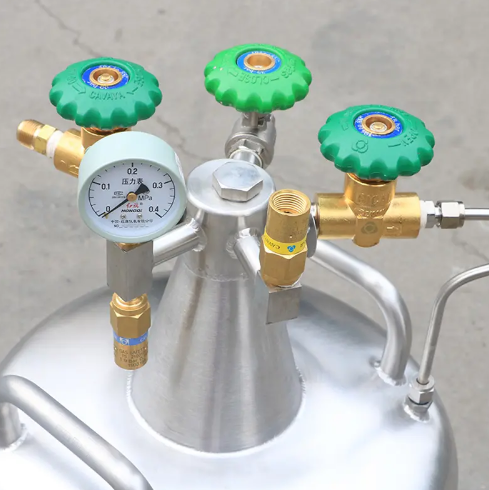
Environmental heat ingress naturally causes Boil-Off Gas (BOG) in any cryogenic vessel. No insulation system is perfectly flawless. This heat transfer leads to a constant, gradual pressure increase inside the tank. Systems must vent this gas safely to maintain structural integrity.
Liquid nitrogen becomes extremely dangerous when trapped between two closed valves. Engineers call this the "blocked-in" hazard. Cryogenic fluids require adequate vapor space to accommodate sudden thermal shifts. Industry guidelines recommend maintaining a minimum 15% vapor space inside the vessel. Without this buffer, warming liquid expands violently. The resulting hydraulic pressure easily destroys piping and creates a severe rupture risk.
You must assess if the tank’s relief hardware is sized appropriately. Standard daily evaporation rates typically hover around 2-3% of the total volume. Your primary safety valves must handle this routine bleed off easily. However, they also need enough bypass capacity to manage sudden thermal shocks or sudden vacuum loss scenarios. Relying on an undersized valve leads to constant nuisance venting. This wastes expensive nitrogen and creates unnecessary noise on the facility floor.
Common Mistakes to Avoid
Ignoring daily evaporation rates when sizing primary relief systems.
Failing to provide at least 15% expansion space in closed piping loops.
Treating nuisance venting as a normal operational state rather than a sizing error.
Choosing the right valve technology determines your system's efficiency. Cryogenic applications generally rely on two main structural designs. Each serves a very specific engineering purpose.
A direct-acting valve relies on a spring-loaded poppet. This mechanical component directly opposes system pressure. When internal pressure overcomes the spring tension, the valve opens.
Best Application: We use these for fast "pop-off" scenarios. They respond immediately to sudden shock pressures. Because they have a high pressure override, they act incredibly fast. However, they are less suited for precise, continuous pressure regulation. You might notice them fluctuating rapidly rather than holding a steady open state.
Pilot-operated valves utilize a more complex mechanism. They feed system pressure into a dome cavity above the main piston. This creates a powerful downward force. It keeps the main valve tightly sealed until a precise setpoint is reached.
Best Application: These excel in high-pressure, high-capacity scenarios. The valve remains completely tight until the system hits roughly 90% of its maximum pressure. This mechanism minimizes premature gas loss. It offers highly accurate pressure control during major blowdown events.
During vendor selection, you must differentiate between two critical metrics. "Cracking pressure" refers to the exact moment gas first escapes the seal. "Full-flow pressure" indicates the maximum rated bypass capacity of the open valve. Misunderstanding these two numbers often leads to improper field installations.
High-capacity storage demands redundant safety measures. Relying on a single point of failure is catastrophic in cryogenic engineering. An Industrial Self-pressurized Liquid Nitrogen Tank requires a robust 3-tier safety architecture to guarantee facility protection.
Level 1: Primary Safety Relief Valve
This valve handles standard, daily overpressure events. Operators set it to trigger periodic, expected venting. You will often hear a quiet hissing sound. This represents the system safely bleeding off daily BOG. It is the frontline defense for normal operations.
Level 2: Secondary Overpressure Valve
Engineers set this valve at a significantly higher PSI threshold. It acts as the immediate backup. Actuation here indicates a serious problem. The primary valve may have failed or frozen shut. Alternatively, an operator might have improperly left the pressure builder circuit open.
Level 3: Burst/Rupture Disk
This is the absolute fail-safe. It consists of a non-mechanical metal disk designed to fracture at the maximum allowable working pressure (MAWP). Once blown, the disk cannot reset. It forces total tank depressurization. Actuation of this disk requires immediate facility evacuation protocols.
Best practices dictate rigorous annual testing of the primary and secondary tiers. You must document these tests to maintain compliance and ensure rapid response capabilities during thermal emergencies.
Hardware selection extends beyond the valves themselves. The surrounding pipeline geometry dramatically impacts relief system reliability.
For large industrial setups, downtime to replace a faulty valve is financially unviable. An Ultra-Large Self-pressurized Liquid Nitrogen Tank utilizes specialized diverter valves. These allow dual relief systems to operate in parallel. Operators can switch between active and standby PRVs live. This isolates the faulty hardware for immediate replacement while the tank remains fully operational.
Evaluators must meticulously check the inlet piping geometry located below the PRV. Without a proper "gas trap" or gooseneck configuration, liquid nitrogen contacts the valve seat directly. The extreme cold causes ambient moisture to condense rapidly. This forms heavy block-ice. Eventually, the ice completely blocks the exhaust port. A gas trap ensures only ambient-temperature vapor rests against the internal seals.
Material selection defines long-term durability. Bronze and brass serve as standard, cost-effective options for general applications. However, electropolished stainless steel is mandatory for highly corrosive or high-purity laboratory environments.
You must verify rigorous compliance standards across all components. Ensure all valves meet strict ASME certification for pressure vessels. Furthermore, components must adhere to CGA G-4.1 specifications. This standard mandates intense anti-contamination and degreasing procedures. Proper cleaning prevents secondary ignition if liquid oxygen enrichment occurs locally around the exhaust vents.
Operational costs scale quickly when systems vent improperly. Managing total cost of ownership requires a proactive approach to peripheral systems and environmental factors.
Standard liquid transfer operations use a Pressure Builder (PB) valve. This device rapidly vaporizes stored liquid to increase head pressure for dispensing. A common operational error involves leaving this PB valve open post-operation. The internal vaporizer continues to work, forcing the safety valves to vent aggressively. This mistake causes severe external frosting and drives up expensive, unnecessary gas loss.
Industrial tanks located close to personnel require acoustic management. Standard PRVs generate intense noise during full-flow actuation. You should evaluate compatibility with "whisper valves" or specialized silencers. These components reduce auditory disruption during normal BOG venting. Crucially, they achieve noise reduction without compromising the critical full-flow bypass capabilities.
Proper training transforms your operators into the best monitoring tools. They must learn to visually distinguish between normal and dangerous icing patterns. Light, powdery frost during pressure building is entirely expected. However, thick, solid block-ice formation on an inactive PRV signals internal seal failure. The valve is likely frozen open or leaking continuously. This necessitates immediate supplier intervention. Operators must never attempt manual plugging, chipping, or tampering.
A reliable liquid nitrogen storage solution hinges entirely on its pressure relief design.
You must balance direct-acting mechanisms for shock response with pilot-operated mechanisms for precise capacity management.
Employ correct piping geometry, including gas traps, to prevent catastrophic valve freezing.
Maintain a strict redundant safety architecture utilizing diverter valves to eliminate maintenance downtime.
When comparing different vendors, request explicit, documented details on MAWP ratings. Ensure they include diverter valves for safe, continuous maintenance. Always demand comprehensive ASME and CGA compliance documentation upfront. We strongly recommend consulting with cryogenic engineering specialists to audit your specific flow rates and spatial constraints before finalizing any major procurement.
A: Yes. Intermittent popping or hissing indicates the primary relief valve is bleeding off normal Boil-Off Gas (BOG). However, continuous, violent venting indicates a potential operational issue. It may point to an open pressure building valve or a seriously compromised vacuum jacket requiring inspection.
A: This represents a redundant safety design. Diverter valves usually connect these parallel systems. This architecture allows one valve to remain actively online while the other is securely isolated. Operators can then perform necessary maintenance, testing, or complete replacement without ever taking the main tank offline.
A: While thin surface frost during active operation is normal, a heavy, solid block of ice on an inactive valve suggests the internal seat is leaking or frozen open. Isolate the immediate area. Do not attempt to chip the ice with tools or plug the leak. Contact the equipment supplier immediately.
A: A pressure builder intentionally vaporizes liquid to increase tank pressure for rapid dispensing. If operators do not shut it off after use, it will continue to rapidly over-pressurize the tank. This forces the safety relief valves to fully open and continuously exhaust valuable product to the atmosphere.

 yongy0223@gmail.com
  +86-17693104145
 Lanzhou New Area, Lanzhou City, Gansu Province, on the second floor to the east of New Harbor Road, to the east of Building Materials Road No. 2, to the west of Qilian Mountain Avenue (Jingqi Road)

