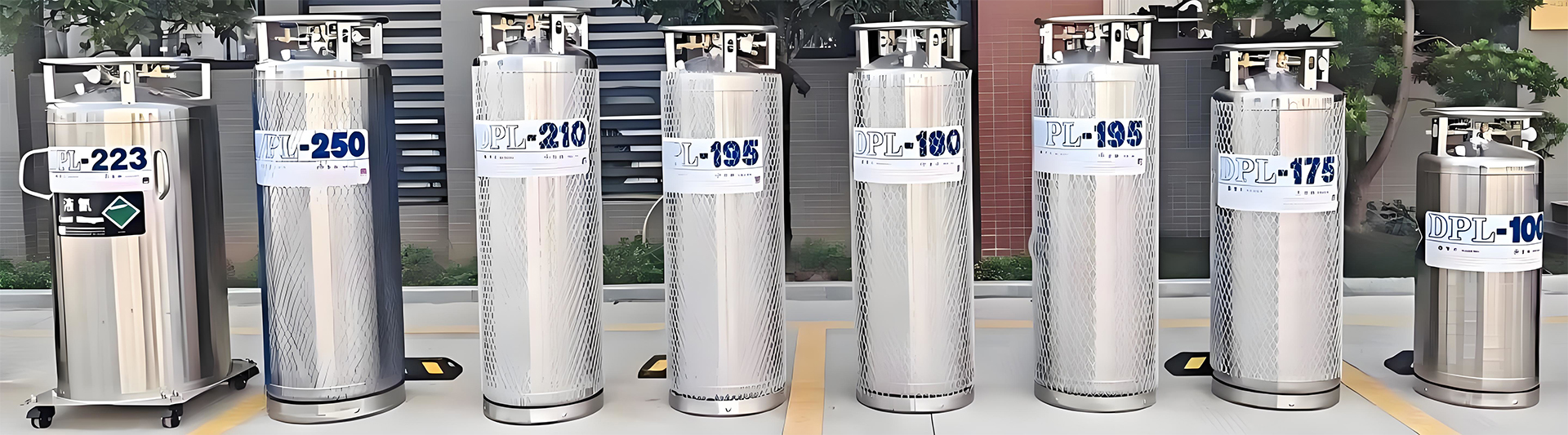
Optimized Dewar Flasks: The Ultimate Solution for Cryogenic Liquid Storage
Dewar flask solutions are the go-to choice when you need dependable, low-loss storage and transfer of cryogenic liquids in real-world operations. At Gansu Shenleng Cryogenic Equipment Co., Ltd., we supply a complete range of vacuum insulated Dewar flasks—from compact 100L mini dewars to large-capacity 1000L cryogenic dewars—engineered for industrial sites, laboratories, medical supply chains, and gas distribution partners that demand stable pressure performance and reliable safety protection.
What is a Dewar Flask and How Does It Work?
A Dewar flask is a specialized low-temperature thermal insulating pressure vessel designed for the long-term storage of cryogenic liquids. The core of its efficiency lies in its double-layer stainless steel structure.
The Inner Tank: Crafted from high-grade S30408 stainless steel to withstand extreme cryogenic temperatures.
The Insulation Layer: The space between the inner and outer shells is wrapped with multi-layer thermal insulation materials and pumped to a high vacuum state. This advanced vacuum technology creates a superior thermal barrier, drastically reducing heat transfer and ensuring that the liquid remains at its required temperature with minimal boil-off.
Built for LN2 and multi-cryogen applications
Our Dewar flasks are designed as low-temperature thermal insulating pressure vessels for storing and transporting cryogenic media such as liquid nitrogen (LN2), liquid oxygen (LOX), liquid argon (LAR), liquid carbon dioxide, and other low-temperature liquefied gases where applicable. For many buyers, “liquid nitrogen dewar” is the priority search—and for good reason: LN2 is widely used across labs, healthcare, electronics, metallurgy, food freezing, and industrial gas supply. Choosing the right cryogenic dewar flask helps reduce product loss, improve uptime, and keep downstream processes stable.
Vacuum insulation that protects your product and your budget
Each dewar is built with a double-layer stainless steel structure. The inner vessel stores the cryogenic liquid, while the outer shell is wrapped with multi-layer insulation materials. The interspace is pumped to high vacuum, forming an advanced insulation system that supports exceptionally low daily evaporation rates. In practical terms, lower evaporation means less refilling, less downtime, and a better total cost of ownership—key factors for buyers comparing long-term operating costs, not just initial price.
Safety-first design for continuous gas supply
Dewar flasks are often expected to provide gas continuously through controlled vaporization and stable pressure delivery. That’s why safety is not optional. Our solutions are engineered with leak-resistant construction, pressure relief protection, and robust valve configurations to support day-to-day use in demanding environments. For procurement teams and engineering contractors, this safety-oriented design helps simplify compliance planning and reduces risk during handling, storage, and transport.
Product range that matches common purchasing needs
To fit diverse operating scenarios, we offer multiple popular sizes and duty levels, including:
Vacuum-Insulated 175L Dewar Flask for general industrial use
Portable 210L Laboratory Dewar Flask for mobility-focused applications
195L Industrial Dewar Flask for standard LN2 supply and transfer needs
410L / 450L Heavy-Duty Industrial Dewars for higher throughput operations
500L Large-Capacity Dewar Flask for extended service intervals
1000L Cryogenic Dewar Flask for bulk-like storage in a compact footprint
If you are sourcing a LN2 dewar supplier for repeat orders, these specifications allow you to standardize procurement while scaling capacity as demand grows.
Why Choose SHENLENGDIWEN for Your Cryogenic Needs?
Selecting the right supplier is as critical as selecting the right equipment. Gansu Shenleng Cryogenic Equipment Co., Ltd. brings decades of expertise to the global market.
International Compliance: Our products meet stringent DOT, CE, GB, and ASME standards, ensuring legal and safe operation across different regions.
Extended Warranty: Expert pre-sales consultation and a responsive global after-sales network.
Global Support: From technical consultation to swift logistics and after-sales service, we provide a "one-stop" solution to keep your operations running smoothly.
Get a fast quote and model recommendation
If you’re selecting a laboratory dewar flask, upgrading an industrial dewar container, or planning a new LN2 distribution setup, share your required capacity, working conditions, and intended cryogen. Our team will recommend the right model and provide a competitive, factory-direct quotation.
Explore the Dewar flask series now and secure a dependable cornerstone for your critical cryogenic applications.


 yongy0223@gmail.com
  +86-17693104145
 Lanzhou New Area, Lanzhou City, Gansu Province, on the second floor to the east of New Harbor Road, to the east of Building Materials Road No. 2, to the west of Qilian Mountain Avenue (Jingqi Road)


