


Views: 0 Author: Site Editor Publish Time: 2026-09-22 Origin: Site


Managing volatile cryogenic liquids is high-stakes engineering. Running out of critical supplies like liquid oxygen or nitrogen halts industrial production lines. It compromises the integrity of biological samples. In healthcare facilities, it directly endangers patients. In these extreme-temperature environments, the margin for error is zero.
Historically, facility managers faced a persistent logistical headache. Relying on manual checks or fixed calendar schedules for liquid gas deliveries creates a cycle of inefficiency. This traditional milk-run approach frequently leads to expensive emergency fills when levels drop unexpectedly. Worse, it causes dangerous stockouts that completely disrupt daily operations.
Fortunately, the practical solution lies in telemetry and data-driven monitoring. Modern Internet of Things sensors now measure liquid levels, internal pressure, and temperature in real-time. These digital transmitters send vital data directly to centralized cloud dashboards. By leveraging empirical data, operators can optimize refill schedules, drastically reduce operational costs, and maintain stringent safety standards across various industrial and medical applications.
Real-Time Visibility: Continuous data monitoring eliminates the guesswork from refill scheduling. Facilities maintain a consistent supply of critical gases without manual gauge tapping.
Cost Reduction: Predictive analytics help operators avoid expensive emergency deliveries. Suppliers optimize route logistics by scheduling bulk deliveries only when statistically necessary.
Tailored to Tank Size: Real-time data is crucial for all operational scales. Whether monitoring a massive cryogenic storage tank or a microbulk unit, precision prevents costly downtime.
Enhanced Safety: Tracking internal pressure and temperature predicts preventive maintenance needs. It prevents hazardous overfilling and stops emergency safety valve venting.
Product-Specific Precision: Different cryogenic liquids evaporate at varying rates. Telemetry ensures precise delivery scheduling for highly sensitive applications.
The industrial gas sector is undergoing a massive transformation driven by Industry 4.0 standards. Recent market analyses reveal a sharp pivot away from reactive supply chains. Distributors and end-users are rapidly adopting artificial intelligence and predictive modeling to manage cryogenic assets. Market data indicates that facilities failing to digitize their gas logistics face operational costs up to 20 percent higher than their connected competitors.
This trend is fueled by the need for supply chain resilience. Global disruptions have taught facility managers that rigid delivery schedules are fragile. Today, smart telemetry systems cross-reference real-time tank levels with local weather patterns, traffic data, and historical consumption algorithms. This macro-level data integration allows gas suppliers to dispatch trucks before a facility even realizes it is running low. Moving forward, digital monitoring is no longer an optional upgrade. It is the baseline requirement for industrial gas procurement.
For decades, gas distributors utilized a fixed calendar framework. Delivery trucks visited client sites every week or month, regardless of the actual volume remaining in the vessel. While predictable on paper, this method fails in dynamic engineering environments. Delivery trucks frequently arrive to fill tanks still operating at 60 percent capacity. This inefficiency wastes fleet fuel. It occupies staff time unnecessarily. Conversely, if a facility experiences an unexpected production spike, the rigid schedule cannot adapt.
Relying on physical gauges presents measurable operational risks on the front lines. Analog gauges are highly susceptible to environmental wear. On a freezing morning, ambient moisture causes mechanical components to freeze over with a thick layer of frost. This leads to completely inaccurate readings. A manual gauge only provides a snapshot of the current moment. It fails to offer a historical trend, making it mathematically impossible to calculate accurate burn rates.
To clearly illustrate the operational differences, consider the following comparison between traditional and modern scheduling methods:
Parameter | Manual Scheduling | Data-Driven Telemetry |
|---|---|---|
Accuracy Level | Low. Prone to mechanical freezing and human error. | High. Real-time digital precision via differential pressure. |
Labor Requirement | High. Requires daily physical inspections. | Minimal. Automated alerts sent to dashboards. |
Emergency Fill Risk | Frequent. Unpredictable usage spikes lead to stockouts. | Virtually eliminated through predictive burn rate algorithms. |
Flash Gas Loss | High. Frequent top-offs increase thermal transfer losses. | Optimized. Fewer, larger fills reduce connection losses. |
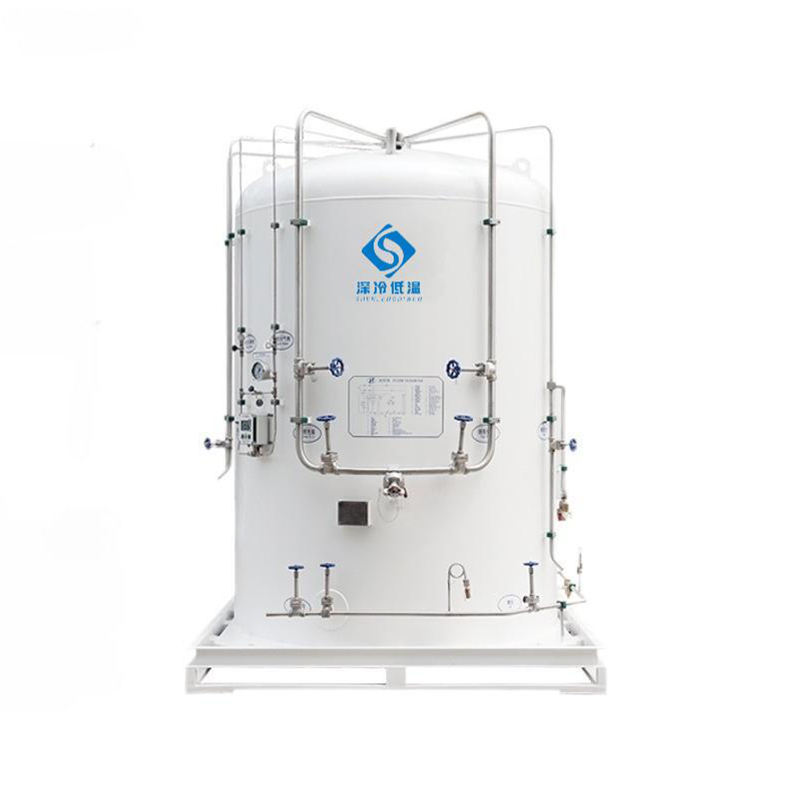
The most critical metric for scheduling a refill is the exact volume of liquid remaining inside the vessel. Engineers measure this using differential pressure sensors. A differential pressure sensor measures the hydrostatic head at the bottom of the liquid column and subtracts the gas head pressure at the top of the tank. The resulting difference isolates the liquid weight. This correlates directly to the internal volume. By continuously tracking this data, operators know exactly how much product remains.
Monitoring internal tank pressure is vital for both safety and thermodynamic efficiency. Cryogenic liquids are stored precisely at their boiling points. If the tank absorbs ambient heat, a portion of the liquid vaporizes into Boil-Off Gas. This causes internal pressure to rise. If this pressure exceeds the maximum allowable working pressure of the vessel, safety relief valves will actuate. Venting valuable gas into the atmosphere is a direct financial loss. A timely refill introduces sub-cooled liquid into the tank. This collapses the excess gas, reduces internal pressure, and prevents product loss.
Raw numbers become actionable intelligence when analyzed over time. Telemetry software aggregates daily usage data to establish historical consumption rates. Advanced algorithms analyze this data to calculate the average volume consumed per day. By factoring in operational variables like seasonal production spikes or weekend shutdowns, the software projects a precise depletion date. This predictive capability allows procurement teams to schedule deliveries precisely when the tank reaches a pre-defined threshold.
In medical facilities and heavy industrial sectors, liquid oxygen storage requires rigorous oversight. For instance, a standard 5 cubic meter low-evaporation vessel typically operates at working pressures of 0.8 MPa or 1.6 MPa. Hospitals rely on uninterrupted oxygen flow from these vessels for life support systems. Industrial applications require massive volumes of oxygen to sustain high-heat combustion processes. Telemetry data ensures regulatory compliance by maintaining mandatory reserve levels at all times. By analyzing real-time consumption, suppliers prioritize high-demand oxygen tanks in their delivery routing.
Facilities with spatial constraints often utilize smaller vessels. When dealing with a compact cryogenic tank, such as a 3 cubic meter unit designed for liquefied natural gas or argon, scheduling challenges multiply. Because they hold a smaller total volume, an unexpected spike in production drains the inventory at an accelerated rate. A sudden demand increase that lowers a massive tank by 5 percent could deplete a compact unit by 30 percent. Data monitoring systems address this vulnerability by triggering automated alerts when liquid levels hit specific thresholds.
Laboratories and dermatology clinics frequently utilize microbulk setups to support their specialized workflows. These facilities often rely on a small cryogenic nitrogen tank, such as a 1 cubic meter vertical vessel featuring high-vacuum multi-layer insulation. The usage rate in these environments is highly variable. A research laboratory may consume minimal nitrogen during standard operations but require substantial volumes during biological sample freezing cycles. Implementing telemetry ensures refills are scheduled strictly based on real-time depletion data. This prevents the loss of sensitive materials without over-servicing the facility during dormant periods.
One of the most immediate financial benefits of data-driven scheduling is eliminating emergency delivery premiums. When a facility relies on manual checks and unexpectedly runs low on gas, they must request expedited off-hour deliveries. Gas distributors apply significant surcharges for these rushed services. Eliminating just one emergency delivery fee often justifies the initial cost of digital sensor integration.
The physical process of transferring cryogenic liquids from a delivery truck to a stationary vessel involves inherent thermal challenges. Transfer hoses are initially at ambient temperature. As the cryogenic liquid flows through warm hoses, a portion flashes into gas and is permanently lost. By utilizing data to optimize refill schedules, tanks are filled less frequently but with larger volumes. Reducing delivery frequency directly reduces the cumulative volume of flash gas lost during connection and cool-down phases.
From the perspective of industrial gas distributors, accessing real-time tank data across a client network revolutionizes logistics. Instead of dispatching trucks on speculative routes, dispatchers map highly efficient delivery circuits. Software identifies clusters of clients whose tanks will reach the refill threshold within the same 48-hour window. Consolidating these deliveries into a single route significantly reduces fleet fuel consumption and decreases mechanical wear on transport vehicles.
A cryogenic vessel relies on an annular space filled with perlite or multi-layer insulation under a high vacuum. If this vacuum seal is compromised, ambient heat rapidly penetrates the inner shell. Data monitoring acts as a highly sensitive early warning system. If the software detects a rapid drop in liquid level or an abnormal spike in internal pressure during zero usage, it indicates a loss of vacuum integrity. Identifying this thermal anomaly early allows technicians to perform vacuum pumping maintenance before catastrophic product loss occurs.
The initial cooldown and first filling of a new vessel is a delicate engineering procedure. Introducing cryogenic liquids into a warm tank induces severe thermal stress on the piping infrastructure. During commissioning, continuous data monitoring is strictly required. Technicians rely on real-time temperature and pressure feedback to control the flow rate. This ensures the metal contracts evenly without causing micro-fractures. Documenting this baseline data provides a vital reference point for evaluating thermal performance later.
The first step in modernizing gas management is evaluating existing infrastructure. Facility managers must determine whether their storage vessels are telemetry-ready or require retrofitting. Most modern tanks are manufactured with dedicated telemetry ports. However, older vessels can typically be retrofitted without emptying the tank. Technicians install digital transmitters in parallel with existing analog gauges. Conducting a thorough site audit to assess cellular signal strength at the tank pad is essential for reliable data transmission.
When a facility expands production and requires new infrastructure, integrating data capabilities must be a primary purchasing criterion. Buyers should actively question manufacturers about the digital readiness of their equipment. Inquire whether a specific model comes with pre-installed telemetry ports. Purchasing a vessel with native smart capabilities eliminates the friction and secondary costs associated with third-party retrofitting. This allows for immediate data-guided scheduling from day one.
Transitioning from guesswork to data-driven scheduling transforms cryogenic gas management from a reactive headache into a streamlined process. By continuously tracking liquid levels, internal pressure, and historical burn rates, facilities completely eliminate expensive emergency deliveries. They drastically reduce product loss during thermal transfers.
Whether you are managing a massive industrial depot supporting heavy manufacturing or a localized vessel in a research laboratory, empirical data is the ultimate key to operational safety. The era of the fixed-schedule milk run is rapidly closing. It is being replaced by smart, predictive supply chains.
If you are ready to modernize your gas management logistics, upgrade your monitoring systems today. Evaluate your current operational demands and choose equipment engineered for the digital age. Browse the latest smart product lines at gascryovessels.com to future-proof your facility's infrastructure and guarantee supply continuity.
The most critical metrics are the liquid level measured via differential pressure sensors and historical consumption rates. The liquid level dictates your current inventory. The burn rate allows predictive software to forecast the exact date the supply will reach critical thresholds. Tank pressure serves as a secondary metric to monitor thermodynamic stability and prevent safety venting.
Modern digital differential pressure transmitters are highly accurate, typically offering precision within 1 to 2 percent of the total scale. Unlike analog gauges that freeze or stick, digital sensors compensate for ambient temperature changes and provide consistent, reliable hydrostatic head measurements directly to the cloud.
Yes. Most modern telemetry units are specifically designed to be retrofitted onto existing infrastructure. Certified technicians attach electronic sensors to existing differential pressure gauges and pressure ports without the need to empty the vessel. This makes it a highly accessible and cost-effective upgrade.
Data systems continuously track internal pressure buildup. If the pressure rises too fast during periods of low facility usage, it indicates excessive boil-off gas. By observing this data trend, operators proactively schedule a refill. Introducing sub-cooled liquid lowers the internal temperature, preventing the mechanical safety valves from venting valuable oxygen.
Absolutely. While the overall volume is smaller, a compact vessel depletes much faster during high-use periods compared to a bulk installation. The margin for error is tighter. Telemetry prevents sudden stockouts that could ruin expensive biological samples or disrupt scheduled medical procedures.
Most facilities achieve a full return on investment within 6 to 12 months. Savings are realized immediately by eliminating emergency off-hour delivery surcharges, reducing delivery frequencies by up to 30 percent, and minimizing flash gas loss during hose connections.
While exact savings depend on your consumption scale, facilities drastically cut operational waste. By reducing delivery frequencies, minimizing flash gas loss, and eliminating 100 percent of the premium surcharges associated with emergency deliveries, industrial plants save thousands of dollars annually per vessel.

 yongy0223@gmail.com
 +86-17693104145
 Lanzhou New Area, Lanzhou City, Gansu Province, on the second floor to the east of New Harbor Road, to the east of Building Materials Road No. 2, to the west of Qilian Mountain Avenue (Jingqi Road)


