


Views: 0 Author: Site Editor Publish Time: 2026-10-09 Origin: Site


Every second counts when a patient’s breathing falters. Large healthcare facilities consume massive volumes of oxygen daily to keep operating theaters, intensive care units, and general patient wards running smoothly. Relying entirely on traditional high-pressure gas cylinders for this level of demand is logistically exhausting. Furthermore, it is expensive and inherently risky for clinical operations.
Enter the cryogenic solution. By transitioning to a centralized bulk system, facility managers guarantee a safe, continuous, and highly efficient supply line. This comprehensive engineering guide breaks down the exact mechanics of these systems. We will detail how they safely deliver breathable gas to the patient bedside and outline exactly what administrators must consider when upgrading their medical gas infrastructure.
Massive Efficiency: One single liter of cryogenic liquid expands into approximately 860 liters of breathable gaseous oxygen. This phenomenal expansion ratio makes bulk storage the absolute most efficient method for modern hospitals.
The Conversion Process: These robust systems rely on external ambient air vaporizers. They safely warm the ultra-cold liquid and seamlessly convert it back into a gas before it enters the internal pipeline of the hospital.
Uninterrupted Supply: Modern medical gas networks utilize primary vessels, mandatory reserve backups, and automated pressure regulators to maintain a continuous and fail-safe flow.
Smart Technology: Advanced infrastructure now features IoT monitoring and high-precision telemetry. This allows procurement officers to track consumption and prevent supply shortages in real time.
A medical liquid oxygen storage vessel is a specialized cryogenic container engineered to safely hold liquefied gas at extremely low temperatures. It serves as the beating heart of the respiratory supply chain for large-scale healthcare facilities. Ultimately, it effectively replaces the need to manually manage thousands of individual compressed steel cylinders.
To truly understand why hospitals rely on this technology, engineers must look at the physical properties of the element itself. When oxygen gas is subjected to extreme cooling, dropping to cryogenic temperatures of approximately minus 183 degrees Celsius, it condenses into a dense and pale blue liquid.
The primary advantage of this state change is a drastic volume reduction. Liquid oxygen boasts an expansion ratio of 1 to 860. Because of this incredible spatial efficiency, hospitals utilize liquid oxygen storage to maintain massive, life-saving reserves within a surprisingly compact physical footprint on the hospital grounds.
Maintaining a temperature of minus 183 degrees Celsius without active refrigeration requires highly specialized engineering. Think of the unit as an industrial-grade thermal fortress. It utilizes a vacuum-insulated, double-wall construction to halt rapid heat transfer and minimize natural evaporation.
The inner vessel is typically forged from high-grade stainless steel. This material is fully capable of withstanding the biting cryogenic cold without suffering from structural embrittlement. In contrast, the outer jacket is constructed from durable carbon steel to deflect harsh environmental elements. Sandwiched between these two metal walls lies a vacuum space tightly packed with insulating materials like expanded perlite. This robust thermal barrier ensures the liquid remains perfectly stable to preserve the medical gas inventory.
The journey of oxygen from a bulk delivery truck to a mechanical ventilator involves a precise and physics-driven workflow. Facility engineers must completely understand these operational phases to ensure both safety and mechanical efficiency.
The supply chain initiates with specialized cryogenic transport trailers. These vehicles haul the liquid from industrial separation plants directly to the designated outdoor concrete pad of the facility. Operators connect insulated transfer hoses to the primary vessel. They utilize controlled pressure differentials to safely push the ultra-cold liquid into the holding system. Specifically, this streamlined bulk delivery method vastly reduces the logistical burden on hospital staff.
Patients obviously cannot breathe a cryogenic liquid. It must be converted back into a breathable gas. This critical transformation is achieved through ambient air vaporizers. As the liquid flows out of the main holding vessel, it enters a series of tall and finned aluminum tubes.
These vaporizers act as highly efficient heat exchangers. They draw natural warmth from the surrounding atmospheric air to heat the cryogenic fluid flowing inside the piping. As the liquid warms, it boils and transitions back into a gaseous state. Because this specific process relies entirely on ambient air temperature rather than mechanical heaters, it requires absolutely no electricity. This makes the core conversion process highly resilient during sudden power grid failures.
Once the liquid has been successfully vaporized, the resulting gas is highly pressurized. Before this gas can safely interface with delicate medical equipment, it must pass through a sophisticated pressure control manifold. This mechanical checkpoint features dual-line regulators that step the aggressive pressure down to a safe and unwavering level, typically between 50 and 55 pounds per square inch. The manifold guarantees that regardless of peak demand spikes in the operating theaters, the pressure entering the hospital remains perfectly flat.
After clearing the regulatory manifold, the gaseous oxygen enters the internal copper pipeline network. This intricate web of specialized piping routes the life-saving gas through various zone valves and digital alarm panels. It distributes the flow across intensive care units, surgical suites, and general wards. Ultimately, the oxygen reaches the wall outlets at the patient bedside, where mechanical ventilators and flowmeters deliver precise therapeutic doses.
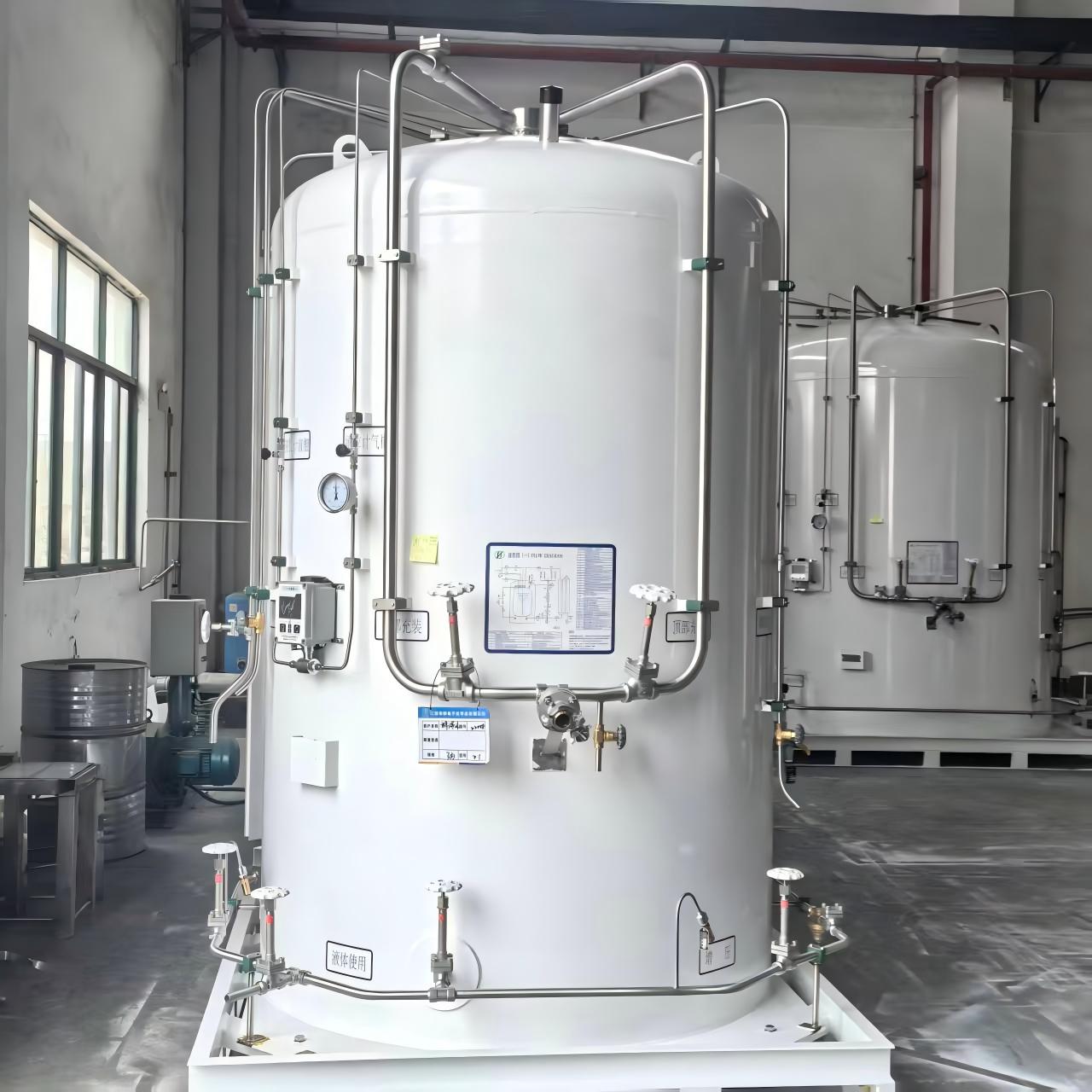
A reliable medical gas supply relies on a complex ecosystem of interconnected hardware. While the main cryogenic vessel is the centerpiece, several other elements work in the background to ensure strict regulatory compliance and unwavering patient safety.
Component | Primary Engineering Function | Commercial & Clinical Value |
|---|---|---|
Primary Storage Tank | Holds the main supply of liquid oxygen for daily hospital operations using vacuum insulation. | Acts as the foundational source of medical gas, drastically reducing delivery frequency and operational labor costs. |
Reserve Storage Tank | Serves as a mandatory backup supply, often holding 24 to 48 hours of emergency oxygen. | Ensures continuous patient care during primary tank maintenance, severe weather delays, or catastrophic supply failures. |
Ambient Vaporizers | Converts cryogenic liquid into breathable gas using atmospheric heat exchange. | Provides a completely passive and electricity-free method of gas conversion to ensure resilience against blackouts. |
Pressure Manifold | Regulates and flattens the pressure of the vaporized gas before it enters the hospital pipeline. | Prevents dangerous over-pressurization of delicate medical equipment like anesthesia machines and ventilators. |
Telemetry System | Monitors tank levels, pressure metrics, and vacuum integrity in real time via cloud servers. | Triggers alarms for facility managers and automates refill requests to gas suppliers before shortages ever occur. |
Recent global health crises exposed severe vulnerabilities in traditional, manual medical gas supply chains. Consequently, the healthcare engineering sector is rapidly adopting decentralized micro-bulk systems and digital telemetry. Facility administrators are moving away from reactive ordering and analog gauge reading. Instead, they are integrating cloud-based monitoring to accurately predict consumption spikes based on patient admission data. This industry-wide shift toward smart infrastructure ensures continuous patient care even during regional logistics disruptions, making automated vendor-managed inventory the new gold standard for hospital accreditation.
For decades, small clinics relied heavily on high-pressure gas cylinders. However, for modern and large-scale medical campuses, bulk liquid systems are the undeniable standard. This transition is driven by three core engineering factors: spatial efficiency, operational economics, and clinical safety.
The most immediate advantage is footprint reduction. Thanks to the massive expansion ratio, a single bulk vessel can hold the equivalent volume of thousands of standard compressed steel cylinders. Storing thousands of highly pressurized cylinders requires massive and heavily reinforced indoor storage rooms. In stark contrast, a centralized cryogenic setup occupies a small outdoor concrete pad. This liberates highly valuable indoor real estate for revenue-generating clinical use.
Managing individual compressed gas cylinders is a grueling and labor-intensive chore. Hospital staff must constantly monitor pressure gauges, manually disconnect empty tanks, physically drag heavy steel cylinders through busy hallways, and wrench on full replacements. This analog workflow inflates labor costs and significantly increases the risk of workplace crush injuries.
Bulk storage completely eliminates this manual handling. Deliveries are consolidated to perhaps once a week or even once a month. This drastically slashes delivery dispatch fees, eliminates endless cylinder rental costs, and frees up maintenance staff for more critical facility tasks.
Life-support ventilators demand a highly stable and unwavering flow of oxygen. As a traditional compressed gas cylinder empties, its internal pressure naturally drops. If local regulators are not perfectly calibrated, this can cause dangerous micro-fluctuations in the supply lines. Bulk systems provide a continuous and rock-solid flow of high-purity medical oxygen, which is absolutely critical for patient stability in intensive care environments.
Procuring new medical gas infrastructure requires careful calculation and strategic foresight. Procurement officers must balance current daily consumption rates with future ward expansion plans while navigating a sea of technical specifications.
The very first step is calculating the Maximum Daily Consumption. Medical gas engineers determine this metric by analyzing the number of active beds, heavily weighting high-consumption zones like surgical theaters and neonatal units.
A properly sized system should typically hold a multi-day supply buffer. This specific duration provides an optimal sweet spot. It minimizes the logistical disruption of daily delivery trucks while maintaining a robust safety margin for unpredictable emergencies.
Modern cryogenic engineering offers varying technological enhancements tailored to different operational scales. For a regional clinic with steady but lower consumption, minimizing natural evaporation is critical. A liquid oxygen tank designed with a 5 cubic meter capacity and enhanced vacuum perlite insulation prevents valuable gas from venting into the atmosphere during quiet weekends.
Furthermore, mid-sized hospitals benefit immensely from smart infrastructure. Upgrading to an industrial gas tank featuring a 7.5 cubic meter capacity and integrated IoT sensors allows facility managers to track pressure drops and liquid levels directly from their smartphones.
Sprawling metropolitan research centers require massive flow capacities. These heavily trafficked sites demand a robust LOX storage tank, typically 10 cubic meters or larger. High-precision pressure-building circuits within these larger units ensure pipeline pressure never falters during simultaneous multi-ward demand spikes.
While this technology is highly efficient, the fluid inside is a powerful oxidizer. Strict adherence to international safety protocols and routine maintenance schedules is absolutely non-negotiable for hospital administrators and site engineers.
Healthcare regulations strictly mandate that these systems be installed outdoors. The concrete storage pad must maintain specific radial clearances away from combustible materials, wooden structures, overhead power lines, and heavy vehicle traffic.
In addition, the ground beneath the installation must be completely free of asphalt. If an ultra-cold oxidizer spills onto petroleum-based asphalt, the resulting chemical reaction poses a severe and immediate combustion hazard.
Preventative maintenance is the key to longevity. Facility technicians must conduct daily visual inspections of the equipment. A primary task involves checking the ambient vaporizers for excessive frost build-up. While a light dusting of white frost is a normal byproduct of extreme cold meeting atmospheric humidity, a solid block of ice creeping up the aluminum fins will severely impede heat transfer.
Annual maintenance should involve testing the quiet hiss of the pressure relief valves and ensuring the vacuum integrity remains uncompromised.
Resilient infrastructure must account for worst-case scenarios, including total power grid failures. Fortunately, because the core vaporization process relies entirely on ambient air rather than electricity, the primary oxygen supply remains highly functional during blackouts. Nevertheless, facilities must maintain physical reserve tanks and run regular training drills with clinical staff on how to read zone valve alarms and safely isolate localized supply lines during a fire event.
A centralized cryogenic storage system is undeniably the beating heart of a modern hospital respiratory support network. By harnessing the physics of extreme low temperatures, these highly engineered vessels allow healthcare facilities to store massive volumes of life-saving gas safely, efficiently, and cost-effectively.
From the vacuum-insulated walls of the primary vessel to the passive ambient vaporizers and precision pressure manifolds, every single component works in mechanical harmony. As medical infrastructure continues to evolve, choosing the correct equipment is a critical administrative duty. A well-maintained and properly sized system slashes operational costs and reduces manual labor. Most importantly, it guarantees an unwavering supply of oxygen to the patients who depend on it for survival. For facility managers looking to upgrade their medical gas infrastructure, exploring the tailored engineering solutions at Gas Cryo Vessels ensures you select a system perfectly matched to your clinical demands.
The duration of a single fill depends entirely on the volumetric capacity of the vessel, like 5 cubic meters versus 10 cubic meters, and the real-time consumption rate of the specific healthcare facility. Medical gas engineers typically size the primary system to hold a standard multi-day supply. This duration provides a strategic balance. It minimizes the logistical disruption of daily delivery trucks while ensuring the hospital maintains a sufficient emergency reserve to handle unexpected spikes in patient admissions.
No, the liquid itself is not a flammable substance and will not ignite spontaneously. However, it is a highly concentrated and powerful oxidizer. In the context of the fire triangle, it acts as a massive accelerant. If combustible materials such as clothing, grease, asphalt, or wood are exposed to a cryogenic spill, they become highly saturated. If an ignition source is then introduced, these materials will burn significantly hotter, faster, and more violently than they would in normal atmospheric air.
To remain in a liquid state, the element must be maintained at extreme cryogenic temperatures of approximately minus 183 degrees Celsius. Modern storage vessels achieve this without active mechanical refrigeration. Instead, they utilize a highly engineered and vacuum-insulated double-wall design. The inner vessel holds the ultra-cold liquid, while the outer jacket protects it. The space between these two walls is filled with a porous insulating material and evacuated to a high vacuum, virtually eliminating conductive and convective heat transfer.
No, the oxygen supply will not be interrupted. The primary vaporization process is governed by the laws of thermodynamics, not electrical power. The ultra-cold liquid is pushed out of the tank by its own internal pressure and flows into ambient air vaporizers. These finned aluminum tubes act as heat exchangers, using the natural warmth of the surrounding atmospheric air to boil the liquid back into a gas. As long as there is liquid remaining in the vessel and the internal pipeline remains intact, breathable oxygen will continue to flow safely.
The natural evaporation, or boil-off rate, typically ranges from 0.5 percent to 2 percent of the total volume per day, depending on the quality of the vacuum insulation and the ambient outdoor temperature. High-quality vessels utilizing advanced perlite vacuum technology will experience rates on the lower end of that spectrum, ensuring minimal gas is wasted through the pressure relief valves during periods of low hospital consumption.
During periods of exceptionally high oxygen demand or freezing weather conditions, ambient vaporizers can accumulate thick layers of solid ice, which severely reduces their ability to absorb atmospheric heat. To combat this, engineers install dual vaporizer arrays piped in parallel. When one unit freezes over, a switching valve redirects the liquid flow to the secondary standby vaporizer, allowing the primary unit time to safely thaw without interrupting the gas supply to the hospital.

 yongy0223@gmail.com
 +86-17693104145
 Lanzhou New Area, Lanzhou City, Gansu Province, on the second floor to the east of New Harbor Road, to the east of Building Materials Road No. 2, to the west of Qilian Mountain Avenue (Jingqi Road)


