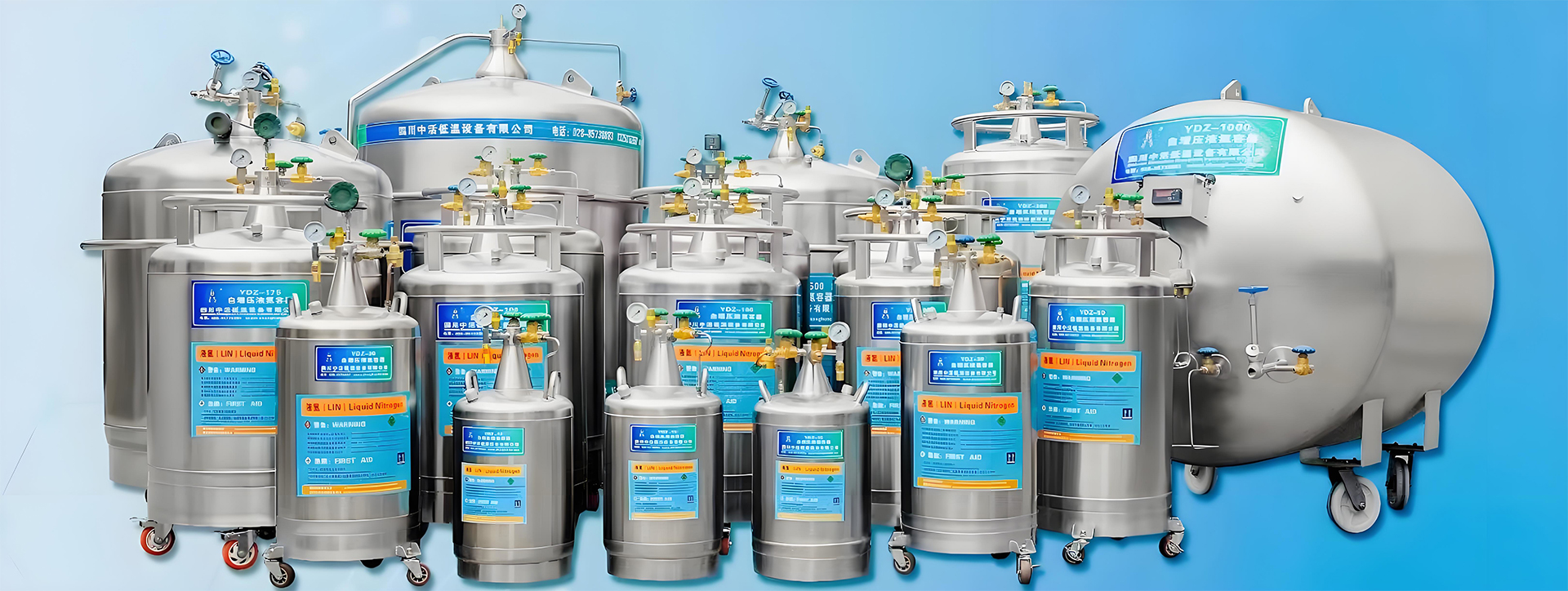
Liquid nitrogen tank solutions for biological and laboratory storage must deliver one thing above all: a stable cryogenic environment that protects valuable materials over time. Gansu Shenleng Cryogenic Equipment Co., Ltd. supplies the YDZ liquid nitrogen tank series—covering multiple capacities such as YDZ-10, YDZ-15, YDZ-50, YDZ-100, YDZ-150, YDZ-175, YDZ-300, YDZ-800, and YDZ-1000—designed to support long-term preservation and day-to-day LN2 management in labs, hospitals, research institutes, and biobanks.
What is a biological liquid nitrogen dewar used for?
A biological LN2 dewar is a specialized liquid nitrogen dewar intended for the secure storage of sensitive biomaterials such as cells, vaccines, embryos, and tissue samples. These items require consistent ultra-low temperature conditions to maintain integrity. Because the risk and value are high, buyers typically prioritize three factors when selecting a cryogenic storage dewar: insulation performance, storage security, and easy access that doesn’t disturb surrounding inventory.
Vacuum insulation that reduces LN2 evaporation
Evaporation control is a major driver of performance and operating cost. Our tanks use vacuum multilayer insulation paired with a high-performance neck tube, a combination designed to reduce heat leakage and help extend static holding time. Lower evaporation means fewer refills, steadier storage conditions, and reduced handling frequency—important benefits for facilities managing long-term sample preservation programs.
From an operations perspective, a well-designed vacuum insulated nitrogen tank supports a more predictable LN2 consumption plan and helps reduce labor associated with frequent topping up.
Aluminum inner vessel for cryogenic compatibility
Material selection impacts reliability, cleanliness, and usability. The inner vessel is built with high-quality, corrosion-resistant aluminum, chosen for being lightweight and cryogen-compatible. This helps support clean storage conditions and reduces the risk of issues that can arise from unsuitable materials over long-term exposure to cryogenic temperatures. For users searching for a “liquid nitrogen container” for sensitive storage, inner vessel quality is a practical differentiator—especially when the dewar is expected to remain in service for years.
Secure storage features that support proactive management
Biological storage requires more than low temperature; it requires control. Our biological dewars emphasize:
Robust construction and tight seals to minimize rapid-loss risks
Clear level monitoring to support proactive safety checks and refill planning
Designs that align with repeatable storage SOPs for critical materials
These fundamentals help reduce uncertainty in daily operation and support safer storage management across teams and shifts.
Efficient access that protects neighboring samples
Frequent retrieval is common in many laboratories and storage rooms, and every opening event can introduce heat. That’s why access efficiency is built into the system. An optimized neck opening plus compatible canister/rack systems help users organize inventory and retrieve target samples with less unnecessary exposure. By minimizing cold loss during access, the tank helps protect nearby samples and supports more consistent conditions throughout the storage space.
Flexible solutions: portable, standard, and vapor-phase options
Different workflows require different configurations. The YDZ series supports a range of practical setups, including:
Portable LN2 tanks for smaller-scale use and easy positioning
Standard storage dewars for routine long-term holding
Vapor phase nitrogen dewar solutions (where applicable) for users who prioritize structured access control and enhanced protection strategies
If you’re selecting a model, key parameters include target capacity, access frequency, intended storage method (liquid phase vs. vapor phase), and holding-time expectations. Sharing these details enables accurate selection and avoids overspending on mismatched capacity.
Why choose Shenleng as your LN2 tank manufacturer
As an experienced LN2 tank manufacturer, we focus on insulation performance, practical safety design, and support that helps customers choose the right configuration quickly. Request a quote with your preferred YDZ model, storage requirements, and application scenario—our team will recommend a suitable liquid nitrogen tank solution for stable, secure biological cryogenic storage.


 yongy0223@gmail.com
  +86-17693104145
 Lanzhou New Area, Lanzhou City, Gansu Province, on the second floor to the east of New Harbor Road, to the east of Building Materials Road No. 2, to the west of Qilian Mountain Avenue (Jingqi Road)


