


Views: 0 Author: Site Editor Publish Time: 2026-04-22 Origin: Site


Budgeting for cryogenic equipment poses a major challenge for many organizations today. Opaque B2B pricing and highly customized hardware specifications constantly complicate the procurement process. Buyers often fixate on the initial price tag but miss the broader financial implications. You must shift your focus from basic unit costs to calculating the Total Cost of Ownership (TCO). This comprehensive approach accounts for site infrastructure, gas delivery models, and long-term maintenance requirements.
In this guide, we provide a realistic evaluation framework designed specifically for procurement and facility managers. You will learn exactly how to align your liquid nitrogen storage capacity with actual operational demands. We explore everything from entry-level lab dewars to massive industrial installations. Ultimately, this knowledge ensures you meet both your technical requirements and strict budget constraints.
Upfront capital expenditure (CapEx) for a liquid nitrogen tank represents only a fraction of the lifetime cost; gas delivery logistics and boil-off rates heavily impact TCO.
Equipment ranges from low-cost portable lab units to high-value, high-capacity bulk industrial tanks, each with distinct pricing and compliance drivers.
Choosing between leasing (often tied to a gas supply contract) and outright purchasing depends entirely on your facility’s consumption rate and long-term site permanence.
Used or refurbished tanks offer upfront discounts but carry hidden risks related to vacuum integrity and regulatory recertification.
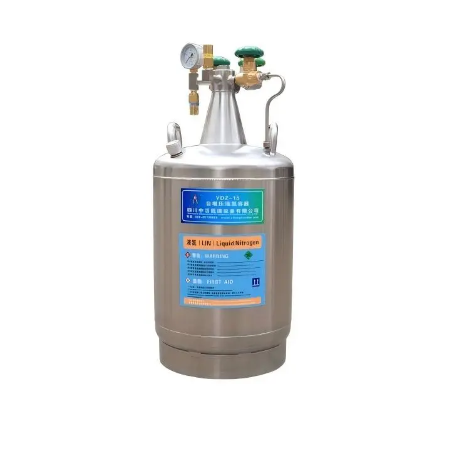
Buyers need a clear baseline to estimate capital expenditures accurately. You can categorize cryogenic solutions based on their total volume and primary application. Understanding these tiers helps you avoid over-specifying equipment or underestimating operational limitations.
Use Case: Research institutions, medical facilities, cryobanks, and small-batch processing centers rely heavily on these units. They provide accessible cryogenic storage directly at the point of use.
Cost Drivers: Price scaling depends mostly on portability features and dispensing technology. You will pay a premium for ruggedized footrings, non-magnetic caster bases, and specialized dispensing manifolds. These units operate at lower volumes, typically ranging from 10L to 200L. Investing in a high-quality Mobile Lab Liquid Nitrogen Tank ensures safer manual handling and precise liquid extraction.
Market Reality: These tanks boast a significantly lower entry price. However, you face higher per-liter gas refill costs. Vendors must make frequent, low-volume deliveries, driving up your monthly operational expenses.
Use Case: Industrial applications demand a steady supply. These tanks serve facilities requiring continuous gas or liquid withdrawal without relying on external pressure sources or pumps.
Cost Drivers: The complexity of internal plumbing drives the price. A robust Mobile Self-pressurized Liquid Nitrogen Tank features integrated pressure-building circuits. Multi-stage regulators add significant hardware costs. Buyers must also choose between low-pressure (LP) and high-pressure (HP) capabilities. Furthermore, stringent DOT or TPED compliance certifications are mandatory for road transport, directly increasing manufacturing costs.
Use Case: High-consumption environments use bulk storage. Examples include automotive manufacturing, industrial food freezing, and semiconductor fabrication. Volumes typically range from 1,000L to well over 20,000L.
Cost Drivers: Bulk tanks represent massive capital investments. Prices fluctuate based on global stainless-steel and carbon-steel commodity markets. Beyond raw materials, complex telemetry and IoT monitoring systems drive up costs. Facilities also require advanced vacuum-jacketed piping and highly customized vaporization systems to handle massive flow rates safely.
Pricing Tier Comparison Summary
| Equipment Tier | Volume Range | Primary Cost Drivers | Delivery Cost Impact |
|---|---|---|---|
| Lab Scale Dewars | 10L - 200L | Caster bases, dispensing manifolds | High (Frequent, low-volume refills) |
| Self-Pressurized Tanks | 100L - 500L | Pressure-building circuits, DOT compliance | Medium (Cylinder exchange or local fill) |
| Bulk & Microbulk | 1,000L - 20,000L+ | Telemetry, IoT, massive steel volume | Low (Economies of scale via tanker trucks) |
Deciding how to acquire your equipment forms the fundamental core of your financial decision model. You must frame this as a business problem rather than just a procurement task. TCO dictates whether you should tie up capital today or accept higher monthly operational expenses.
Purchasing equipment outright requires significant liquidity. However, it provides absolute control over your operational infrastructure.
Pros: You gain the freedom to negotiate gas delivery contracts independently across different suppliers. This competition drives down per-liter gas prices. Ultimately, purchasing yields significantly lower long-term costs.
Cons: The high upfront investment strains annual budgets. Furthermore, your facility assumes full liability. You must handle all ongoing maintenance, vacuum testing, and mandatory regulatory compliance responsibilities internally.
Many facilities opt to lease tanks directly from major industrial gas companies or local distributors. This usually involves signing an exclusive long-term gas supply contract.
Pros: You face minimal upfront costs. The gas supplier typically manages all maintenance, emergency repairs, and hardware upgrades. This offloads technical risk from your facility team.
Cons: You experience vendor "lock-in." Because you do not own the tank, you must accept the supplier's specific gas pricing. Over a decade, accumulated rental fees and inflated gas prices far exceed the cost of purchasing the tank outright.
Calculating your crossover point is critical. The crossover point marks the exact month where buying becomes more cost-effective than leasing. For most mid-sized manufacturing facilities, this point lands between 24 and 36 months.
To calculate this, sum the monthly rental fee and the premium paid for vendor-locked gas. Compare this combined monthly expense against the outright purchase price plus estimated annual maintenance. If you plan to operate at your current site for five or more years, purchasing almost always delivers a superior Return on Investment (ROI).
Not all tanks perform equally. Educating yourself on premium features helps you justify a higher price tag during the procurement cycle. Understanding these specifications prevents you from buying an underpowered or inefficient system.
Normal Evaporation Rate (NER): Cryogenic liquids naturally boil off and expand into gas. NER measures the daily percentage of product lost to heat leak. Paying a premium for advanced multi-layer vacuum insulation saves money long-term. Superior insulation dramatically reduces lost product. A cheaper tank with a poor NER wastes thousands of dollars in evaporated gas annually.
Pressure Ratings & Regulators: System pressure dictates application suitability. Low-pressure systems exist solely for liquid dispensing. They cost less to manufacture. High-pressure systems supply continuous gas flow for laser cutting or biological freezing. These require heavy-duty internal vaporizers and sophisticated multi-stage regulators, significantly increasing the purchase price.
Material Quality & Manufacturing Origin: The metal matters. Industry standards rely on austenitic stainless steel. However, pricing differs vastly between basic 304 stainless steel and the highly corrosion-resistant 316L grade. Furthermore, domestic manufacturing generally costs more than overseas imports due to labor rates and strict local quality assurance testing.
Safety & Compliance Ratings: Legal operation requires specific certifications based on your region. A tank built to ASME Section VIII standards ensures maximum safety in the United States. Transporting the tank requires DOT (US) or TPED (Europe) certification. In Canada, you need a CRN (Canadian Registration Number). Securing these mandatory engineering stamps adds substantial engineering and auditing costs to the final product.
Best Practice: Always ask the manufacturer for the tested NER under actual working conditions, not just the theoretical laboratory baseline.
Adopting cryogenic infrastructure involves unadvertised expenses. Building trust with your stakeholders requires highlighting these hidden costs early. Failing to budget for implementation and maintenance derails entire projects.
You cannot simply place a large tank on existing asphalt. Bulk tanks require custom-engineered, reinforced concrete pads to support massive weight loads. Additionally, local fire marshals mandate safety fencing, crash bollards, and strict setback distances from property lines. Permitting alone can cost thousands of dollars and delay installation by months.
Liquid nitrogen displaces breathable oxygen rapidly. An indoor leak poses severe asphyxiation risks. You must invest heavily in oxygen depletion monitors (ODMs) and specialized emergency ventilation systems. Furthermore, your staff requires proper cryogenic Personal Protective Equipment (PPE), including face shields and insulated gloves.
Tanks age. Over 15 to 20 years, the annular vacuum space loses its integrity. As the vacuum degrades, boil-off rates skyrocket. Restoring efficiency requires professional vacuum pumping and re-insulation. We strongly warn against buying heavily discounted used equipment. Purchasing a used tank without a recent, documented vacuum integrity test often results in catastrophic gas loss.
Moving a massive steel vessel is expensive. Freight costs fluctuate based on distance and fuel surcharges. For bulk tanks, you must hire specialized heavy rigging crews and massive cranes to hoist the equipment onto the concrete pad. Never assume shipping and handling are included in the base hardware quote.
Common Mistake: Facility managers often exhaust their budget on the tank itself, leaving zero capital for critical cryogenic piping and exhaust ventilation.
Gathering standard price sheets rarely yields accurate numbers. Industrial gas solutions require deep customization. You must master shortlisting logic and take clear next-step actions to secure competitive procurement quotes.
Vendors cannot provide accurate pricing without understanding your specific operational demands. Before making a single phone call, you must define your consumption profile. You need to know your peak flow rate (how fast you need the gas), your operating pressure requirements, and your estimated daily volume usage. Providing these exact metrics prevents vendors from over-sizing your equipment.
When you receive an initial proposal, push back with technical questions. Use this checklist to evaluate supplier transparency:
What are the guaranteed NER specifications under actual working conditions? (Ensure they account for your specific climate and daily usage patterns).
Is the telemetry/monitoring system proprietary, or can it integrate with third-party gas suppliers? (Proprietary telemetry creates vendor lock-in; open systems give you freedom to change gas suppliers later).
What is the availability of replacement valves and regulators in my region? (Global supply chains falter. If your vendor lacks a local parts depot, a simple broken valve could halt your production for weeks).
Evaluate the true value of a vendor's post-sale support network. An initial hardware discount means nothing if the supplier takes five days to respond to an emergency service call. Look closely at the SLA. Prioritize vendors offering extended vacuum warranties (often up to 5 years) and guaranteed 24-hour response times for critical regulator failures.
Purchasing a liquid nitrogen tank constitutes a serious infrastructure investment, not a simple off-the-shelf commodity transaction. Navigating this process requires a deep understanding of your facility's operational demands and financial flexibility. Prioritizing a low upfront CapEx often traps companies into paying exorbitant operational costs via unacceptable gas loss and highly inefficient delivery schedules.
You must balance the initial hardware price against long-term reliability, boil-off rates, and vendor service agreements. We highly encourage you to audit your current gas consumption immediately. Document your peak flow rates and monthly invoices. Then, contact a specialized technical sales engineer for a comprehensive, site-specific sizing calculation and ROI assessment to secure the best possible equipment for your facility.
A: A high-quality commercial tank typically lasts between 15 and 20 years. However, its lifespan heavily depends on periodic vacuum maintenance. Over time, the internal vacuum degrades, increasing boil-off rates. Routine vacuum pumping and replacing wear parts like valves and relief regulators significantly extend the equipment's operational life.
A: A dewar is an unpressurized, double-walled thermos used strictly for storing and manually dispensing small amounts of liquid nitrogen. A self-pressurized cylinder features internal pressure-building circuits and regulators. It allows users to continuously withdraw liquid or vaporized gas at specific pressures, making it suitable for automated industrial processes.
A: Upfront, yes. However, used tanks carry substantial financial risks. Older tanks often suffer from degraded internal insulation and compromised vacuums, leading to massive daily gas loss. Furthermore, bringing an old tank up to current local safety codes and paying for mandatory regulatory recertification often negates the initial price discount.
A: You generally do not need a specific "operator license." However, you must strictly comply with local zoning laws, municipal fire codes, and OSHA standards. Facilities must secure specialized permits for installation, install oxygen depletion sensors, and ensure all handling personnel complete documented cryogenic safety and emergency response training.

 yongy0223@gmail.com
  +86-17693104145
 Lanzhou New Area, Lanzhou City, Gansu Province, on the second floor to the east of New Harbor Road, to the east of Building Materials Road No. 2, to the west of Qilian Mountain Avenue (Jingqi Road)

