


Views: 0 Author: Site Editor Publish Time: 2026-04-17 Origin: Site


Managing a liquid nitrogen tank goes beyond simple storage. It represents a vital capital asset where degraded performance translates directly into ongoing financial loss. Excessive nitrogen boil-off or sample spoilage quietly erodes your bottom line over time. Framing the annual maintenance protocol merely as an OSHA or ISO safety requirement misses the broader operational picture. Consistent, detailed audits act as the primary driver for lowering your Total Cost of Ownership (TCO) and maximizing asset longevity.
Daily and weekly visual checks certainly prevent immediate workplace hazards. However, a comprehensive annual deep-dive audit serves as the definitive intervention point. We will explore how to evaluate equipment viability, identify hidden structural failures, and determine exactly when to replace aging vessels. Read on to master the complete annual maintenance framework and protect your facility's investments.
Boil-Off Gas (BOG) is a primary diagnostic: Sudden spikes in evaporation rates are the leading indicator of vacuum degradation or insulation failure.
Compliance requires documentation: Annual calibration of pressure relief valves (PRVs) and level gauges is mandatory for ISO 9001 and internal safety audits.
Visual cues dictate action: Frost accumulation on the neck is common, but exterior ice spots demand immediate asset evaluation.
Maintenance dictates lifecycle: Proactive care extends the standard 5-to-10-year equipment lifespan, delaying major capital expenditures.
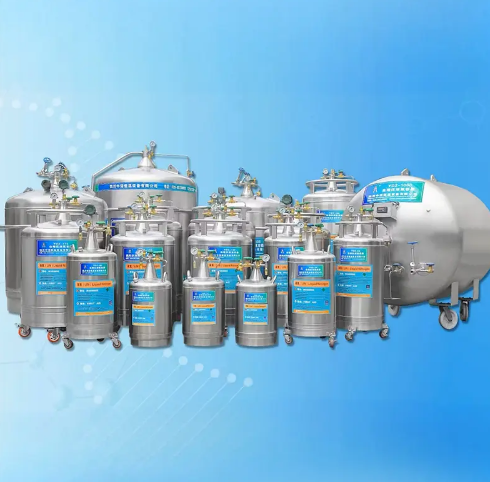
Unplanned downtime severely damages operational workflows. Undetected micro-leaks in cryogenic infrastructure compromise valuable sample integrity. They also inflate ongoing gas procurement costs significantly. Many facility managers overlook minor evaporation increases. You must recognize these small losses quickly. They compound over months into massive financial deficits. Effective maintenance stops this slow capital drain.
Extreme operational temperatures constantly stress your equipment. Liquid nitrogen maintains an unforgiving baseline of -320°F. This severe cold causes constant material expansion and contraction. Over time, these thermal cycles lead to structural weld fatigue. They may also induce dangerous metal embrittlement. Metal embrittlement reduces the structural flexibility of the inner vessel. It makes the entire system highly vulnerable to micro-fractures during routine gas filling operations.
Preventive action offers an outstanding return on investment. Consider the fractional cost of annual calibrations. Compare this minor expense against a catastrophic vacuum loss event. A sudden vacuum failure requires emergency sample transfer within hours. Emergency transfers demand expensive overtime labor. They also expose irreplaceable biological or chemical samples to deadly thermal shocks. Proactive audits eliminate these expensive crisis scenarios entirely.
Your annual audit must start with a rigorous physical inspection. Routine observation often misses slowly developing structural flaws.
Audit the exterior shell: Look carefully for dents, deep scratches, or external condensation. Localized ice spots serve as a definitive sign of an internal vacuum breach. You must isolate any vessel showing exterior ice patches immediately.
Assess the neck tube and plug: Distinguish between normal and problematic frost. Acceptable minor frost occurs during and shortly after filling operations. However, continuous, heavy frost accumulation indicates a slow, persistent vacuum leak. You should monitor the plug fit tightly. A loose plug accelerates gas evaporation rapidly.
A tank foundation dictates its long-term survival. We call this the "Installation as Destiny" rule.
Verify the tank foundation is perfectly level: Uneven settling over time causes eccentric loading. Eccentric loading puts critical stress on structural welds and inner vessels. It distorts the vacuum space. You must correct pad subsidence immediately using approved engineering methods.
Inspect secondary containment areas: Look for hairline cracks or sudden moisture buildup. Verify safe venting pathways remain completely unblocked. Blocked vents cause dangerous gas accumulation in low-lying areas.
Piping systems face the highest thermal shock frequency. They require meticulous annual scrutiny.
Examine flexible transfer hoses: Search for micro-cracking or stiffness in the protective braiding. Stainless steel hoses lose flexibility after repeated deep thermal cycling. Replace them if they show visible mechanical wear.
Inspect brass and stainless-steel legacy joints: Moisture often freezes around older connections. Note a critical safety rule here. Never force or touch frozen joints. Solid ice may be temporarily holding a compromised connection together. Wait for the joint to thaw naturally before attempting any wrench adjustments.
Regulatory frameworks demand strict proof of compliance. Your visual checks require backing from calibrated diagnostic data.
Auditors look specifically for instrument accuracy. You must verify and record the calibration expiry dates for all pressure gauges, liquid level indicators, and flow meters. Keep these records readily accessible. Missing calibration tags often result in immediate safety audit failures.
Instrument Category Annual Audit Action Compliance Target (ISO 9001) Pressure Gauges Recalibrate to zero baseline. Verify full sweep. Visible calibration sticker with strict expiry date. Liquid Level Indicators Cross-reference digital readout with manual dipstick. Deviation must remain strictly under defined tolerances. Flow Meters Clean internal sensors. Verify flow rate telemetry. Accurate throughput logging for gas procurement audits.
Safety valves act as your ultimate fail-safe against catastrophic over-pressurization. Confirm all PRVs are functioning properly. Verify they remain completely unblocked by ice or environmental debris. You must check their specific ratings. Ensure they correctly match the tank’s Maximum Allowable Working Pressure (MAWP).
Venting direction matters immensely. Ensure venting is directed outdoors. It must point safely away from all operator zones. Poorly directed vents cause fatal oxygen enrichment in some environments. In others, they create deadly asphyxiation risks by displacing ambient oxygen.
For automated systems, electrical integrity is vital. Verify three-phase pump motors are operating precisely within the standard 380V-440V range. Listen closely to the motor during operation. Abnormal acoustic signatures often precede expensive mechanical bearing failures.
Finally, perform a formalized system-wide leak round. Check every flange, valve, and sensor port. Log all results systematically for your ISO 9001 compliance files. Transparent documentation proves your proactive safety culture.
Different vessel configurations demand specialized maintenance maneuvers. You cannot treat a highly automated lab system exactly like a bulk outdoor storage tank.
Self-pressurizing systems rely on intricate internal plumbing. When inspecting a Compact Self-pressurized Liquid Nitrogen Tank, you must focus closely on the pressure-building circuit. Inspect the internal pressure-building coils and regulator valves thoroughly. Look for accumulated debris or internal moisture. Moisture causes flash-freezing. Flash-freezing leads to immediate operational lock-up.
Next, review the safety burst discs. These discs protect the system if the PRV fails. Replace them immediately if they show signs of outward bulging or metal fatigue. You should also replace them if they have exceeded manufacturer-recommended lifespans, regardless of their visual appearance.
Laboratory environments require exact temperature and level tolerances. A Lab-Grade Self-pressurized Liquid Nitrogen Tank usually features advanced telemetry. Test the micro-computer control panels annually. Verify the high/low-level setpoints react properly. Trigger the audible and visual alarms manually to ensure functionality.
Do not trust digital readouts blindly. Conduct manual baseline measurements periodically. Use a dedicated cryogenic measuring stick to validate the digital telemetry. Standard acceptable deviation between the manual stick and digital readout is typically under 2 inches. Recalibrate the sensors if the deviation exceeds this 2-inch threshold.
Pay special attention to implementation risks during reassembly. When reconnecting high-pressure lines after maintenance, explicitly prohibit the use of standard Teflon tape. Standard Teflon tape degrades rapidly in cryogenic conditions. The shredded tape fragments travel through the lines and block delicate control valves. Only use approved cryogenic-grade thread sealants.
Every asset eventually reaches the end of its reliable service life. Facility managers must recognize the distinct threshold between a worthwhile repair and a mandatory replacement.
Vacuum degradation happens naturally over a decade. However, sudden degradation requires a cost-benefit analysis. If a tank requires frequent vacuum re-pumping (re-evacuation), evaluate the labor and downtime costs carefully. Compare these recurring expenses against procuring a modern, highly insulated vessel. Often, the ongoing gas loss from a poorly insulated tank costs more than a brand-new unit.
Older high-capacity industrial tanks require advanced diagnostics. You cannot assess internal vessel corrosion visually. Discuss when to commission third-party ultrasonic thickness (UT) testing with your engineering team. UT testing evaluates unseen internal corrosion safely. It measures the remaining metal wall thickness. If the thickness falls below ASME minimums, the vessel becomes a severe liability.
Use clear triggers to initiate replacement procurement. If the annual audit reveals persistent exterior frost, you have lost thermal integrity. Sudden BOG spikes indicate irreversible vacuum collapse. Obsolete MAWP safety configurations often fail modern regulatory audits. When you observe these conditions, outline a clear transition strategy. Move toward newer, automated systems. Modern tanks offer much better telemetric monitoring, reducing daily operator burden significantly.
Symptom Observed Recommended Action Financial Impact Justification Slight frost near the neck plug. Repair (Replace plug). Low cost. High return by stopping minor gas venting. Slow increase in daily BOG. Repair (Vacuum re-pumping). Moderate cost. Restores insulation efficiency for 2-3 years. Solid ice patches on outer shell. Replace immediate. Total vacuum failure. Gas loss exceeds new tank ROI rapidly. Failed Ultrasonic Thickness test. Replace immediate. Catastrophic structural risk. Non-compliant with safety codes.
Annual maintenance represents a direct investment in operational security, not just a tedious checklist exercise.
You must retain at least three years of maintenance logs to satisfy safety inspectors and gas suppliers prior to refill operations.
Always verify calibration tags and keep safety relief valves free from external ice blockages.
Replace older tanks showing continuous heavy frost or uncorrectable vacuum degradation to protect your long-term operating budget.
Encourage facility managers to standardize their Standard Operating Procedures (SOPs) and partner with certified technicians for complex vacuum or electrical diagnostics.
A: Frost around the neck plug during or right after filling is completely normal vapor escape. The intense cold naturally condenses ambient moisture. However, solid ice patches forming on the outer aluminum shell indicate total vacuum loss. It means the extreme internal cold is conducting directly through the walls.
A: We recommend conducting a professional vacuum test every 1-2 years. You should also request an emergency test immediately if your daily BOG tracking shows a sudden, unexplained increase in nitrogen consumption. Early vacuum testing prevents catastrophic sample loss.
A: You can use mild detergent and a damp cloth on the outer shell at room temperature. However, water must never be used near valves, vents, or the neck area. Stray water creates an extreme risk of ice-blockage, leading to sudden and highly dangerous over-pressurization.
A: Suppliers strictly enforce safety mandates. Common compliance failures include outdated safety relief valves, visibly damaged piping, unanchored foundations, or insufficient clearance distances from flammable materials. They will safely deny service until you provide updated maintenance documentation and fix the hazards.

 yongy0223@gmail.com
  +86-17693104145
 Lanzhou New Area, Lanzhou City, Gansu Province, on the second floor to the east of New Harbor Road, to the east of Building Materials Road No. 2, to the west of Qilian Mountain Avenue (Jingqi Road)

