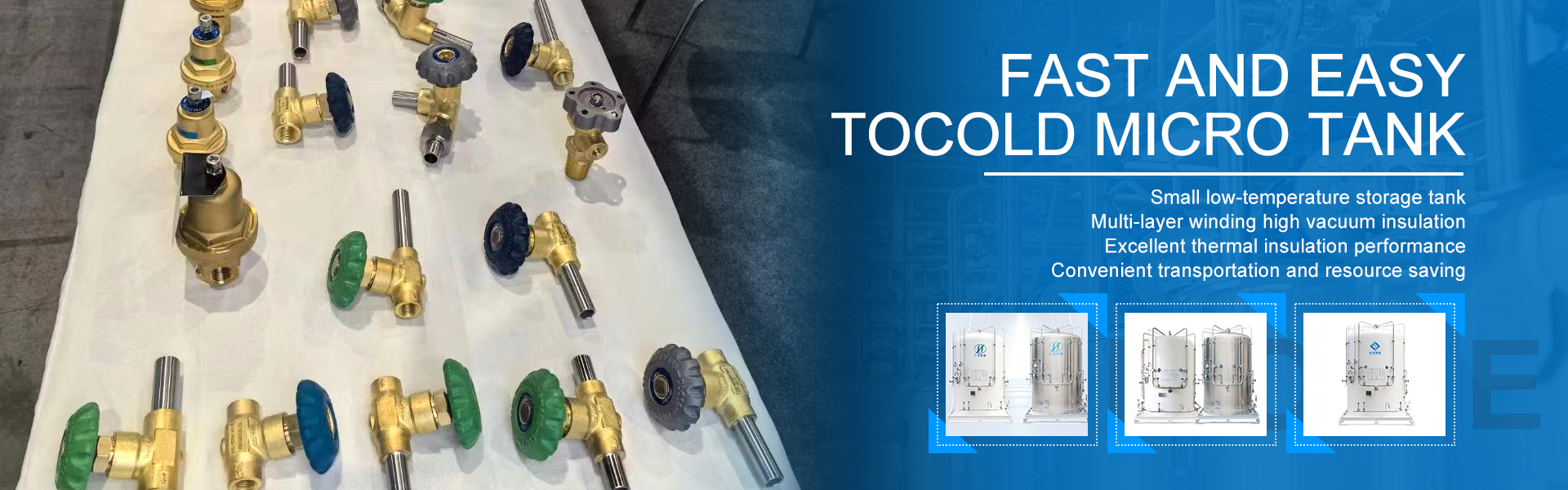
Cryogenic valve accessories are the control center of any low-temperature system—determining how safely and efficiently you can store, transfer, and regulate media such as liquid nitrogen (LN2), liquid oxygen (LOX), and liquefied natural gas (LNG). At Gansu Shenleng Cryogenic Equipment Co., Ltd., we support cryogenic tanks, industrial dewars, liquid nitrogen tanks, and tube trailer systems with a practical selection of cryogenic valves designed for stable low-temperature performance, tight shutoff, and long service life.
Why cryogenic valves matter in bulk storage and transfer
When users search for liquid nitrogen valve, LOX valve, or LNG cryogenic valve, the underlying need is usually the same: reduce leakage risk, improve control accuracy, and keep equipment running with minimal product loss. In cryogenic service, a standard valve design may face issues such as cold embrittlement, thermal cycling fatigue, sealing shrinkage, and icing around the stem. Purpose-built cryogenic valve accessories help address these failure modes by using materials, sealing structures, and geometries optimized for extreme low temperatures.
Materials engineered for low-temperature toughness
Cryogenic systems routinely operate far below freezing, and toughness at low temperature is non-negotiable. Our valve components are constructed from cryogenic-grade austenitic stainless steel and selected special alloys, chosen to maintain mechanical strength and resist brittle fracture under cold conditions. This material strategy helps improve reliability in repeated cool-down/warm-up cycles and supports safer handling across LN2, LOX, and LNG service environments.
Multi-stage sealing to target “tight shutoff” performance
One of the highest-intent keywords in this space is “leak tight” or “zero leakage,” because even small leaks can lead to safety hazards, oxygen enrichment concerns, or ongoing evaporation losses. Our cryogenic valves adopt multi-stage sealing concepts and design details that support stable sealing under thermal contraction. In addition, an extended stem design is used to help reduce heat transfer to the cold zone and keep packing areas at more manageable temperatures—contributing to smoother operation and reduced icing risk.
Complete range for tanks, piping and trailers
For buyers and maintenance teams, sourcing compatibility across a full system is often more important than purchasing a single part. We provide a supporting range of cryogenic valve accessories commonly used in liquid gas installations, including:
Cryogenic ball valve options for quick on/off isolation
Cryogenic globe valve options where throttling and flow regulation are required
Cryogenic check valve solutions to prevent backflow and protect equipment
Cryogenic safety valve configurations for pressure protection and risk control
These valve types are widely used across tank skids, vaporizer stations, filling manifolds, and insulated piping runs—helping integrators standardize maintenance and reduce downtime caused by mismatched components.
Designed to reduce total cost of operation
Cost-effectiveness in cryogenic service is not only purchase price. It’s also about minimizing operational losses and maintenance frequency. High-quality cryogenic valves can help reduce boil-off related loss by maintaining tight shutoff, while robust materials and sealing designs support longer maintenance intervals. For plant operators, this translates into a lower total cost of operation through fewer leaks, fewer unplanned shutdowns, and easier part replacement planning.
Custom solutions for media, pressure and connections
Real projects rarely share identical media, pressure ranges, and connection standards. That’s why we support customization based on your working conditions—such as service medium (LN2/LOX/LNG), operating pressure, flow requirements, and connection type. For EPC contractors and industrial gas suppliers, custom-fit valve accessories can simplify installation, reduce adaptors in the line, and improve system integrity.
Select the right cryogenic valve accessories
To choose correctly, prepare these inputs for your inquiry:
Medium (LN2 / LOX / LNG) and temperature range
Operating pressure and flow requirement
Valve type needed (ball / globe / check / safety)
Connection standard and size
Installation location (tank, pipeline, trailer, manifold)
Share your system details with SHENLENGDIWEN, and we’ll recommend cryogenic valve accessories that prioritize sealing reliability, low-temperature durability, and safer long-term operation—built to match your cryogenic equipment from the start.


 yongy0223@gmail.com
  +86-17693104145
 Lanzhou New Area, Lanzhou City, Gansu Province, on the second floor to the east of New Harbor Road, to the east of Building Materials Road No. 2, to the west of Qilian Mountain Avenue (Jingqi Road)


