


Views: 0 Author: Site Editor Publish Time: 2026-03-04 Origin: Site


Procuring a dewar flask is never a simple hardware purchase. It represents a critical risk-management decision. Your primary goal is preserving high-value cryogenic samples safely over long durations. Whether you store bulk liquid nitrogen, rare cell lines, or delicate biological tissues, equipment failure carries catastrophic financial and scientific costs. Advancements in 2026 vacuum insulation technology redefine laboratory standards. Modern manufacturing materials mean buyers must look far past basic volume specifications. Lab managers must rigorously evaluate static hold times, daily evaporation rates, and advanced operational safety mechanisms.
This guide serves as a pragmatic, decision-stage framework. We designed it specifically for lab managers, principal investigators, and industrial procurement teams. You will learn how to accurately calculate total cost of ownership (TCO) across decades of use. You will also ensure complete operational alignment within your facility. Let us translate complex technical specifications into actionable procurement strategies.
Capacity vs. Consumption Trade-off: Neck diameter and access frequency directly dictate liquid nitrogen (LN2) evaporation rates; larger capacities do not automatically equate to longer hold times.
Material Dictates Application: Borosilicate glass and closed-cell foam suit short-term benchtop transfers, while double-walled aluminum or stainless steel are mandatory for high-capacity long-term storage.
Mobility Scalability: Specifying units like a Portable 210L Laboratory Dewar Flask requires evaluating immediate facility infrastructure (doorway widths, flooring weight limits, ventilation).
TCO Extends Beyond Purchase Price: Long-term ROI is heavily dependent on static evaporation rates and the availability of standardized withdrawal accessories.
You must first map your specific research problems to corresponding structural solutions. Categorizing your daily workflows makes selecting the right volumetric category much easier.
Small-scale cryogenic transfers demand low thermal mass. Units operating in this tier focus heavily on ease of handling. Borosilicate glass or closed-cell foam constructions excel here. They minimize vigorous boiling when you initially pour liquid nitrogen into the vessel. This behavioral trait saves valuable consumables during busy lab days. You should carefully evaluate shallow-form configurations for specific operational tasks. These shallow profiles provide excellent access for magnetic stirring applications. They also facilitate rapid tissue freezing protocols by keeping samples close to the surface.
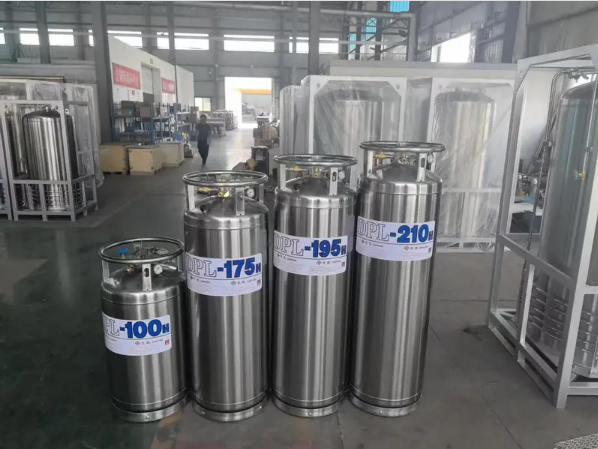
Biological archiving requires distinct infrastructure compared to simple transfer tasks. Institutional repositories usually define their operational threshold around mid-sized units. For instance, the portable 210L laboratory dewar flask acts as the standard baseline for significant biological archiving. It perfectly balances immense capacity and a manageable physical footprint. This volume easily handles moderate-scale LN2 distribution across multiple lab benches. However, mobility becomes a primary concern at this weight class. Moving hundreds of liters of liquid requires specialized roller bases. Reinforced neck tubes are also mandatory. They prevent structural cracking when operators maneuver fully loaded units over uneven floors.
Mass biospecimen banking shifts focus entirely toward automation. Intensive clinical usage relies on centralized LN2 supply systems. A heavy-duty 410L Cryo Dewar Flask serves this top tier perfectly. Facilities utilize these units for intensive clinical storage or mass biopharma production. At this scale, manual decanting is physically impossible and extremely dangerous. You must shift operations to pressurized liquid withdrawal devices. These closed-system cylinders feature integrated plumbing systems. They feed multiple benchtop freezers seamlessly without human lifting.
Technical specifications only matter if they improve your operational outcomes. Let us translate complex data sheets into real-world performance metrics.
Vacuum integrity directly minimizes environmental heat transfer. High-end cylinders often feature absolute pressure ratings around 10^-5 torr. Combined multi-layer super insulation virtually eliminates convective heat loss. These microscopic foil layers reflect radiant energy away from the inner chamber.
Common Mistake: Do not rely blindly on manufacturer "static hold" figures. Vendors calculate these numbers assuming operators never open the lid. Daily sample retrieval drastically reduces actual hold times. We call this real-world metric "dynamic hold." You must always model your expected liquid consumption based on your actual daily lid opening frequency.
This single specification forces a strict engineering compromise. You cannot have maximum thermal efficiency and maximum physical access simultaneously.
Narrow Necks: They restrict ambient heat entry brilliantly. This geometry yields the longest possible hold times. However, they severely limit physical access for large, complex sample racks.
Wide Necks: They allow effortless, rapid sample retrieval. Unfortunately, this large opening causes significantly higher daily LN2 loss due to massive convective currents.
You must align the neck size directly to your handling patterns. Frequent access demands wider necks to prevent operator frustration.
High-traffic environments routinely destroy fragile equipment. Aerospace-grade aluminum offers an excellent strength-to-weight ratio. It keeps large units maneuverable. Conversely, stainless steel provides unmatched durability for heavy industrial abuse, though it adds significant empty weight. Over time, internal materials slowly release microscopic trapped gases. We call this phenomenon outgassing. It degrades the insulating vacuum slowly. Top-tier manufacturers install chemical getters between the double walls. These getters continuously absorb outgassed molecules. They ensure your vacuum layer lasts its expected 5-to-10-year life cycle without premature failure.
Procurement requires a transparent, CFO-friendly framework. Long-term operating costs rapidly outpace initial sticker prices in cryogenics.
A poorly insulated Dewar flask costs thousands of dollars in wasted liquid nitrogen annually. Subpar insulation forces frequent top-offs. Premium, high-efficiency flasks carry a steeper initial capital expenditure (CAPEX). However, they generate positive return on investment (ROI) rapidly through dramatically reduced evaporation rates.
Below is a simplified matrix demonstrating the long-term economic impact of evaporation rates:
Equipment Grade Initial CAPEX Daily Evaporation Loss 5-Year Consumable Cost Overall ROI Standard Market Model Low ($) High (3.5 Liters/Day) Extremely High Poor Premium Super-Insulated High Low (< 0.8 Liters/Day) Minimal Excellent
You must always frame procurement around severe risk mitigation. Vacuum failure ruins biological contents instantly. Stored materials like IVF embryos, rare stem cell lines, or custom CAR-T cells hold immense financial and scientific value. These biological contents often exceed the equipment price by orders of magnitude. A premium flask essentially acts as an affordable insurance policy against catastrophic biological loss.
Standardization controls your ongoing operational budgets. You must factor in necessary accessory costs during procurement. Liquid withdrawal devices, cryogenic racks, and specialized tipping stands add up quickly. Replacing phase separators is also a routine operational expense. Purchasing non-standardized flasks is a massive logistical error. Proprietary thread sizes force labs to order expensive custom accessories. Always stick to globally recognized dimensions to leverage aftermarket accessory ecosystems.
Real-world rollouts face numerous logistical hurdles. Personnel safety remains strictly non-negotiable when handling cryogenic liquids.
Liquid nitrogen expands into gaseous nitrogen at an astounding 1:694 ratio. A seemingly minor liquid spill displaces enormous volumes of breathable oxygen. Deploying massive units requires rigorous facility HVAC assessments. You must install continuous oxygen depletion monitors in every storage room. Confined spaces turn deadly within seconds during a catastrophic liquid leak. Safety protocols must account for rapid room evacuation procedures.
Closed-system dispensing dewars generate immense internal pressure. Thermal expansion happens continuously as liquid slowly boils into gas. You must rigorously verify all mechanical safety mechanisms. Dual pressure-relief valves are strictly required for safe operation. Burst discs provide critical secondary fail-safes. Never bypass, freeze, or modify these factory safety vents. Doing so creates an immediate, lethal explosion hazard in your laboratory.
Liquid sloshing dynamically shifts the container's center of gravity. Transporting heavy equipment poses severe physical risks to laboratory personnel. Moving a fully loaded container demands specialized roller bases. You need heavy-duty locking casters to prevent runaway momentum. Facilities must map out designated transit routing ahead of time. Avoid steep hallway ramps or uneven elevator transitions. Such structural obstacles frequently cause devastating tipping accidents.
You now have the technical and financial context necessary for success. Use this step-by-step checklist to finalize your purchasing decision.
Step 1: Audit Current Workflow. Measure your daily access frequency meticulously. Compare this metric against your pure storage duration needs. This behavioral data determines your required neck size. It also dictates your absolute minimum dynamic hold times.
Step 2: Assess Infrastructure Constraints. Do not guess your spatial limits. Measure service elevator weight capacities precisely. Check your laboratory aisle widths. Verify all cleanroom compatibility requirements. High-capacity units often fail to fit through standard 36-inch commercial doors.
Step 3: Vet Warranty and Vendor Support. Demand absolute transparency on vacuum warranty durations. The reliable industry standard typically spans three to five years. Ensure local technical support networks exist. You will eventually need specialized technicians to re-pump the vacuum layers.
Choosing the correct equipment requires meticulous balance. You must weigh maximum thermal efficiency against daily workflow accessibility. Overlooking facility infrastructure constraints or long-term accessory costs leads to severe budget overruns.
Keep these actionable strategies in mind before issuing a purchase order:
Assess your true operational volume rather than buying excess capacity.
Prioritize mandatory safety features like dual pressure-relief valves.
Factor daily physical access into your dynamic evaporation models.
Take proactive action today by calculating your acceptable LN2 loss rate. Map out your facility transit logistics completely. Complete these audits before requesting vendor quotes or detailed CAD models. Ready to secure your high-value biological samples safely? Consult a dedicated cryogenic storage specialist immediately. We recommend downloading a proprietary TCO calculator to compare specific models against your exact laboratory conditions.
A: High-quality metal dewars typically last 5 to 10+ years. Their longevity depends entirely on strict vacuum integrity maintenance. You must protect the unit against physical impacts. Dents easily break the internal vacuum seal. Regular maintenance and avoiding extreme mechanical shock will maximize your investment.
A: Static hold assumes operators never open the lid. Dynamic hold accounts for regular sample retrieval and physical agitation. Every time you open the flask, ambient heat enters the system. This drastically reduces the total days a flask can remain at cryogenic temperatures. Always plan workflows around dynamic metrics.
A: You should upgrade when your facility outgrows manual sample decanting. If your laboratory requires automated, piped LN2 distribution to multiple benchtop units or standalone freezers, a high-capacity pressurized system becomes mandatory. It ensures safe, highly efficient, and continuous cryogenic supply without manual lifting.
A: No. Dry shippers are highly specialized transport containers. They require specific hydrophobic absorbent materials built directly into the inner walls. These materials hold LN2 safely in a vapor phase during transit. This prevents dangerous liquid spills and is mandatory to comply with strict aviation shipping regulations.

 yongy0223@gmail.com
  +86-17693104145
 Lanzhou New Area, Lanzhou City, Gansu Province, on the second floor to the east of New Harbor Road, to the east of Building Materials Road No. 2, to the west of Qilian Mountain Avenue (Jingqi Road)

