


Views: 0 Author: Site Editor Publish Time: 2026-03-25 Origin: Site


High-quality cryogenic storage requires significant capital investment. You rely on these advanced systems to protect invaluable biological samples and industrial materials. However, improper handling or neglected maintenance drastically accelerates thermal degradation. Poor upkeep directly increases liquid nitrogen (LN2) consumption. It also introduces severe facility safety risks.
For facility managers and procurement leads evaluating cryogenic storage solutions, understanding long-term maintenance requirements is critical. You must factor these upkeep costs into calculating Total Cost of Ownership (TCO). This knowledge also ensures ongoing regulatory compliance across your facility.This guide provides an industry-standard framework. We will explore how to properly evaluate, maintain, and safely operate industrial and laboratory Dewar flasks. You will learn actionable protocols to extend asset lifespans while mitigating hazardous operational risks.
Thermal Protection is Fragile: Exposure to cleaning temperatures above 50°C (122°F) can permanently compromise vacuum insulation, leading to asset failure.
Evaporation Metrics Dictate Health: Monitoring static evaporation rates and visual cues (like external frosting) is the most reliable method to detect early vacuum degradation.
Safety Requires Strict SOPs: Due to the 700:1 liquid-to-gas expansion ratio of LN2, standardized protocols for filling, transporting, and PPE are non-negotiable facility requirements.
Scale Amplifies Risk: High-volume assets like a Large-Capacity 500L Dewar Flask or a Large-Capacity 1000L Cryogenic Dewar Flask require specialized handling, dedicated transport routes, and distinct withdrawal device management.
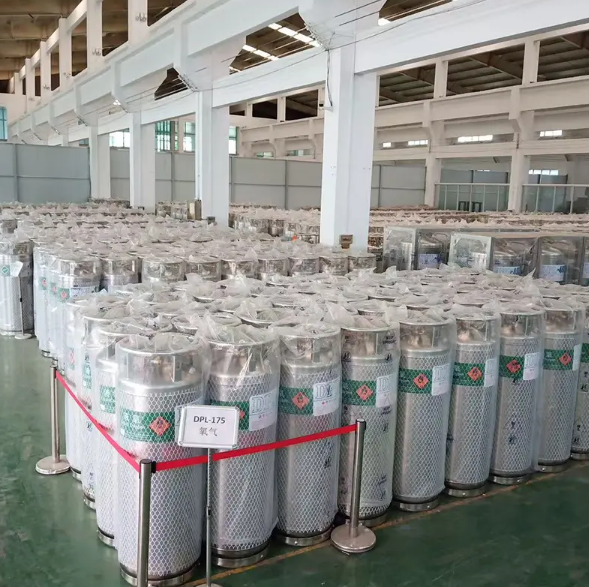
Regular maintenance directly drives your Total Cost of Ownership (TCO) and return on investment. The primary metric to watch is the static evaporation rate. A well-maintained vacuum layer reduces daily LN2 consumption. Over an asset's lifecycle, this efficiency delivers cumulative cost savings. You essentially stop paying to replace lost gas.
Operational efficiency relies heavily on the "Cooling Loss Rule." You should never let a flask dry out completely. Cooling a warm container consumes significantly more liquid gas than simply topping off a cold one. When you pour LN2 into a warm vessel, it boils violently. It flashes back into gas until the inner wall reaches cryogenic temperatures. Keeping assets actively cooled preserves your operational budget.
We must also frame maintenance as a vital risk mitigation tool. Failing to maintain these vessels introduces severe compliance and liability issues. Biological cross-contamination from poorly sanitized tanks ruins irreplaceable samples. You also face catastrophic failure risks. For example, if frozen condensation creates a dead-sealed neck, pressure builds rapidly inside. This scenario can easily trigger a deadly explosion.
Track LN2 refill volumes weekly to spot negative evaporation trends early.
Maintain a minimum 20% liquid level to optimize the cooling loss rule.
Log all maintenance activities to satisfy future compliance audits.
Before you clean a vessel, emphasize proper preparation and thawing. You must empty all contents carefully. Allow the container a gradual, natural return to ambient room temperature. This process typically takes over 48 hours. Rushing this step causes structural thermal shock. Rapid temperature swings can fracture the inner walls.
Washing and rinsing demand strict adherence to the 50°C Rule. Mandate the use of mild, neutral detergents mixed into warm water. You must understand a crucial implementation reality here. Water or forced air used for drying must never exceed 50°C to 60°C. Higher heat will irreversibly damage the vacuum seal insulation. Once you compromise the vacuum getter materials, the flask is ruined.
For medical or biological applications, you must perform proper biological decontamination. Use a standard solution containing 10% chlorine bleach and 90% water. Apply this mixture and ensure a required 30-minute contact time. Follow this step using a thorough distilled water rinse. Distilled water prevents mineral scale buildup inside the chamber.
Drying the equipment requires patience. We highly recommend inverted, natural air drying in a cleanroom environment. Avoid forced-heat methods completely. Do not use commercial blowers or heated air guns. Let gravity and ambient air perform the work safely.
Operators must learn to identify visual early warning signs. Instruct them to look for exterior frosting or severe condensation on the outer shell. Frost appearing on the aluminum shell or lid indicates a localized vacuum breach. The thermal barrier has failed, allowing internal cold to reach the outer surface.
You must also define temperature and evaporation benchmarks. Teach your team the symptoms of "rapid warming." Conduct a static evaporation test regularly. You can measure the daily inch drop of LN2 using a proper dipstick. Compare these localized results against the manufacturer's original baseline data.
Industrial testing methods offer deeper diagnostic capabilities. Industry experts rely on helium leak detectors. These devices represent the industry-standard diagnostic tool. They accurately pinpoint micro-fissures hidden deep within the vessel walls.
Facility managers need a clear decision matrix for troubleshooting. You must know when to attempt superficial repairs versus when to decommission an asset.
Cryogenic environments present intense hazards. You must train personnel to respect the five core hazard profiles.
Extreme Cold Burns: Contact with LN2 freezes skin tissue instantly, causing severe frostbite.
Asphyxiation: LN2 displaces oxygen rapidly. An oxygen level below 19.5% causes silent asphyxiation.
Pressure Explosion: Trapped expanding gas ruptures sealed containers violently.
Oxygen Enrichment: Extreme cold condenses surrounding air, leaving behind combustible liquid oxygen.
Material Embrittlement: Standard plastics and metals become fragile and shatter upon impact.
Personal Protective Equipment (PPE) mandates center on the "Overlap Rule." Specify only compliance-grade PPE for your team. They must wear full-face shields, non-absorbent cryogenic gloves, and long trousers without cuffs. Emphasize that long sleeves must go over the glove cuffs. This overlap prevents liquid from pooling inside the glove during an accidental splash. Pant legs must similarly overlap work boots.
The "Pre-Cooling" fill procedure prevents dangerous accidents. Detail this step-by-step filling SOP for all operators. First, inspect the neck for ice plugs. Clear all moisture from the transfer hose. Execute the critical pre-cooling phase next. Add a small amount of LN2 to cool the inner wall before filling to 1/4 capacity. This controlled step prevents violent boiling and sudden splashing.
You must strictly forbid the use of hollow tubes as dipsticks. Hollow tubes create a dangerous geyser effect. Expanding gas forces liquid nitrogen violently up through the tube center. Mandate solid metal or wooden measuring sticks for all liquid level checks.
Scaling up your storage capacity changes your operational risk profile entirely. Standard laboratory flasks require basic handling. Heavy-duty infrastructure demands advanced logistics. Moving from benchtop units to industrial assets like a Large-Capacity 500L Dewar Flask requires specialized facility planning.
These massive units hold enough potential gas expansion to displace oxygen across an entire warehouse floor. A Large-Capacity 1000L Cryogenic Dewar Flask introduces immense floor-loading requirements and stringent ventilation prerequisites.
Withdrawal device management becomes a vital TCO trade-off at this scale. Leaving liquid withdrawal devices fitted poses a dilemma. They are necessary for active, short-term use. However, keeping them installed during long-term storage effectively doubles your evaporation rate. Heat travels down the metal extraction tubes directly into the liquid. Remove these devices during static storage periods to preserve your inventory.
Transporting these massive units invokes strict confined space rules. You must enforce an absolute ban on personnel riding in passenger elevators alongside actively filled large-capacity dewars. Pressure relief valves can vent unexpectedly. This venting causes rapid asphyxiation in a small elevator cab. Send the tank up alone, and have personnel meet it on the destination floor.
Outline strict vehicle transport rules for off-site moves. Use open-cab or sealed-bulkhead transport vehicles only. Never place a filled cryogenic container inside a standard passenger vehicle. If a spill occurs, the driver will lose consciousness in seconds.
Facility managers eventually face equipment end-of-life decisions. You need a clear shortlisting logic to determine when a vessel is beyond economic repair. Complete vacuum loss signals immediate retirement. If you discover a cracked inner vessel, do not attempt structural patching. Severe housing dents also compromise the vacuum gap permanently. In these scenarios, replacement remains the only safe option.
When procuring a replacement, apply rigorous vendor evaluation criteria. Look for documented static evaporation rates to verify thermal efficiency. Demand a robust warranty covering vacuum integrity for multiple years. Check the availability of compliant, heavy-duty transportation carts. Finally, insist on reviewing verifiable factory testing reports before signing the purchase order.
Your immediate next-step action involves data collection. Encourage your procurement buyers and lab managers to audit current inventory evaporation rates. Measure your daily losses accurately. You can use this concrete data to build a solid business case for upgrading legacy equipment.
Treating cryogenic storage as a "set it and forget it" solution drains your operational budget through excessive gas consumption.
Strict adherence to the 50°C cleaning limit preserves the fragile vacuum layer and extends asset life.
Continuous monitoring of static evaporation rates identifies failing equipment before catastrophic accidents occur.
Implementing the "Overlap Rule" for PPE and standardizing pre-cooling fill procedures are vital markers of a mature safety culture.
Audit your existing fleet's thermal performance today to identify cost-saving upgrade opportunities.
A: Frosting indicates a loss of vacuum integrity. Without the vacuum barrier, severe thermal bridging occurs. The extreme cold from the internal liquid nitrogen transfers directly to the outer aluminum shell. You should decommission the flask immediately, as the insulation failure will cause rapid liquid evaporation and potential pressure buildup.
A: Absolutely not. Standard commercial thermoses lack proper pressure relief mechanisms. Liquid nitrogen expands at a 700:1 ratio as it warms into gas. If you seal a standard thermos, the trapped expanding gas will rupture the container violently, causing a deadly explosion and severe shrapnel injuries.
A: Move the vessel to a safe, well-ventilated area and allow natural thawing. Never use mechanical force, rods, or heat guns to puncture the ice block. Forcing the ice can push it downward or damage the inner neck. A dead-sealed neck is highly explosive, so clear the room during thawing.
A: Flush the affected area with copious amounts of tepid or lukewarm water. Never use hot water or direct heat sources, as this destroys frozen tissue. If clothing freezes to the skin, never pull it off forcibly. Seek immediate professional medical attention for severe cold burns.

 yongy0223@gmail.com
  +86-17693104145
 Lanzhou New Area, Lanzhou City, Gansu Province, on the second floor to the east of New Harbor Road, to the east of Building Materials Road No. 2, to the west of Qilian Mountain Avenue (Jingqi Road)

