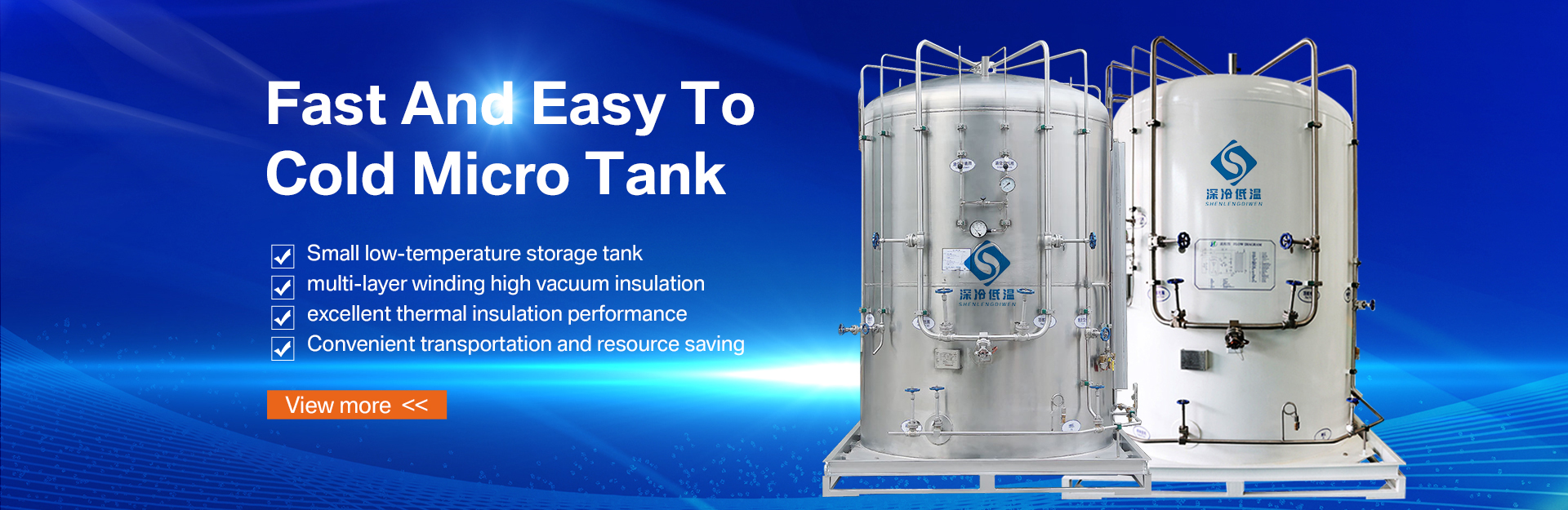
Cryogenic storage tank systems are the backbone of bulk liquid gas storage for plants and stations that can’t afford interruptions, product loss, or safety uncertainty. Gansu Shenleng Cryogenic Equipment Co., Ltd. supplies engineered cryogenic tanks for liquid oxygen (LOX), liquid nitrogen (LN2), and liquefied natural gas (LNG)—with practical capacities such as 3m³, 5m³, 7.5m³, and 10m³ to support industrial gas distribution, manufacturing operations, laboratories, medical supply chains, and clean-energy infrastructure.
What a cryogenic tank must do in real operations
When buyers search for “cryogenic tank supplier” or “vacuum insulated storage tank,” they’re usually solving the same business problem: maintain stable supply while minimizing boil-off and operational risk. A well-designed double wall cryogenic tank helps you:
Keep cryogenic liquids at ultra-low temperatures with minimal heat leak
Reduce gas loss (boil-off) and improve overall cost per usable unit
Provide stable pressure and flow for downstream vaporization and process demand
Meet safety expectations for handling and long-term storage
Vacuum-insulated, double-wall construction for low boil-off
Our tanks are built around a proven double-wall vacuum insulation architecture. The inner vessel—commonly fabricated from austenitic stainless steel (and other suitable cryogenic-grade materials depending on design)—stores the liquid product, while the outer shell protects the insulation system. High vacuum in the annular space and optimized insulation design work together to deliver low boil-off cryogenic tank performance, helping customers extend holding time and reduce refill frequency.
For procurement teams, the benefit is measurable: lower evaporation translates into lower product loss, fewer logistics events, and a more predictable operating budget—especially important for high-consumption users of LOX storage tanks and liquid nitrogen storage tanks.
Product options aligned with today’s buying trends
This category includes models tailored for different use cases, including:
Compact 3m³ LNG storage cryogenic tank for space-sensitive energy sites and small-scale fueling or buffering
Low-evaporation 5m³ liquid oxygen cryogenic tank for industrial users with high safety requirements and continuous demand
IoT-monitored 7.5m³ industrial cryogenic tank for customers prioritizing visibility, alarms, and modern asset management
High-precision 10m³ liquid gas cryogenic tank for larger throughput needs where stability and reliability matter most
The growing interest in IoT monitored cryogenic tank solutions reflects a broader industry shift: operators want earlier warnings, easier routine checks, and more efficient maintenance planning. Remote monitoring capability can also support multi-site management for gas suppliers and EPC contractors.
Safety engineered into the system
A cryogenic tank is not just a container—it’s a critical-pressure system supporting hazardous cryogenic media. Our designs integrate layered protection such as safety valves and process-friendly instrumentation provisions, supporting safer commissioning, daily operation, and servicing. For many customers, “uncompromised safety” means selecting a tank designed for stable operation under variable ambient conditions, with clear interfaces for vaporizers and site piping.
Where these tanks are used
Our industrial gas storage tank solutions serve common and fast-growing applications, including:
Industrial gas production and filling stations (LOX/LN2/LAR supply chains)
Manufacturing plants using nitrogen for inerting, purging, or cooling
Clean energy and gas infrastructure using LNG storage tank buffering and peak supply
Research, labs, and facilities that require consistent nitrogen availability
Why SHENLENGDIWEN is a practical supplier choice
Customers choose us when they need more than a catalog item—when they need guidance on capacity selection, configuration fit, and long-term serviceability. Our edge is a combination of project experience, insulation know-how, and end-to-end support that helps reduce decision risk for buyers managing timelines and compliance.
Send your medium, required capacity (3–10m³ or more), site conditions, and whether you need monitoring options. We’ll recommend the best-fit configuration and provide a fast, factory-direct quotation for your cryogenic storage tank project.


 yongy0223@gmail.com
  +86-17693104145
 Lanzhou New Area, Lanzhou City, Gansu Province, on the second floor to the east of New Harbor Road, to the east of Building Materials Road No. 2, to the west of Qilian Mountain Avenue (Jingqi Road)


