


Views: 0 Author: Site Editor Publish Time: 2026-03-11 Origin: Site


Procurement managers often face a common dilemma when sourcing thermal containment vessels. The terms "dewar flask" and "vacuum flask" are frequently used interchangeably because they share similar thermodynamic origins. This overlap creates significant confusion during equipment sourcing.Misunderstanding this critical distinction carries high-stakes consequences for any facility. Selecting the wrong vessel can lead to catastrophic safety failures, including violent container explosions. It also risks costly boil-off losses in sensitive cryogenic applications.
We wrote this guide to clearly separate industrial-grade cryogenic containment from standard vacuum-insulated containers. You will discover a definitive framework for evaluating, sizing, and sourcing the right equipment. Whether you run a small lab or a large-scale industrial operation, these insights will help you make a safe, cost-effective choice.
Terminology vs. Application: All Dewar flasks use vacuum flask technology, but not all vacuum flasks are Dewars. "Vacuum flask" typically denotes commercial/consumer temperature retention, while "Dewar" signifies specialized cryogenic storage.
Pressure & Venting: Consumer vacuum flasks have sealed caps that become explosive hazards with cryogens; Dewars utilize loose-fitting or specialized pressure-relief systems to safely vent expanding gases.
Evaporation Control: Industrial Dewars are engineered with narrow necks, specialized thermal bridges, and sometimes dual-vacuum systems to minimize the Static Evaporation Rate (SER) of highly volatile liquids like nitrogen and helium.
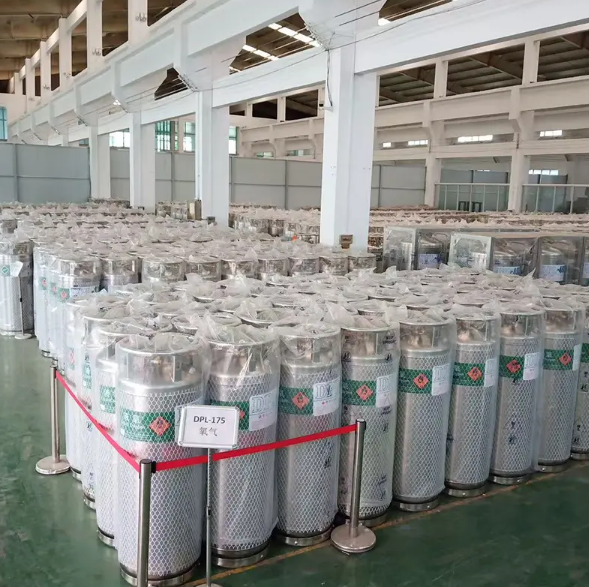
Scale and TCO: While vacuum flasks cap out at a few liters, industrial operations require specialized high-capacity units—such as a Vacuum-Insulated 175L Dewar Flask or a Cryogenic 195L Industrial Dewar Flask—where boil-off rates dictate long-term ROI.
Sir James Dewar invented the vacuum-jacketed vessel in 1892. He originally created it to preserve liquefied gases during his scientific research. However, he never patented his groundbreaking design. A German company recognized the massive commercial potential in 1904. They launched the "Thermos," taking vacuum insulation straight into the consumer mainstream. This shared origin explains why people still confuse the two terms today.
To source the correct equipment, you must understand their specific operational boundaries. We define them below:
Vacuum Flasks: These handle minimal temperature differences. You typically use them to keep liquids hot or cold within a 100°C to ambient range. Manufacturers build them for total liquid sealing and everyday durability in consumer environments.
Dewar Flasks: Engineers purpose-build these vessels for extreme temperature deltas. They confidently manage shifts from -196°C up to ambient room temperatures. You use them specifically to handle cryogenic liquids like nitrogen, oxygen, and argon. They are also essential for biological sample preservation.
Using the wrong vessel type introduces severe consequences. It is never merely a matter of poor temperature retention. Putting cryogens in a consumer flask introduces critical safety liabilities. You risk rapid material degradation, total loss of expensive gases, and potentially fatal implosions. You must match the container's engineering strictly to your intended application.
Heat transfer occurs through conduction, convection, and radiation. Vacuum layers successfully halt conduction and convection. However, standard vacuum flasks lack sophisticated insulation at the container's neck. This omission creates a thermal bridge where heat easily enters the inner chamber.
Industrial vessels solve this problem through advanced engineering. They utilize highly engineered narrow-neck designs. Manufacturers also incorporate specific spacer materials, like fiberglass or aerogels, to block thermal bridging. This specialized construction keeps internal temperatures incredibly stable, even in warm environments.
Material selection defines a container's overall survivability and lifespan.
Vacuum flasks often rely on standard stainless steel or basic glass. These materials work perfectly for hot coffee but fail rapidly under extreme cold.
Dewar flasks require robust, specialized construction. They utilize heavy-duty reflective coatings to minimize radiation. Small lab settings often use high-grade aluminum or specialized silvered glass. These feature built-in expansion joints. Such joints allow the vessel to survive drastic thermal shock without shattering.
Pressure control represents the absolute non-negotiable difference between these vessels. Vacuum flasks use threaded, airtight screw-caps. They trap contents securely to prevent annoying spills.
Conversely, cryogenic containers feature unsealed, loose-fitting stoppers. High-capacity models use engineered pressure relief valves (PRVs). Cryogens boil constantly at room temperature. They convert from liquid to gas rapidly. Trapping this expanding gas causes rapid over-pressurization. If you seal a cryogen inside an airtight vacuum flask, it will violently rupture. You must prioritize proper venting above all else.
Design Comparison Table
Feature Standard Vacuum Flask Industrial Dewar Flask Neck Insulation Basic or completely absent Narrow neck, specialized spacers Inner Materials Standard steel or basic glass Reflective coatings, expansion joints Lid Design Airtight threaded screw-cap Loose stopper or PRV system Primary Risk Spillage or lukewarm liquid Catastrophic over-pressurization
Standard vacuum flasks rarely exceed a few liters in total capacity. They serve individuals or small groups perfectly. In contrast, manufacturing plants, medical facilities, and large-scale labs require massive volumes of liquefied gases. You cannot run these facilities efficiently using small benchtop containers. Modern industrial operations demand highly scalable cryogenic storage solutions.
When you scale up operations, you need specialized, high-capacity units. Below are two industry-standard benchmarks you should evaluate:
Medium-to-Large Facility Storage: The Vacuum-Insulated 175L Dewar Flask serves as a perfect standard benchmark. Facilities use it heavily for reliable gas supply networks and bulk biological sample storage. It balances footprint efficiency perfectly while offering substantial payload capacity.
High-Volume Liquid Transport: For more demanding applications, operations turn to the Cryogenic 195L Industrial Dewar Flask. This unit excels in heavy liquid transport scenarios. It features reinforced bases and dedicated dispensing trolleys. It also includes automated pressure-building circuits to simplify liquid transfer processes across factory floors.
Static Evaporation Rate (SER) is the most critical performance metric for high-capacity units. It measures how much liquid turns to gas and escapes daily. Top-tier industrial vessels can achieve an SER of less than 0.7 liters per day.
Why does this matter? A lower SER directly protects your bottom line. Cryogenic gases like liquid helium and nitrogen remain quite expensive. High evaporation rates drain your budget continuously. Investing in a Dewar Flask with an exceptional SER guarantees long-term financial savings and operational stability.
We must reiterate the severe risks of improper equipment usage. Pouring liquid nitrogen into a consumer-grade thermos flask is incredibly dangerous. The airtight seal traps continuously expanding gases. This mistake quickly leads to a violent implosion and dangerous metal fragmentation. You risk severe injury to anyone standing nearby.
Open-top Dewar flasks present a unique risk called oxygen enrichment. Extreme cold at the unsealed neck condenses surrounding air. Liquid nitrogen boils at -196°C, but oxygen condenses at -183°C. This temperature gap draws liquid oxygen straight into the vessel. It creates localized fire and explosion hazards around the neck. Standard vacuum flasks never encounter this dangerous phenomenon because they operate at much warmer temperatures.
Silvered-glass Dewars suffer from severe material fatigue over their lifecycle. They require strict, uncompromising safety protocols. You must use specialized blast shields and perform regular visual inspections. Tiny scratches on the inner glass can easily trigger sudden implosions.
Modern industrial vessels eliminate this specific risk entirely. They feature all-metal, shatter-proof construction. This structural integrity makes them significantly safer for high-traffic industrial environments where accidental bumps occur.
Handling industrial cryogens requires strict regulatory compliance. You must wear specific Personal Protective Equipment (PPE), including cryogenic gloves and heavy face shields. Facilities must enforce strict handling protocols unique to continuous gas expansion. You do not need these complex regulations when handling standard vacuum vessels.
Selecting the correct container prevents wasted capital. Follow these general matching rules to optimize your procurement strategy:
Short-term transport and benchwork: Use small, open-top aluminum or glass Dewars.
Long-term storage and high volume: Invest in stainless steel, multi-layer insulated cylinders. Capacities between 175L and 195L usually work best.
Standard catering and light commercial: Stick to standard consumer vacuum flasks.
Total Cost of Ownership (TCO) goes far beyond the initial purchase price. You must weigh upfront costs against long-term gas preservation. Boil-off costs accumulate rapidly when you use inefficient containers.
You must also evaluate the durability of vacuum integrity over time. Cheaper containers lose their vacuum seal much faster due to micro-leaks in their welds. High-end manufacturers use "getter" materials in the vacuum space to absorb stray outgassing molecules. This preserves the vacuum longer. Once the vacuum fails completely, the container becomes utterly useless for cryogenic applications.
Use this practical checklist when evaluating potential equipment purchases for your facility:
Required SER: Does the evaporation rate match your monthly budget for gas losses?
Pressure Venting: Does it feature reliable, engineered pressure relief valves?
Material Compatibility: Can the inner core survive extreme, repeated thermal shock?
Payload Capacity: Does the volume truly support your daily operational needs?
Footprint Restrictions: Will the unit fit within your designated lab or facility floor space?
TCO Evaluation Chart
Investment Factor Cheap/Standard Container Premium Industrial Dewar Upfront Capital Low High Boil-Off Expenses High (Rapid gas loss) Minimal (Optimal SER) Vacuum Lifespan Short (Seal degrades quickly) Long (Welded multi-layer seals) Overall ROI Poor for cryogens Excellent for long-term use
The distinction between a standard thermos and an industrial Dewar flask is not just semantics. The difference lies entirely in specialized engineering built for extreme cold and continuous gas expansion. Standard flasks prioritize liquid retention above all else. Industrial units prioritize safe gas venting and extreme thermal isolation.
Never compromise on venting capabilities or Static Evaporation Rate (SER) when dealing with cryogens. Taking shortcuts on containment equipment will cost you heavily in wasted gas and severe safety liabilities.
Audit your current storage solutions today. Identify any older glass vessels or improper containers currently in active use. We advise you to consult with certified cryogenic equipment suppliers. They will help you match your exact volume needs with proper, safety-compliant vessel specifications.
A: No. Using a standard vacuum flask for liquid nitrogen introduces a severe explosion risk. Regular flasks feature airtight lids designed to trap liquids. Cryogens boil continuously, creating expanding gases. Because standard flasks lack engineered pressure relief systems, the trapped pressure will violently rupture the container.
A: Static Evaporation Rate (SER) is the metric defining how much liquid turns to gas and escapes per day. It is a crucial measurement for assessing the vessel's overall insulation efficiency and calculating long-term operational gas costs.
A: Yes. You must perform regular maintenance on industrial units. This includes checking vacuum integrity, verifying pressure relief valve functionality, and conducting visual inspections for abnormal frost buildup, which strongly indicates early insulation failure.
A: They utilize loose lids to allow boiled-off cryogenic gases to escape naturally. This continuous venting prevents internal pressure from building up, ensuring the vessel does not rupture or explode from trapped expanding gas.

 yongy0223@gmail.com
  +86-17693104145
 Lanzhou New Area, Lanzhou City, Gansu Province, on the second floor to the east of New Harbor Road, to the east of Building Materials Road No. 2, to the west of Qilian Mountain Avenue (Jingqi Road)

