


Views: 0 Author: Site Editor Publish Time: 2026-10-03 Origin: Site


Are you tired of volatile fuel costs eating into your facility's operational budget? Many off-grid industrial plants constantly struggle to feed their massive boiler systems efficiently. Traditional options like coal and diesel are increasingly expensive. Furthermore, they carry a heavy environmental burden that attracts strict regulatory scrutiny.
Off-grid energy infrastructure often looks complex. However, the mechanics of modern cryogenic systems are actually quite straightforward. They offer a highly efficient pathway to power massive industrial boilers. An on-site LNG storage tank solves geographical limitations by acting as a decentralized energy hub. In this comprehensive breakdown, we will explore the complete liquefied natural gas vaporization process. We will detail exactly how sub-zero liquid is safely stored, converted, and fed directly into industrial burners to keep your production lines running without interruption.
Cryogenic tanks safely hold natural gas in a liquid state at -162°C or -260°F using advanced passive insulation technology rather than active, power-hungry refrigeration.
The transition from a cryogenic liquid to a usable boiler fuel relies on a specialized regasification system. This typically utilizes ambient air vaporizers that require zero electricity.
A high-quality vacuum-perlite insulated cryogenic vessel remains the industry standard for minimizing ambient heat transfer and preventing costly gas loss.
For small to mid-sized industrial operations, modular units provide a flexible, space-saving, and cost-effective energy storage solution.
Switching to clean-burning gas for industrial boilers significantly reduces carbon emissions, lowers long-term fuel costs, and drastically improves overall boiler lifespan by eliminating soot and ash buildup.
To fully grasp how off-grid industrial facilities power their thermal systems, you must first understand the physical properties of the fuel itself. Liquefied Natural Gas is simply standard pipeline-quality natural gas that has been super-cooled. Hitting this extreme temperature threshold triggers a phase change. This transforms the invisible gas into a clear, non-toxic liquid.
This transformation is the linchpin of industrial logistics. It shrinks the volume of the gas by a factor of 600. To put this spatial efficiency into perspective, 600 cubic meters of natural gas in its gaseous state takes up just one cubic meter of space when liquefied. This allows trucks to deliver massive amounts of energy to remote locations efficiently.
Maintaining this extreme temperature requires highly specialized infrastructure. Unlike standard commercial refrigerators, these tanks do not use active mechanical cooling compressors. Instead, they function much like giant, highly engineered thermos bottles. They rely entirely on superior structural insulation to trap the cold inside.
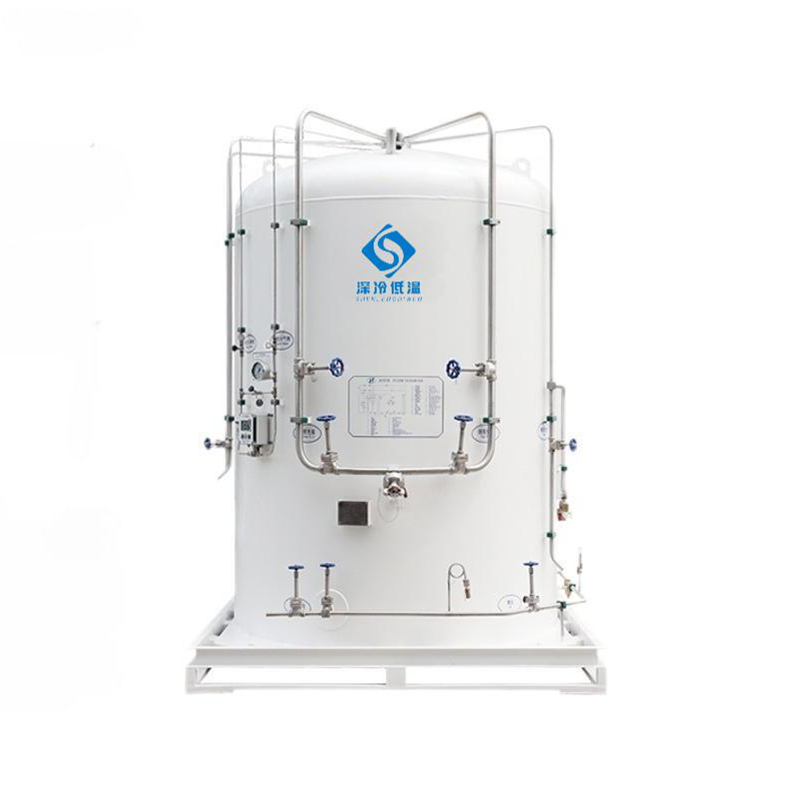
The thermal efficiency of your storage equipment directly dictates the operational efficiency of your entire boiler system. The undisputed industry standard for achieving this thermal perfection is the vacuum-perlite insulated cryogenic vessel. For instance, a highly efficient 1 cubic meter unit relies on this exact technology to maintain stable internal pressures.
This specific type of vessel utilizes a robust, double-walled construction designed to survive harsh industrial environments. The inner tank is forged from high-grade stainless steel, such as 304L or 316L. This specific alloy is chosen for its ability to withstand cryogenic embrittlement. It ensures the metal will not crack under extreme cold. Encasing this is an outer shell manufactured from durable carbon steel. This shields the delicate internal components from weather, moisture, and physical impact.
The true engineering value lies hidden in the annular space between these two metal walls. This gap is densely packed with perlite. Perlite is a naturally occurring siliceous volcanic rock that expands when heated to create a lightweight powder with exceptional thermal resistance. Once the perlite is packed tightly, technicians evacuate all the air from the space to create a high-level vacuum. By combining the physical barrier of the perlite with the complete absence of air, the vessel virtually stops convective and conductive heat transfer. This dual-layer defense ensures the fuel remains safely chilled and ready for the boiler's demand.
Transforming a dormant cryogenic liquid into a high-pressure, combustible gas suitable for a roaring industrial burner is a precise mechanical sequence. Facility managers and plant engineers must understand this fluid journey. It ensures continuous and safe boiler operation during peak production hours.
The journey begins quietly inside the storage vessel. The liquid natural gas rests securely within the inner stainless steel chamber. It is maintained at a relatively low pressure, typically ranging between 0.8 MPa to 1.6 MPa depending on the specific system design. Modern tanks are equipped with highly sensitive liquid level indicators and pressure transmitters. These sensors communicate continuously with the facility's central control room. Operators always have real-time data on exactly how much thermal energy is available for upcoming shifts.
Industrial boilers are engineered to combust gas, not liquid. Therefore, the fuel must undergo a rapid regasification process. When the boiler's burner management system signals a demand for heat, automated valves open. This allows the cryogenic liquid to flow out of the storage tank and into a vaporizer skid.
In the vast majority of industrial setups, an Ambient Air Vaporizer handles this process. It looks like a series of tall, finned aluminum radiators. As the extremely cold liquid flows upward through the internal tubes, it aggressively absorbs heat from the surrounding atmospheric air outside the fins. This passive heat exchange causes the liquid to rapidly warm, boil, and revert back into natural gas. Because these vaporizers rely entirely on free atmospheric heat, they require zero electricity or moving parts. This makes them incredibly reliable and cheap to operate.
Once the fuel has been successfully regasified, it exits the aluminum vaporizer array as a high-pressure gas. However, this raw output pressure is generally too aggressive and variable for direct injection into a sensitive boiler burner.
To correct this, the gas is routed through a Pressure Regulating and Metering Station. This skid-mounted unit acts as the system's traffic controller. It contains a series of precision reduction valves, safety sensors, and flow regulators. The station systematically steps down the gas pressure to match the exact input specifications required by the burner. Concurrently, the metering component meticulously tracks the exact volume of gas consumed. This provides vital data for facility accounting and thermal efficiency monitoring.
Finally, the perfectly regulated and metered natural gas is fed directly into the boiler's gas train. It mixes intimately with forced combustion air and is ignited. The resulting clean, blue flame generates the intense thermal energy required to produce high-pressure steam or hot water. This energy is then distributed throughout the plant to power manufacturing processes, sanitize equipment, or heat massive warehouse spaces.
While massive, multi-story vertical tanks are a common sight at major power plants, they are rarely practical for mid-market industrial facilities. For manufacturing operations with moderate steam requirements or strict spatial constraints, scaling the storage solution to fit the property is critical. You need actionable criteria to make the right choice.
An LNG mini bulk tank is a compact, highly efficient cryogenic storage vessel explicitly designed for localized industrial use. For example, a 2 cubic meter modular unit provides an excellent balance of footprint and fuel capacity. Despite their noticeably smaller footprint, they do not compromise on performance. They utilize the exact same vacuum-perlite insulation technology found in massive terminal tanks.
How do you know if a mini bulk system is right for your plant? Consider these field-tested selection standards:
Boiler Capacity: Ideal for facilities running boilers between 50 HP and 500 HP.
Space Constraints: Perfect for crowded industrial parks where standard setback requirements prohibit massive fuel oil farms.
Scalability Needs: If your production fluctuates, engineers can easily daisy-chain multiple 1 cubic meter or 2 cubic meter mini bulk tanks together in parallel. This avoids the massive capital expense of a single oversized custom tank.
Logistically, these skid-mounted units are designed to be easily refilled by standard delivery bobtails. This ensures a seamless supply chain without disrupting plant traffic.
Market analysts tracking industrial energy consumption have noted a definitive pivot over the last five years. As geopolitical tensions disrupt traditional crude oil supply chains, off-grid manufacturing plants are aggressively seeking fuel independence. Industry reports indicate a surging demand for localized, decentralized energy hubs.
Instead of waiting for municipal pipeline expansions, corporate decision-makers are taking matters into their own hands. Grid expansions can take decades and cost millions in bureaucratic red tape. By investing in on-site cryogenic infrastructure, facilities secure a predictable, high-density fuel source. This insulates them from volatile diesel pricing. Furthermore, it protects them from the looming threat of strict carbon taxes.
This proactive approach to energy security is fundamentally reshaping heavy industry. It proves that clean, reliable energy is no longer exclusive to facilities located on the main utility grid.
The transition from traditional, dirty fuels to liquefied natural gas requires an upfront capital investment. Despite this initial hurdle, facility managers are increasingly approving these engineering budgets. The justification for this paradigm shift is anchored by compelling economics, strict environmental compliance, and enhanced equipment longevity.
Fuel Type | Operational Cost Volatility | Emissions Profile | Boiler Maintenance Impact | Storage Footprint Efficiency |
|---|---|---|---|---|
Liquefied Natural Gas | Low to Moderate (Highly Stable) | Excellent (Zero SOx, Low NOx/CO2) | Minimal (Clean burning, no soot) | High (600:1 expansion ratio) |
Diesel / Light Oil | High (Geopolitically sensitive) | Poor (High particulate matter) | High (Requires frequent tube cleaning) | Moderate (Requires large bunded areas) |
Heavy Fuel Oil | Moderate | Very Poor (High sulfur and ash) | Severe (Heavy slag and soot buildup) | Low (Requires heated storage tanks) |
As the table illustrates, clean-burning gas leaves behind absolutely no soot or ash residue. This pristine combustion environment drastically reduces required maintenance intervals. It minimizes costly operational downtime and significantly extends the overall operational lifespan of the expensive boiler pressure vessel.
Introducing cryogenic liquids to an industrial site naturally raises safety questions among stakeholders and local fire marshals. However, the industry has spent decades developing rigorous engineering standards. Modern storage systems are exceptionally safe. The liquid itself is non-toxic, non-corrosive, and unpressurized in its cold state. If a leak were to occur, the fluid simply warms, vaporizes, and safely dissipates into the upper atmosphere. In contrast, diesel pools on the ground, creating long-lasting environmental contamination.
Even with superior insulation, a minuscule amount of ambient heat will eventually penetrate the tank over time. This slight temperature increase causes a small portion of the liquid to naturally warm and revert to a gas. This phenomenon is known as Boil-Off Gas. As it forms, pressure inside the tank slowly rises.
Modern installations are equipped with automated management systems. Instead of venting this valuable gas into the atmosphere, the system safely routes it through a specialized pressure control valve directly into the facility's gas network. The boiler burns it, ensuring zero fuel waste and maintaining optimal tank pressure.
Installing a cryogenic system requires meticulous site planning. Strict safety codes dictate specific physical clearances. The equipment must be installed outdoors on a reinforced, grounded concrete pad. They must be situated at calculated distances from property lines, electrical transformers, and the boiler room itself. This strategic placement ensures adequate natural ventilation and safe access for heavy delivery trucks.
A prevalent misconception among facility managers is that transitioning fuels requires ripping out their entirely functional industrial boiler. In reality, the integration process is straightforward. It utilizes much of your existing infrastructure.
Existing oil, diesel, or coal-fired boilers can be successfully retrofitted. The massive steel pressure vessel itself remains completely unchanged. The engineering modification happens exclusively at the burner. Combustion engineers simply remove the existing heavy oil burner and install a dedicated natural gas burner or a versatile dual-fuel burner.
A dual-fuel setup is highly recommended for off-grid plants. It allows the facility to run primarily on clean gas while retaining the ability to flip a switch and burn backup diesel during supply chain disruptions. Alongside the new burner, a fresh gas train is installed. This includes the specific series of pipes, regulators, and shutoff valves delivering fuel to the flame.
Industrial boilers depend on a continuous, unwavering fuel supply. The reliability of your entire thermal system hinges on the mechanical condition of the storage and regasification equipment. Proper maintenance is not merely a manufacturer suggestion. It is a strict operational requirement dictated by engineering codes.
Over years of continuous industrial operation, micro-leaks or natural outgassing from internal metal surfaces can slowly degrade the vacuum environment between the tank walls. When the vacuum degrades, thermal heat transfer accelerates rapidly. This increased heat leak causes the liquid to vaporize prematurely, generating excessive pressure.
To prevent this, facility engineers must conduct routine vacuum checks. Certified technicians utilize specialized thermocouple vacuum gauges to measure the precise micron level of the annular space. Baseline vacuum readings should be strictly recorded during initial commissioning. Following this, annual vacuum inspections are mandatory. If the pressure rises above acceptable engineering thresholds, a professional vacuum pump-down procedure is required to restore insulating power.
Because ambient air vaporizers extract necessary heat directly from the surrounding air, heavy condensation and frost accumulation on the extruded aluminum fins are entirely normal. However, unmanaged solid ice buildup can severely insulate the aluminum fins. This drastically reduces their ability to pull heat from the air.
If left unchecked, this ice block can allow un-vaporized cryogenic liquid to carry over into the downstream carbon steel piping. This is a highly dangerous condition that can cause pipe embrittlement and catastrophic failure in the boiler room. Operators must visually ensure that automated or manual switching valves function correctly. This allows one vaporizer bank to fully defrost while a secondary parallel bank handles the active regasification load.
Transitioning to liquefied natural gas offers a remarkably clean, economically stable fuel source for off-grid industrial boilers. By leveraging advanced passive insulation, specialized vessels securely store sub-zero fuel for extended periods. Meanwhile, atmospheric vaporizers seamlessly transform the cryogenic liquid into a steady stream of usable, high-pressure gas. This elegantly simple thermodynamic process frees facilities from the volatility of diesel markets and the environmental penalties of burning heavy fuel oil.
Whether your plant requires a massive custom vessel or a compact modular setup, the technology is proven, safe, and readily accessible. Routine maintenance and proactive safety audits keep your entire fuel network running flawlessly. Industrial facilities that make the switch significantly lower their carbon emissions, drastically reduce fuel costs, and extend the life of their expensive boiler equipment.
Do not let outdated fuel logistics hold your production back. If you are ready to secure your energy independence, evaluate your boiler's specific consumption profile today. Visit Gas Cryo Vessels (gascryovessels.com) to explore a full range of industry-leading storage solutions, from 1 cubic meter mini tanks to large-scale vacuum-perlite insulated vessels, and request a custom quote tailored to your exact industrial requirements.
The Return on Investment for a boiler fuel conversion depends heavily on your current fuel costs and annual operating hours. For a facility running a 1,000 HP boiler around the clock on expensive diesel or heavy fuel oil, the operational savings are substantial. Because natural gas consistently offers a lower cost per million British Thermal Units and eliminates costly boiler tube cleaning downtime, most mid-sized industrial plants see a complete payback on their cryogenic infrastructure and burner retrofit within 18 to 36 months.
Yes, heavy frost and solid ice accumulation are real operational challenges, especially in colder climates or during prolonged periods of peak boiler demand. When ice completely bridges the gaps between the vaporizer fins, it acts as an insulator, blocking ambient heat transfer. To prevent liquid carryover into the boiler gas train, engineers design vaporization skids with parallel banks. A switching valve system automatically toggles the fuel flow every few hours, allowing the active, frosted bank to naturally thaw while the standby bank takes over the regasification load.
Under static storage conditions where no liquid is being withdrawn and no gas is being consumed, the fuel can typically be stored for several weeks to a few months before internal pressure naturally reaches the safety relief valve setpoint. However, in an industrial boiler application, the storage tank is rarely static. When the system withdraws gas to feed the burner, it naturally reduces the internal pressure. As long as the industrial boiler is operating at its normal capacity and drawing fuel regularly, the liquid can be stored indefinitely without any loss of gas to the atmosphere.
Sizing the appropriate storage equipment is a critical engineering calculation. The primary metric used is the boiler’s maximum fuel consumption rate measured in MMBtu per hour or standard cubic meters per hour, combined with the total operating hours per week. For smaller commercial applications or mid-sized manufacturing facilities with limited physical footprints, a modular mini bulk tank is often the most practical solution. A standard engineering rule of thumb is to size the storage vessel to hold at least a seven to ten-day supply of fuel at peak boiler load. This ensures the facility remains fully operational even if winter storms temporarily delay refueling trucks.
Empirical data and historical safety records strongly indicate it is one of the safest fossil fuels available for industrial applications. The safety profile is largely defined by its unique physical properties. It is entirely non-toxic and non-corrosive. If a spill occurs, the cryogenic liquid does not pool on the ground and contaminate soil or groundwater. Furthermore, natural gas is lighter than air. Once vaporized, it quickly dissipates into the upper atmosphere, neutralizing the risk of localized explosive concentrations. Propane gas is heavier than air and will sink to the ground, creating a severe explosion hazard in low-lying boiler rooms.
You do not need a special boiler. Once the liquid leaves the storage tank and passes through the ambient air vaporizers, it is converted back into standard, pipeline-quality natural gas. By the time this fuel reaches your boiler room, it is physically and chemically identical to the natural gas supplied by a municipal utility grid. Therefore, the boiler itself only requires a standard natural gas burner upgrade. The massive steel pressure vessel remains completely intact.

 yongy0223@gmail.com
 +86-17693104145
 Lanzhou New Area, Lanzhou City, Gansu Province, on the second floor to the east of New Harbor Road, to the east of Building Materials Road No. 2, to the west of Qilian Mountain Avenue (Jingqi Road)


