


Views: 0 Author: Site Editor Publish Time: 2026-09-16 Origin: Site


Running out of liquid gas does not just pause production. It slams the brakes on your entire facility. Checking a deep-freeze storage unit manually is notoriously dangerous. It is also highly inaccurate due to the extreme physical environments involved. In this comprehensive guide, you will discover how automated monitoring tracks inventory safely. We will explore how it eliminates human error and transforms industrial gas management into a streamlined, data-driven operation.
Before diving into the exact mechanisms of inventory tracking, it is essential to understand the complex environment within a deep-freeze system. Picture a bustling semiconductor fab or a busy regional hospital. In these high-stakes scenarios, industrial gas management relies entirely on specialized equipment engineered to withstand brutal physical conditions.
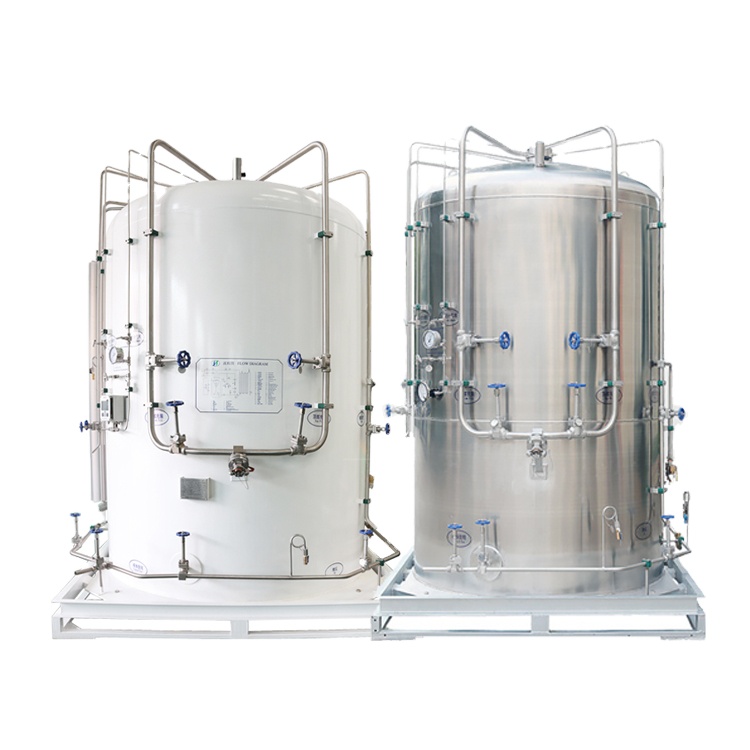
Containment of liquefied gases happens at exceptionally low temperatures. These temperatures typically fall below minus 150 degrees Celsius. The most common industrial gases stored in these volatile conditions include Liquid Nitrogen, Liquid Oxygen, Liquid Argon, and Liquefied Natural Gas. Because these substances expand violently when transitioning from a liquid state back into a gas, storing them safely requires robust, purpose-built engineering. This is where a high-quality cryogenic storage tank becomes the backbone of your operation.
To maintain ultra-low temperatures, facilities utilize dual-layer insulation. Think of this equipment as a massive, industrial-scale thermos. It consists of an inner stainless-steel vessel holding the liquid, surrounded by an outer carbon-steel shell. The annular space between these two layers is packed with perlite, which is a porous volcanic glass. This space is then evacuated to create a high vacuum. Consequently, this dual-layer insulation minimizes heat transfer from the outside environment. It significantly reduces the rate at which the liquid warms and turns back into gas, a natural process known in the field as boil-off.
Even with top-tier insulation, a minor degree of thermal leak is inevitable. Because the internal volume is constantly fluctuating due to both daily operational usage and natural evaporation, attempting to guess inventory levels based on static delivery schedules is mathematically impossible. Continuous telemetry is absolutely required to establish a reliable inventory baseline.
Modern inventory tracking has evolved far beyond visual estimation or tapping on the side of a tank. By measuring the physical properties of the contents, automated systems provide highly accurate volume data for any industrial gas tank. This ensures operators always know exactly what remains in reserve.
The most widely adopted method for tracking liquid levels in the field is Differential Pressure measurement. As engineers, we rely on this sophisticated system because it uses specialized sensors to measure pressure at two distinct points. First, a sensor at the bottom of the vessel measures the combined pressure of the liquid column and the gas resting above it. Second, a sensor at the top measures only the gas phase pressure. By subtracting the top reading from the bottom reading, the system isolates the exact hydrostatic pressure exerted solely by the liquid. Using the known specific density of the fluid, this raw pressure reading translates instantly into a precise liquid level and total volume.
Furthermore, capturing the physical measurement is only the first piece of the puzzle. Telemetry units and Internet of Things transmitters convert the raw analog data into encrypted digital packets. These transmitters then push the data via cellular, Wi-Fi, or satellite networks to a centralized cloud dashboard. For facility managers, this means the ability to view real-time inventory levels from anywhere in the world.
Historically, facilities relied heavily on manual tracking protocols to manage their deep-freeze inventory. Today, the rapid shift toward digital automation has rendered these older methods largely obsolete for bulk storage applications.
In biological and medical facilities, inventory was traditionally tracked by placing physical barcodes on individual vials or portable dewars. While inexpensive to implement initially, this approach carries severe operational drawbacks. It requires personnel to manually open freezers and scan items. This exposes sensitive samples to ambient room temperatures. If a rushed operator forgets to scan a withdrawn vial, the entire inventory database immediately becomes corrupted.
In contrast, automated sensor tracking completely removes human intervention from the inventory equation. By continuously monitoring the liquid level and temperature via integrated hardware, the system provides a hands-off data stream. This guarantees that the digital dashboard reflects the actual physical state of the storage unit at any given second. Nobody needs to step foot on the factory floor.
For enterprise-level facilities managing bulk reserves, automated sensor-based tank gauging is the only viable solution. Below is a comparison illustrating exactly why industrial operators are rapidly upgrading their infrastructure:
Feature | Barcode or Manual Method | Automated Sensor Tracking |
|---|---|---|
Data Frequency | Periodic, only when scanned by staff | Continuous, real-time visibility |
Human Error Risk | High due to missed scans and typos | Zero, relies on system-generated raw data |
Safety Risk | High exposure to extreme cold and gas | Low due to remote monitoring |
Best Application | Individual biological sample vials | Bulk storage and heavy industrial vessels |
Implementing monitoring hardware in extreme environments presents unique engineering hurdles. Standard electronic sensors will fail instantly if exposed directly to minus 150 degree temperatures. To overcome this thermal barrier, monitoring systems utilize specialized sensor housings and thermal standoffs. The delicate electronic microprocessors are physically isolated from the extreme cold. Meanwhile, the pressure-sensing diaphragms are forged from low-temperature alloys. These specific metals maintain their flexibility and accuracy even under severe freezing conditions.
Dealing with gas boil-off is another massive challenge. In any insulated vessel, natural evaporation is a constant variable. A critical obstacle in automated monitoring is differentiating between normal daily evaporation and an actual dangerous system leak. Advanced tank gauging software utilizes historical data algorithms to establish a baseline evaporation rate. If the liquid level drops at a steady rate consistent with this baseline, the system logs it as normal behavior. Conversely, if the drop suddenly exceeds the threshold, the system immediately triggers a rapid-venting alarm.
Specifically, heavy industrial plants are often constructed with thick concrete blast walls and vast amounts of structural steel. This creates a massive Faraday cage effect that easily blocks standard wireless signals. To ensure uninterrupted tracking, modern telemetry systems utilize robust Long Range Wide Area Networks or dedicated low-frequency cellular networks. These specific radio frequencies penetrate dense industrial infrastructure far more effectively than standard consumer networks.
While precision sensors provide the raw physical data, the true commercial value of modern telemetry lies in the software processing it. Transitioning from manual clipboards to an automated digital platform fundamentally changes how a facility handles its supply chain. It shifts the focus entirely from reactive troubleshooting to proactive management.
Historically, facility managers relied on static consumption rates to estimate refill dates. However, industrial usage is rarely a straight line. Production spikes, seasonal workflow variations, and unexpected operational shifts drain gas reserves much faster than anticipated. Modern inventory software resolves this by utilizing predictive analytics. By analyzing historical consumption trends alongside real-time data, the software calculates dynamic depletion rates.
Imagine a scenario where an automotive plant adds an unexpected weekend welding shift. This causes an unusual surge in liquid argon usage. The system automatically recalibrates the estimated time to empty. Before critical low levels are reached, the software dispatches smart alerts to procurement teams. This preemptive warning eliminates catastrophic production downtime.
Investing in automated telemetry systems yields a highly measurable return on investment. The financial benefits extend far beyond simply preventing gas shortages. By automating the tracking process, facilities free up specialized labor hours previously wasted on daily physical gauge inspections. Furthermore, predictive alerts allow for standard-rate scheduled deliveries. This completely eliminates the premium rush charges associated with emergency gas shipments.
The effectiveness of an inventory tracking system is intrinsically linked to the quality of the storage vessel itself. A highly accurate sensor cannot compensate for a poorly insulated container suffering from excessive thermal leakage. Evaluating the physical infrastructure is a critical engineering prerequisite.
The scale of your daily operation dictates both the physical footprint of the vessel and the specific configuration of the telemetry required. Facilities with moderate, localized gas consumption may find that a 2 cubic meter cryogenic tank perfectly meets their needs. These compact units typically feature a working pressure range of 0.8 to 1.6 Megapascals and are engineered for temperatures down to minus 196 degrees Celsius. They offer manageable installation and highly efficient space utilization while only requiring basic level-alert sensors.
In contrast, heavy industrial applications require massive reserves. Scaling up to a high-precision 10 cubic meter vacuum-perlite insulated cryogenic vessel ensures continuous high-volume demands are met safely. The physical height of these larger units directly influences the calibration of the differential pressure sensors, as taller liquid columns exert vastly different hydrostatic pressures.
The integrity of a storage unit relies entirely on its metallurgical construction. For optimal performance, specify vessels featuring dual-wall construction with an inner core of austenitic stainless steel. This material retains its strength and flexibility at extreme sub-zero temperatures. Pairing high-quality telemetry with premium insulation ensures the baseline evaporation rate remains exceptionally low.
The landscape of industrial gas management is evolving at a breakneck pace. Based on recent industry analyses regarding inventory telemetry, there is a definitive shift away from localized, isolated control systems toward cloud-native Industrial Internet of Things platforms. As sensor technology matures, the market is rapidly moving toward highly autonomous, predictive models.
Artificial Intelligence is transitioning from a theoretical concept to a highly practical tool in facility management. Machine learning algorithms are now being trained to recognize complex, hidden consumption patterns. By integrating directly with factory production schedules, artificial intelligence can predict future gas requirements based on upcoming manufacturing batches. This ensures the supply chain is always one step ahead of the factory floor.
Equally important is the role of telemetry in corporate sustainability. Operators are increasingly leveraging real-time data to meet strict environmental and governance goals. By closely tracking evaporation rates, facilities can identify microscopic thermal leaks early. This drastically reduces fugitive emissions caused by excessive boil-off gas.
Additionally, the traditional client-supplier dynamic is giving way to Vendor-Managed Inventory models. In this framework, the end-user facility no longer monitors their own levels or places manual orders. Instead, the gas supplier utilizes remote telemetry to monitor the client reserves. The supplier routes delivery trucks automatically based on real-time data. This transforms industrial gas from a constantly managed consumable into a seamless, uninterrupted utility.
Conclusion
Tracking deep-freeze inventory has evolved from dangerous manual guesswork to highly precise, automated telemetry. By leveraging differential pressure sensors and predictive analytics, facilities can completely eliminate human error and prevent costly production halts. However, investing in a well-insulated vessel is just as critical as the sensors attached to it. Integrated monitoring brings modern operational efficiency to your supply chain, reducing logistics costs and preserving your valuable gas reserves. Do not wait for a critical shortage to expose the flaws in your current setup. Evaluate your storage solutions today. Visit Gas Cryo Vessels to explore industrial-grade tanks and upgrade your inventory management infrastructure to ensure your operations remain resilient, safe, and uninterrupted.
Differential Pressure telemetry is the established engineering standard. It operates by measuring the hydrostatic pressure at the bottom of the liquid and comparing it to the gas pressure at the top of the vessel. By analyzing this specific pressure difference, the system calculates highly accurate volume and mass data. This method remains incredibly reliable regardless of the extreme cold temperatures inside the container.
Yes, retrofitting is a very standard practice in the industry. Most modern telemetry units and tank gauging sensors are specifically designed to be installed onto existing storage vessels. As long as the older unit possesses the appropriate standardized valve connections and access ports, specialized technicians can integrate new transmitters without requiring a complete replacement of the physical infrastructure.
The vessel functions similarly to a high-performance industrial thermos. The space between the inner and outer walls is filled with perlite insulation and subjected to a deep vacuum. This specialized design virtually eliminates conductive and convective heat transfer from the outside environment. By successfully blocking ambient heat, it minimizes the natural evaporation of the liquid into gas, thereby preserving your physical inventory and preventing financial loss.
No, your critical data remains completely secure. Top-tier monitoring systems are engineered for heavy industrial resilience. The on-site transmitter units are equipped with internal battery backups that often last for several years. Even during a complete facility-wide power failure, these units continue to measure and transmit data via cellular networks to secure off-site cloud servers.
Barcode methods require personnel to physically walk to the storage area, open freezers, and manually scan individual dewars. This process is highly labor-intensive, exposes workers to potential frostbite hazards, and leaves significant room for human error. In stark contrast, sensor tracking is a fully automated process. It utilizes physical sensors integrated directly into the bulk vessel to provide real-time data to a digital dashboard, requiring zero manual human intervention.
For standard industrial applications, differential pressure sensors should typically be calibrated once a year to maintain peak accuracy. However, in highly regulated environments like aerospace or medical gas storage, engineers often recommend a bi-annual calibration schedule. Routine maintenance ensures the sensors account for any microscopic drift in the pressure diaphragms caused by constant exposure to extreme temperature gradients.
Automated monitoring systems do not stop boil-off. Instead, they meticulously track it. When the liquid naturally converts to gas and expands, it increases the internal pressure of the top gas phase. The telemetry system reads this pressure spike. If the pressure exceeds safe operational limits, the system triggers mechanical relief valves to safely vent the excess gas into the atmosphere, while simultaneously sending an alert to the facility manager.

 yongy0223@gmail.com
 +86-17693104145
 Lanzhou New Area, Lanzhou City, Gansu Province, on the second floor to the east of New Harbor Road, to the east of Building Materials Road No. 2, to the west of Qilian Mountain Avenue (Jingqi Road)


