


Views: 0 Author: Site Editor Publish Time: 2026-08-12 Origin: Site


Medical, laboratory, and industrial facilities rely on extreme thermal isolation to protect volatile materials and cryogenic liquids. Temperature fluctuations instantly compromise these assets. Sub-optimal thermal storage creates severe operational inefficiencies. High static evaporation rates cause rapid boil-off of expensive gases. Poor insulation degrades sample integrity and introduces safety hazards from sudden pressure buildup. Frequent equipment replacement drains facility budgets. Understanding the thermodynamics and construction of a dewar flask is mandatory. This knowledge forms the foundation for evaluating, sizing, and procuring the correct cryogenic storage vessel. Different operational demands require specific structural features. You must match the vessel's capacity and pressure ratings to your facility's exact needs. We will break down the core mechanics of vacuum insulation and provide a practical framework for selecting the right equipment for your specific application.
Thermodynamic Isolation: A dewar flask functions by systematically neutralizing the three modes of heat transfer—conduction, convection, and radiation—through a double-walled vacuum annulus, reflective inner coatings, and specialized capping mechanisms.
Material Durability vs. Thermal Efficiency: Modern industrial dewars prioritize stainless steel or aluminum over traditional glass, trading slight thermal efficiency for necessary structural integrity and pressure tolerance.
Capacity Dictates Application: Procurement requires aligning volume with use-case, ranging from mid-scale storage to high-volume industrial transport (e.g., selecting between 175L, 210L, and 410L capacities).
Performance is Measurable: The ultimate indicator of a dewar’s quality is its Static Evaporation Rate (SER) and holding time, which directly impact long-term operational efficiency.
The foundational design relies on a simple yet highly effective geometry. You have a vessel suspended entirely within another vessel. The two containers remain physically separated throughout their entire surface area. They join only at the top neck opening. This double-wall architecture forms the basis of all cryogenic storage. The inner vessel holds the cryogenic liquid or temperature-sensitive payload. The outer vessel provides structural protection and contains the vacuum space. This physical separation acts as the primary defense against ambient heat intrusion. When you inspect a unit on the facility floor, you only see the outer jacket. The inner tank hangs suspended inside, completely isolated from the ambient room temperature. Engineers design the outer jacket to handle physical impacts while the inner tank handles the extreme thermal contraction of holding liquids at -196°C.
Heat requires a physical medium to travel through conduction or convection. Manufacturers evacuate the air from the annular space between the inner and outer walls. This process creates a high near-vacuum environment, typically pulled down to 10^-4 or 10^-5 Torr. Removing the gas molecules eliminates the physical bridge that heat normally uses to transfer energy. Conduction cannot occur without touching molecules. Convection cannot occur without circulating fluid or gas. This vacuum gap acts as an invisible, highly efficient thermal barrier. It prevents ambient room temperature from reaching the inner payload. Achieving this vacuum requires specialized pumping stations that run for days during the manufacturing process. The pumps pull out every possible gas molecule while the vessel is heated to bake out moisture. Once sealed, this vacuum space becomes the hardest working component of the entire system.
While a vacuum stops conduction and convection, it does not stop thermal radiation. Infrared heat travels easily through empty space. To combat this, engineers modify the surface of the inner vessel. Traditional glass models use silvering to create a mirror-like finish. Modern industrial vessels wrap the inner tank with multi-layer insulation (MLI). MLI consists of alternating layers of reflective aluminum foil and non-conducting fiberglass spacer paper. Manufacturers often wrap 40 to 60 layers of this material tightly around the inner tank. These reflective surfaces bounce radiant infrared heat away from the stored payload. The fiberglass paper prevents the foil layers from touching each other, which would create a conductive short circuit. This shielding maintains ultra-low temperatures over extended periods. Without MLI, radiant heat from the outer jacket would quickly boil off the cryogenic liquid, regardless of how good the vacuum is.
The neck tube presents a significant engineering challenge. It is the only physical connection between the inner and outer walls. Heat naturally seeks this solid path to travel into the vessel. Manufacturers must minimize this thermal bridge. They construct the neck tube from low-conductivity materials. Fiberglass-reinforced composites, like G-10, are highly effective for this purpose. Thin-walled stainless steel is another common choice for industrial units. These materials slow the transfer of heat while maintaining necessary structural support. A longer, narrower neck tube further reduces heat ingress. However, a narrow neck restricts access to the payload and slows down filling operations. Engineers must balance the thermal efficiency of a small neck against the operational requirement for high flow rates during liquid transfer.
The top opening of the vessel requires careful management. An unsealed neck allows rapid surface evaporation and massive convective heat loss. The insulated stopper, or neck plug, solves this issue. Manufacturers construct these plugs from closed-cell foam, cork, or specialized insulating plastics. The plug fits deeply into the neck tube to block ambient air. It prevents atmospheric moisture from entering the neck and freezing into solid ice plugs. However, the stopper is rarely completely airtight. Cryogenic liquids constantly boil off small amounts of gas. The stopper must allow this gas to vent safely. Trapping the expanding gas causes dangerous pressure buildup. In non-pressurized storage units, the stopper sits loosely enough to let vapor escape while keeping ambient heat out.
Material selection directly dictates the vessel's durability and thermal efficiency. Traditional borosilicate glass offers excellent thermal properties. It resists chemical corrosion and takes silvering well. However, glass is inherently fragile. It shatters easily under physical shock or extreme pressure changes. Modern industrial environments require superior durability. Stainless steel and aluminum have largely replaced glass for large-scale applications. Type 304L stainless steel is the industry standard for inner tanks. It remains ductile at cryogenic temperatures, preventing brittle fractures. Aluminum outer jackets reduce the overall weight of the unit, making it easier for operators to move. These metals withstand physical impacts, vibration, and high internal pressures. They trade a slight drop in thermal efficiency for massive gains in structural integrity and safety on the factory floor.
Maintaining the vacuum dictates long-term performance. Over time, metal surfaces slowly release trapped gas molecules into the vacuum space. This process is called outgassing. If left unchecked, outgassing degrades the vacuum and ruins the insulation. Manufacturers place chemical getters inside the annular space to solve this. Getters are highly reactive materials, often utilizing palladium oxide or specialized zeolites. They act like chemical sponges. They absorb and trap any outgassed molecules that enter the vacuum. This active maintenance prevents vacuum degradation. Manufacturers attach these getter packets to the inner tank before sealing the outer jacket. As the inner tank cools down, the getters become even more effective at trapping stray molecules. This system significantly extends the operational lifespan of the vessel.
Large-capacity vessels carry heavy payloads. Liquid nitrogen weighs about 6.7 pounds per gallon. A full industrial tank holds hundreds of pounds of liquid. The inner tank requires robust support to prevent damage during movement. However, adding support structures creates new thermal bridges. Engineers solve this with internal shock-absorbing suspension systems. These systems often use high-strength, low-conductivity materials like fiberglass bands or tension rods. They suspend the inner vessel securely within the outer shell. Radial bumpers prevent the inner tank from swinging and hitting the outer jacket during transport. This design protects the delicate neck tube from bearing the entire weight of the payload. It allows for safe transport across rough factory floors without compromising the vacuum insulation.
Most facilities associate vacuum insulation exclusively with sub-zero storage. The underlying thermodynamics work in both directions. The robust construction of modern metal vessels is highly effective for high-temperature fluid retention. The vacuum gap prevents internal heat from escaping into the ambient environment. Specialized industries use these vessels for high-pressure thermal stability applications. They maintain elevated temperatures for sensitive chemical reactions or specialized fluid transport. The core mechanics of eliminating heat transfer apply universally. Whether you are keeping liquid nitrogen at -196°C or holding specialized thermal oils at +200°C, the double-wall vacuum architecture provides the most reliable thermal isolation available.
Facilities with moderate consumption rates require balanced storage solutions. A vacuum-insulated 175l dewar flask serves this niche perfectly. These units are ideal for pilot plants and medium-scale biological storage facilities. They provide sufficient volume to minimize frequent refills without demanding excessive floor space. Many laboratories use this size for localized liquid nitrogen (LN2) distribution. Operators can easily maneuver them using standard handling equipment. They offer a highly efficient middle ground between small benchtop containers and massive bulk tanks. When deploying a 175L unit, follow these operational steps:
Verify the floor space can accommodate the unit's diameter plus clearance for handling carts.
Install appropriate oxygen depletion monitors in the immediate storage vicinity.
Train staff on proper liquid withdrawal techniques to minimize transfer losses.
Establish a regular refill schedule based on the unit's specific static evaporation rate.
Dynamic research environments demand mobility and ergonomic access. A portable 210l laboratory dewar flask is engineered specifically for these high-turnover settings. These units feature integrated caster-wheel bases for smooth transit across flat laboratory floors. Their footprint is optimized to fit through standard doorways and into tight clinical spaces. The plumbing manifolds on these models prioritize dispensing ergonomics. Operators can easily fill smaller secondary containers or connect directly to analytical equipment. The 210L capacity ensures a steady supply for daily operations while maintaining excellent mobility. The caster wheels usually include locking mechanisms to secure the vessel during liquid transfer. This prevents accidental movement when operators connect rigid transfer hoses.
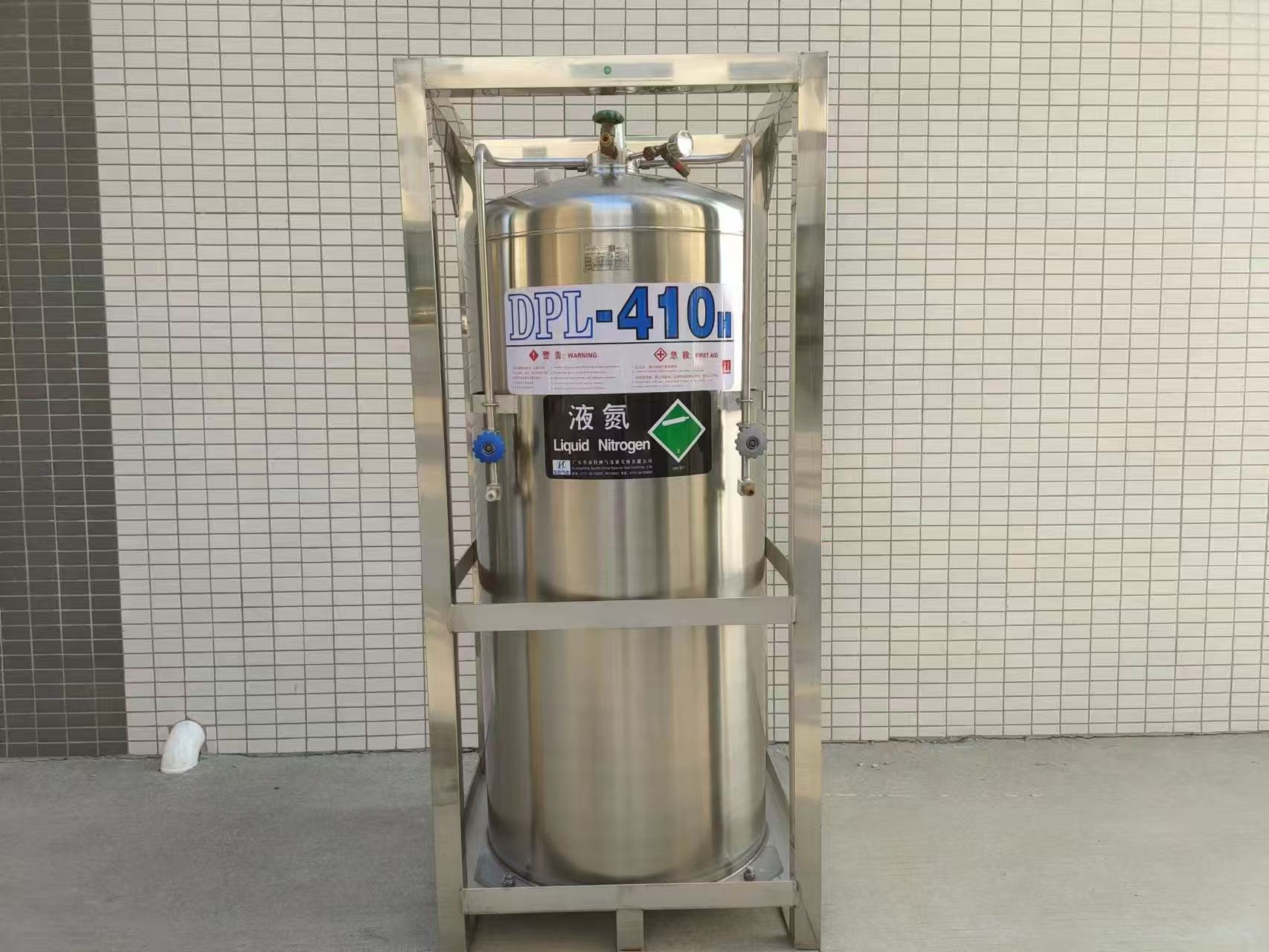
Heavy manufacturing and large-scale processing require robust, high-volume supply chains. A heavy-duty 410l cryo dewar flask meets these rigorous demands. These vessels feature heavily reinforced outer shells to withstand industrial wear and tear. They carry high Maximum Allowable Working Pressure (MAWP) ratings, making them suitable for high-flow gas withdrawal. The base designs are fully forklift-compatible for safe loading and transport. These units serve as reliable bulk gas supplies for laser cutting, food freezing, and large-scale environmental testing chambers. Moving a 410L unit requires specific handling protocols. Operators must use pallet jacks or forklifts rated for the gross weight of a fully loaded vessel. You cannot manually tip or roll these units.
Capacity Model | Primary Use Case | Key Structural Features | Mobility Profile |
|---|---|---|---|
175L Vacuum-Insulated | Pilot plants, localized LN2 distribution | Balanced footprint, standard plumbing | Moderate; requires handling carts |
210L Portable Laboratory | Clinical storage, high-turnover labs | Ergonomic valves, integrated base | High; built-in caster wheels |
410L Heavy-Duty Cryo | Industrial manufacturing, bulk transport | Reinforced shell, high MAWP rating | Low; requires forklift or pallet jack |
The Static Evaporation Rate (SER) is the primary metric for thermal efficiency. It measures how much cryogenic liquid boils off and escapes as gas over a 24-hour period under normal conditions. Manufacturers express this as a percentage of the total volume or in liters per day. A lower SER indicates superior insulation. Holding time refers to how long the vessel can store the liquid before it completely evaporates. You must calculate acceptable boil-off rates against the cost of lost cryogenic liquid. A cheaper vessel with a high SER costs significantly more in wasted gas over its lifecycle. Always request verified SER data before procurement. Test conditions matter. Ensure the manufacturer's SER data reflects ambient temperatures similar to your facility's actual environment.
Pressure ratings dictate how the vessel interacts with your facility's infrastructure. The Maximum Allowable Working Pressure (MAWP) specifies the highest internal pressure the vessel can safely contain. You must match this rating to your downstream equipment. Low-pressure vessels, typically rated around 22 psi, are ideal for simple liquid dispensing into open containers. High-pressure vessels, rated at 230 psi or 350 psi, are necessary for forcing liquid through long piping runs or supplying high-volume gas to industrial machinery. Selecting the wrong MAWP leads to equipment failure or severely restricted flow rates. If you connect a low-pressure vessel to a high-pressure laser cutter, the machine will constantly shut down due to insufficient gas supply.
The quality of the manifold directly impacts daily usability and safety. Industrial models require dual liquid and gas valves for versatile operation. Operators need the ability to draw liquid directly or pull vaporized gas from the headspace. Accurate differential pressure liquid level gauges are mandatory. They provide real-time data on the remaining payload without requiring operators to open the vessel. Evaluate the ergonomic placement of these valves. Hard-to-reach valves increase the risk of operator fatigue and accidental cryogenic exposure during routine tasks. Look for color-coded valve handles. Standard industry practice uses blue for liquid, green for vent, and silver for pressure building. This visual system prevents operators from opening the wrong valve during fast-paced operations.
Cryogenic storage involves significant expansion ratios. Liquid nitrogen expands nearly 700 times its volume when turning into gas. Mandatory safety features manage this expansion safely. Primary pressure relief valves (PRVs) automatically vent excess gas to maintain safe internal pressures. Secondary rupture discs act as fail-safes if the primary PRV malfunctions. Procurement teams must ensure all vessels comply with relevant regional standards. Look for ASME, DOT, or TPED certifications. Non-compliant vessels pose severe safety risks and violate facility insurance policies. Inspect the PRVs regularly. Ice buildup on a PRV indicates a slow leak that requires immediate maintenance. Never cap or plug a venting PRV under any circumstances.
No vacuum insulation lasts forever. Facilities must plan for vacuum degradation over a 5-to-10-year horizon. Even with chemical getters, micro-leaks and outgassing eventually compromise the annular space. The most obvious sign of failure is sweating or heavy frost building up on the outer shell. This indicates that ambient heat is reaching the inner vessel. When this occurs, you face a choice. You can pay for specialized vacuum re-pumping services, or you can replace the unit entirely. Factor this inevitable maintenance into your long-term operational planning. Re-pumping requires taking the vessel out of service for several weeks. You must maintain backup storage capacity to keep your facility running during this maintenance window.
Cryogenic storage introduces specific infrastructure demands. You cannot simply place these vessels in any available corner. Proper ventilation is a strict requirement. Expanding inert gases displace oxygen, creating severe asphyxiation hazards. Facilities must install oxygen depletion sensors in storage areas. Operators require specialized Personal Protective Equipment (PPE), including cryo-gloves, face shields, and heavy aprons. Heavy-duty models exert significant point loads on flooring. You must verify that your facility's floor load-bearing limits can support fully loaded 400L+ vessels before taking delivery. A full 410L vessel weighs over 1,000 pounds. Moving this weight across uneven floors or over thresholds requires specialized ramps and heavy-duty handling equipment.
Purchasing decisions require balancing competing physical realities. There is a direct trade-off between holding time and usable internal volume. Thicker insulation layers improve holding times but reduce the internal capacity for a given external footprint. You must also weigh upfront capital expenditure against long-term gas savings. Premium vessels cost more initially but feature superior vacuum integrity and lower SER. They save money over time by reducing boil-off losses. Analyze your facility's consumption rates to determine which side of this trade-off makes the most financial sense. If you empty the vessel every two days for production, a slightly higher SER matters less. If you store biological samples for months, investing in the lowest possible SER is mandatory.
Audit your current cryogenic consumption logs to establish a baseline for acceptable boil-off rates before evaluating new equipment.
Measure your facility's doorway widths, elevator capacities, and floor load-bearing limits to ensure compatibility with larger vessel footprints.
Consult manufacturer specification sheets to compare Static Evaporation Rates (SER) and Maximum Allowable Working Pressure (MAWP) ratings across different models.
Verify all required safety certifications, including ASME or DOT compliance, and inspect the primary pressure relief mechanisms before requesting a formal quote.
A: Both use double-wall vacuum insulation. A standard thermos is designed for consumer beverages and uses basic materials. An industrial dewar flask is engineered for extreme cryogenic temperatures. It utilizes heavy-duty stainless steel, advanced multi-layer insulation (MLI), chemical getters to maintain the vacuum, and specialized pressure relief systems to handle the massive expansion ratios of liquefied gases.
A: A high-quality industrial vessel typically maintains its vacuum for 5 to 10 years under normal operating conditions. Chemical getters inside the vacuum space absorb outgassed molecules to extend this lifespan. Rough handling, physical impacts, or extreme environmental conditions cause micro-leaks, which degrade the vacuum much faster.
A: Cryogenic liquids constantly absorb small amounts of heat and boil off into gas. This gas expands rapidly. Liquid nitrogen expands nearly 700 times its volume. A pressure relief valve (PRV) safely vents this expanding gas. Without a PRV, the internal pressure builds until the vessel catastrophically ruptures.
A: An airtight stopper traps the continuously boiling gas inside the vessel. This creates a highly dangerous pressure vessel scenario. The stopper insulates the neck while remaining loose enough to allow expanding gases to vent past it naturally. This prevents explosive pressure buildup in non-pressurized storage models.
A: Industrial vessels use differential pressure liquid level gauges. These gauges measure the pressure difference between the liquid at the bottom of the tank and the gas at the top. The gauge translates this pressure differential into an accurate volume reading. Operators check levels without opening the vessel and introducing ambient heat.
A: Sweating or heavy frost on the outer shell indicates a failure of the vacuum insulation. When the vacuum degrades, ambient heat rapidly conducts through the walls to the cryogenic liquid. The extreme cold transfers to the outer shell, freezing the moisture in the ambient room air. The vessel requires immediate repair or replacement.
A: Yes, technicians can repair many industrial metal vessels. They attach a vacuum pump to the vessel's evacuation port and re-pump the annular space. They also replace the chemical getters. If the vacuum loss results from a structural crack or severe physical damage, replacement is usually more cost-effective and safer.

 yongy0223@gmail.com
 +86-17693104145
 Lanzhou New Area, Lanzhou City, Gansu Province, on the second floor to the east of New Harbor Road, to the east of Building Materials Road No. 2, to the west of Qilian Mountain Avenue (Jingqi Road)


