


Views: 0 Author: Site Editor Publish Time: 2026-08-26 Origin: Site


Thermal efficiency dictates the success of any cryogenic storage operation. Substandard insulation or improper vessel sizing leads directly to rapid boil-off. This continuous evaporation causes financial loss and severely compromises sample integrity. Liquid gases like nitrogen, oxygen, argon, helium, and hydrogen require specific containment strategies due to their extreme boiling points. Facility managers and laboratory directors face a constant balancing act. They must align static hold times, working volumes, and footprint constraints across varying cryogenic gases. Overcapitalizing on unnecessary capacity wastes floor space and drains operational budgets through excessive evaporation.
Selecting the right equipment requires a systematic approach. You must evaluate internal dimensions, empirical performance metrics, and specific facility requirements. We will evaluate different storage vessels, from small benchtop units for temporary transport to industrial-scale storage for continuous supply, matching physical footprint with thermal performance. By understanding the mechanics of vacuum insulation and material properties, you can optimize your cryogenic infrastructure for both safety and efficiency.
Capacity Must Align with Consumption: Oversizing a vessel leads to unnecessary evaporation losses and higher CapEx, while undersizing increases refill frequency, operational downtime, and handling risks.
Insulation Technology Dictates Performance: Multi-layer vacuum insulation (MLI) is non-negotiable for extended hold times exceeding 30 days without additional coolant replenishment; vacuum integrity is the primary indicator of vessel lifespan.
Application Specificity is Critical: A liquid nitrogen dewar flask requires different venting, material specifications, and handling protocols compared to vessels holding liquid helium, liquid argon, or liquid hydrogen.
Safety and Compliance are Mandatory: Proper pressure relief systems, vented lids, and facility oxygen-depletion monitoring are required regardless of the vessel's footprint.
Theoretical maximum storage duration assumes the vessel remains sealed and undisturbed in a climate-controlled environment. This metric is known as the static hold time. Manufacturers test static hold time under strictly controlled ambient conditions, typically at 20°C and standard atmospheric pressure. Realistic operational duration, or working time, drops significantly in a real-world environment. Every time you open the lid, access the inventory, or agitate the vessel, ambient heat enters the system. Removing inventory racks or dipping ladles introduces massive thermal loads. You must calculate your working time based on daily access frequency rather than relying solely on static hold specifications. A vessel rated for 120 days of static hold might only provide 40 days of actual working time in a high-traffic biobank.
Acceptable loss rates depend on the specific heat of vaporization for your target cryogenic liquid. Liquid helium boils off much faster than liquid nitrogen under the exact same thermal load. You must calculate these evaporation rates to predict replenishment schedules accurately. High thermal efficiency minimizes this continuous loss. A vessel with a high evaporation rate forces you to purchase more liquid gas over the year. This operational expense quickly eclipses the initial purchase price of the equipment. Understanding the physical properties of the gas you intend to store dictates the level of insulation required.
Cryogenic Liquid | Boiling Point (1 atm) | Latent Heat of Vaporization | Liquid-to-Gas Expansion Ratio |
|---|---|---|---|
Liquid Nitrogen (LN2) | -196°C (-320°F) | 199 kJ/kg | 1:694 |
Liquid Oxygen (LOX) | -183°C (-297°F) | 213 kJ/kg | 1:860 |
Liquid Argon (LAr) | -186°C (-302°F) | 163 kJ/kg | 1:840 |
Liquid Helium (LHe) | -269°C (-452°F) | 21 kJ/kg | 1:754 |
Material selection impacts both structural integrity and thermal performance. Aluminum offers a lightweight profile. It serves well for standard laboratory use and frequent manual transport. Spun aluminum construction eliminates heavy welds, reducing overall weight and minimizing potential leak points in the vacuum space. However, aluminum is highly thermally conductive, requiring specialized neck tube materials to prevent heat transfer. Stainless steel provides superior durability and structural rigidity. You need 304L or 316L stainless steel for high-capacity storage, high-pressure applications, or corrosive environments. Stainless steel withstands the mechanical stress of pressurized dispensing and heavy industrial use, though it significantly increases the empty weight of the vessel.
These units prioritize high portability and manual handling. They excel at flash-freezing samples and facilitating short-term transport between facility zones. The 1L to 10L range represents the most common form in laboratory settings. Researchers use them daily for dermatology procedures, metallurgical shrinking of small bearings, and biological sample transfer. These vessels often feature foam neck plugs, loose-fitting caps, and vented lids. This specific design reduces evaporation rates while inherently preventing dangerous pressure build-up from expanding gases. Wide-neck designs allow for easy and rapid sample retrieval without specialized tools. The outer shells utilize ribbed aluminum to provide structural strength without adding unnecessary weight.
Handling these smaller units requires specific protocols. Operators manually pour liquid from these flasks into secondary containers. This process demands specialized tipping stands for units over 25 liters to prevent ergonomic injuries and uncontrolled spills. The insulation in these smaller units relies heavily on the vacuum space, as there is less physical room for thick layers of multi-layer insulation. Consequently, their static hold times range from a few days to a few weeks, necessitating frequent replenishment from a larger bulk source.
Mid-range storage requires a different approach to mobility and dispensing. A compact 100l mini dewar flask suits clinical biobanking and moderate industrial use. It works perfectly where space remains constrained but higher volume is necessary. These units feature maneuverability on reinforced polyurethane casters. The center of gravity remains low to prevent tipping during transport across uneven facility floors or elevator thresholds.
Pressurized liquid dispensing options improve operational safety by eliminating manual pouring entirely. These liquid cylinders utilize internal pressure-building circuits. A small amount of liquid vaporizes and routes back into the headspace of the tank, creating head pressure. This pressure forces the liquid up a dip tube and out through a controlled dispensing valve. Operators can attach phase separators to the dispensing hose to ensure a steady stream of liquid rather than a dangerous mixture of liquid and high-velocity gas. These units offer an optimal balance of physical footprint to static hold time, making them ideal for intermediate storage hubs in large research facilities.
High-volume industrial applications demand robust, stationary solutions. Long-term centralized biobanking, laser cutting operations, and continuous-supply manifold systems rely on microbulk storage. A large-capacity 1000l cryogenic dewar flask features heavy-duty stainless steel construction. It includes integrated pressure building circuits with external vaporizer coils to maintain consistent flow rates during high-demand applications.
Dual relief valves protect the structural integrity of the massive inner tank. If the primary valve freezes or fails, the secondary valve or rupture disc engages to prevent catastrophic over-pressurization. Telemetry systems allow for precise remote level monitoring. These systems use differential pressure gauges to calculate the exact liquid level based on the hydrostatic head pressure of the fluid. The telemetry unit transmits this data via 4-20mA signals or cellular networks to gas suppliers. This prevents unexpected run-outs and automates the delivery scheduling process, ensuring uninterrupted facility operations.
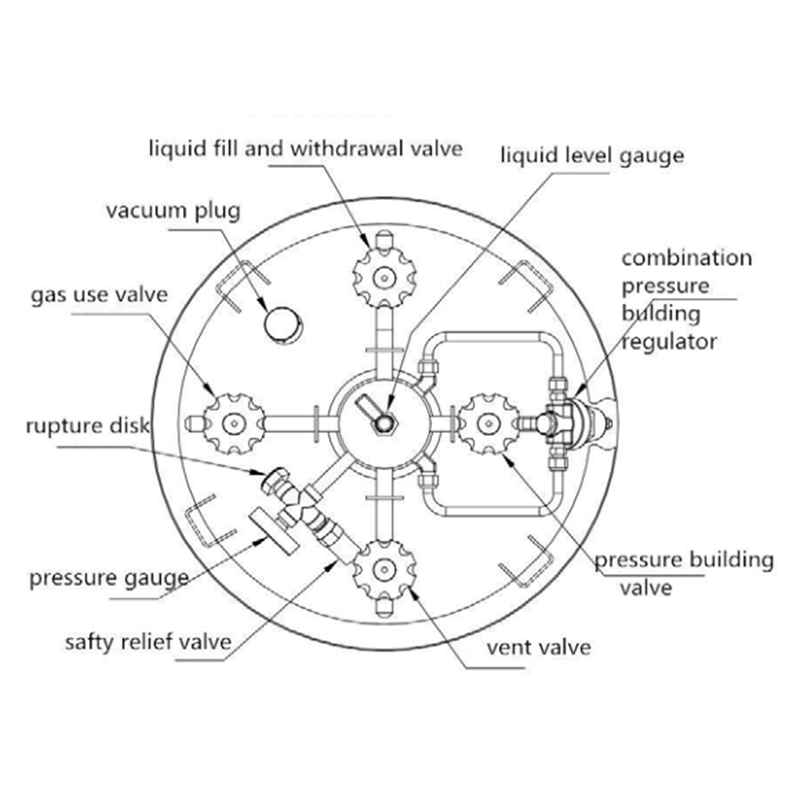
Internal geometry dictates your inventory capacity and retrieval efficiency. Standard 4.5-inch necks suit basic lab use and small canister storage. Custom 96-inch industrial vessels handle massive biological inventories stored in complex racking systems. Depth can reach up to 20 feet for specialized shrink-fitting applications in aerospace manufacturing. You must match these internal dimensions to your specific inventory racking systems, cryoboxes, or industrial components. A mismatch results in wasted internal volume and increased thermal exposure during difficult retrievals. Narrow neck designs restrict access but significantly improve thermal efficiency by minimizing the surface area exposed to ambient temperatures.
The neck tube acts as the primary thermal bridge between the ambient environment and the cryogenic liquid. Its diameter and material directly dictate the baseline evaporation rate. A narrower neck reduces heat transfer but restricts physical access. Manufacturers often use G-10 epoxy fiberglass composite for neck tubes in a high-quality liquid nitrogen dewar flask. This material offers high tensile strength and extremely low thermal conductivity. It isolates the inner tank from the outer shell far better than standard steel. The bonding process between the G-10 neck tube and the aluminum inner vessel requires specialized cryogenic adhesives that will not crack or degrade under extreme thermal cycling.
Multi-layer insulation (MLI) combined with chemical getters maintains the vacuum space. MLI consists of alternating layers of reflective aluminum foil and low-conductivity fiberglass paper. The foil reflects radiant heat, while the fiberglass paper prevents conductive transfer between the foil layers. A standard vessel may contain anywhere from 40 to 80 layers of MLI wrapped tightly around the inner tank. Getters absorb outgassed molecules to maintain the vacuum over years of use. Palladium oxide getters specifically target hydrogen gas outgassing from the metal walls, while zeolite packets absorb stray moisture and atmospheric gases.
You must test for vacuum degradation regularly to ensure operational safety and efficiency. Follow these steps to evaluate vacuum integrity:
Perform a visual inspection of the outer shell for any localized sweating, frost buildup, or cold spots, which indicate a direct thermal short.
Conduct a boil-off test by weighing the vessel empty, filling it completely, and weighing it again after 24 hours to calculate the exact mass of gas lost.
Compare the calculated evaporation rate against the manufacturer's original specifications to determine the percentage of vacuum degradation.
Inspect the vacuum port and pump-out plug for any signs of tampering, mechanical damage, or seal failure.
Dewars designed for pouring or dipping liquid feature different structural reinforcements than vapor-phase units. Liquid-phase storage submerges samples directly in the cryogenic fluid. This guarantees a temperature of -196°C but introduces the risk of cross-contamination between biological samples if liquid nitrogen penetrates the sample vials. Vapor-phase sample storage suspends inventory above the liquid pool. Vapor-phase units require specialized internal platforms and highly conductive internal walls, often utilizing aluminum heat transfer fins. These fins wick the cold temperatures from the liquid pool at the bottom up to the top of the storage racks, maintaining a uniform -190°C environment without the samples ever touching the liquid.
Stationary cryogenic tanks require permanent infrastructure. They demand dedicated concrete pads, extensive vacuum-jacketed piping, and complex zoning permits. Installing a bulk tank involves heavy cranes, specialized rigging, and significant facility downtime. Flasks offer modularity. You can relocate them as facility layouts change or production lines move. A dewar flask requires no permanent installation. You simply roll it into place, connect the manifold, and begin operations. This flexibility proves invaluable in rapidly scaling laboratories or dynamic manufacturing floors where space allocation shifts frequently.
Advanced microbulk systems require significant upfront capital expenditure. However, they lower long-term operational costs by reducing delivery frequency and allowing facilities to purchase gas at bulk pricing rates. Smaller flasks cost less initially. Yet, they incur higher operational costs due to frequent deliveries, hazardous material transport fees, and strict coolant replenishment schedules. You must calculate the break-even point based on your monthly gas consumption volume. Facilities consuming thousands of liters per month will quickly recoup the cost of a microbulk system, while low-volume clinics are better served by portable flasks.
You face a strict physical trade-off between mobility and thermal efficiency. Highly portable units sacrifice insulation thickness to save weight and reduce the external footprint. This reduces the static hold time. High-efficiency units feature thick insulation spaces, heavy metal construction, and massive internal volumes. They maximize hold time but are difficult to relocate without heavy machinery or specialized pallet jacks. You cannot achieve maximum portability and maximum hold time in the same vessel. Engineering constraints force a compromise based on your primary operational requirement.
Feature | Portable Flasks (10L - 100L) | Microbulk Flasks (1000L) | Stationary Bulk Tanks (3000L+) |
|---|---|---|---|
Facility Integration | None required. Roll into place. | Minimal. Requires flat, reinforced floor. | Extensive. Concrete pads, fencing, permits. |
Delivery Method | Cylinder exchange or manual fill. | Pump truck delivery via external fill port. | Dedicated bulk tanker truck delivery. |
Piping Requirements | Direct connection or manual pour. | Short manifold or direct equipment line. | Extensive vacuum-jacketed piping network. |
Primary Advantage | Maximum mobility and low initial cost. | Balance of volume and modularity. | Lowest cost per liter of gas. |
Cryogenic liquids expand massively upon vaporization. Liquid nitrogen expands at a ratio of nearly 700 to 1 when converting to gas at room temperature. This rapid expansion displaces breathable air instantly, creating a severe asphyxiation hazard in confined spaces. You must install ambient oxygen monitors in all storage areas. Mount these sensors at breathing level, as cold nitrogen gas is denser than air and will pool near the floor before filling the room. Set the monitors to trigger audible and visual alarms if the oxygen concentration drops below 19.5%.
Calculate facility ventilation rates based on the maximum potential spill volume of your chosen vessel. Ensure your HVAC system can perform the necessary air changes per hour (ACH) to mitigate asphyxiation risks. If a 100L vessel fails completely, it will produce approximately 70,000 liters of nitrogen gas. Your exhaust fans must be capable of clearing this volume rapidly. In many jurisdictions, emergency exhaust systems must tie directly into the oxygen monitoring relays to activate automatically during a leak.
Expanding gases cause catastrophic over-pressurization if trapped. Open lab dewars use loose-fitting lids to vent gas safely. You must never seal an open-neck dewar tightly with a custom plug or heavy weight. Sealed, pressurized cylinders require mechanical fail-safes. Dual pressure relief valves and rupture discs are mandatory on closed systems. The primary relief valve vents normal operational pressure build-up. The secondary rupture disc acts as a final fail-safe, bursting at a higher pressure rating if the primary valve fails. Inspect these valves regularly for ice buildup. Frozen relief valves cannot vent pressure and create an immediate explosion hazard. Clear any condensation or frost from the valve bodies daily.
Standardize your coolant replenishment workflows. This mitigates frostbite and musculoskeletal injuries. Require specific personal protective equipment for all operators handling cryogenic liquids. Personnel must wear loose-fitting cryo-gloves. Loose gloves allow the operator to throw them off instantly if liquid splashes inside. Full face shields are mandatory to protect the eyes and face from rapid expansion splashes. Operators must wear closed-toe shoes and heavy aprons. Use ergonomic handling equipment like roller bases and tipping stands for heavy manual units. Never drag a vessel across the floor. Mechanical shock damages the internal G-10 neck tube, breaks the getter packets, and destroys the vacuum seal permanently.
Take these immediate next steps to secure your cryogenic storage infrastructure, optimize your daily gas consumption, and ensure absolute facility safety:
Conduct a comprehensive facility boil-off audit to measure current evaporation losses, weigh existing vessels, and identify failing equipment that requires immediate replacement.
Review local safety ventilation codes against your maximum liquid storage capacity to ensure your HVAC system meets the required air changes per hour for emergency spill scenarios.
Consult with manufacturers regarding custom manifold integrations, specific neck diameter sizing for your inventory racks, and phase separator attachments for liquid dispensing.
Upgrade current telemetry systems to remote level monitoring with 4-20mA outputs to prevent unexpected run-outs and automate your bulk delivery schedules.
A: Cryogenic tanks are large, stationary vessels requiring permanent infrastructure, concrete foundations, and vacuum-jacketed piping. They handle massive volumes for industrial supply. Dewar flasks are portable or semi-portable containers. They range from small benchtop units to 1000L microbulk systems. Flasks offer modularity, utilize casters for mobility, and do not require permanent facility integration.
A: Hold times vary drastically by design and daily usage. Small, open-neck lab dewars may hold temperature for just a few days. Sealed units with multi-layer vacuum insulation (MLI) achieve static hold times exceeding 30 days. High-grade models can maintain temperature for months without additional coolant replenishment, assuming the vacuum remains intact and the lid remains closed.
A: Large-capacity vessels require strict mechanical fail-safes. They must feature dual pressure relief valves to vent expanding gases automatically. Rupture discs provide a secondary emergency pressure release if the primary valves freeze. Accurate liquid level gauges, pressure building regulators, and integrated telemetry are also required to prevent overfilling and monitor boil-off rates safely.
A: No. Doing so introduces severe safety risks. Liquid oxygen (LOX) creates extreme combustion hazards. Materials, hydrocarbons, and residues safe for nitrogen can ignite violently in the presence of LOX. Vessels holding liquid oxygen require specific material compatibility, specialized pressure relief valves, and rigorous oxygen-cleaning protocols to prevent catastrophic cross-contamination and fire.
A: Sweating or exterior frost is a primary symptom of vacuum failure. It indicates that the multi-layer insulation has been compromised. Ambient heat is now conducting directly through the outer shell to the inner vessel. This causes rapid boil-off, destroys the static hold time, and means the vessel requires immediate repair or replacement.
A: A well-maintained vacuum-insulated vessel typically lasts between 7 and 15 years. Lifespan depends heavily on vacuum degradation and getter performance. Rough handling, dropping, or dragging accelerates vacuum loss by damaging the neck tube. Regular maintenance schedules, visual inspections, and proper handling protocols significantly extend the operational life of the equipment.

 yongy0223@gmail.com
 +86-17693104145
 Lanzhou New Area, Lanzhou City, Gansu Province, on the second floor to the east of New Harbor Road, to the east of Building Materials Road No. 2, to the west of Qilian Mountain Avenue (Jingqi Road)


