


Views: 0 Author: Site Editor Publish Time: 2026-08-19 Origin: Site


Liquid nitrogen boils at -196°C (-320°F or 77K). Constant evaporation remains an inevitable physical reality in cryogenic storage. The quality of your storage vessel stands as the only barrier against rapid product loss. Manufacturers routinely advertise impressive Static Holding Time (SHT) metrics. However, these laboratory-condition numbers rarely align with actual field performance. Underestimating daily boil-off rates leads to increased operational costs, severely compromises biological sample integrity, and introduces significant safety hazards into the workspace.
Evaluating a dewar flask requires a strict technical assessment. You must analyze the thermodynamic design, capacity scaling, and specific use-case requirements. Daily access demands entirely different specifications than long-term static archiving. Understanding the physics of vacuum insulation and thermal bridging is mandatory. This technical evaluation ensures an evidence-based procurement decision that protects both your samples and your personnel.
SHT vs. Working Time: Manufacturer static holding times (often 10 to 200+ days for standard units) rarely reflect real-world working times, which drop significantly with frequent access and ambient temperature fluctuations.
Capacity-to-Evaporation Ratio: Larger volumes generally offer better thermal efficiency; industrial units can store LN2 for months, whereas 1L to 10L lab flasks may deplete in hours to a few weeks.
Neck Diameter Trade-off: A wider neck facilitates easier sample retrieval but acts as a primary thermal bridge, exponentially increasing the liquid nitrogen evaporation rate.
Safety & Compliance: Proper evaluation must account for gas expansion (1 liter of LN2 expands to 24.6 cubic feet / 0.7 cubic meters of gas), requiring strict ventilation, clean storage environments, and safety protocols regardless of the dewar's holding time.
Static Holding Time (SHT) represents a theoretical maximum duration. It measures how long a vessel retains liquid nitrogen under ideal conditions. SHT assumes the unit remains completely undisturbed. It relies on standard temperature and pressure (STP) without any lid removal, movement, or inventory changes. Manufacturers use SHT as a baseline engineering metric. It demonstrates the raw thermal efficiency of the vacuum insulation when the vessel sits isolated in a climate-controlled testing facility. To calculate SHT, engineers fill the vessel, allow it to reach thermal equilibrium, and weigh it over several days to determine the baseline evaporation rate.
Working Time reflects the practical operational duration on the floor. This metric accounts for daily lid removal, sample insertion, and the thermal shock introduced by warm inventory. Every time an operator opens the lid, ambient air rushes into the neck tube, instantly transferring heat to the cryogenic liquid. Buyers must calculate procurement needs based strictly on working time. Industry standards typically estimate working time at roughly 60% of the stated SHT. Frequent access, such as in active fertility clinics or busy research labs, can reduce this percentage even further. Relying solely on SHT guarantees inventory shortages and unexpected thermal degradation of stored materials.
Cryogenic storage relies entirely on double-walled vacuum insulation. The inner and outer vessels are separated by a high-vacuum annular space. This vacuum, typically pulled down to 10^-5 Torr or lower, virtually eliminates conductive and convective heat transfer. It prevents ambient room temperature from reaching the ultra-low 77K interior. Without this vacuum, liquid nitrogen would boil away in minutes, rendering the vessel useless.
Multi-layer super-insulation (MLI) wraps the inner vessel within that vacuum space. MLI consists of alternating layers of reflective aluminum foil and non-conductive fiberglass paper spacers. These layers reflect radiant heat away from the cold inner wall. The combination of high vacuum and MLI dictates the baseline evaporation rate. This rate, measured in liters per day, serves as the primary metric for comparing efficiency across different brands and models. Lower evaporation rates indicate superior thermodynamic construction and tighter manufacturing tolerances.
To maintain this efficiency, operators must understand the mechanics of heat ingress. Heat enters the system through three primary pathways:
Conduction down the neck tube connecting the inner and outer vessels.
Radiation across the vacuum space, which the MLI attempts to block.
Conduction through any internal structural supports required to stabilize the inner tank.
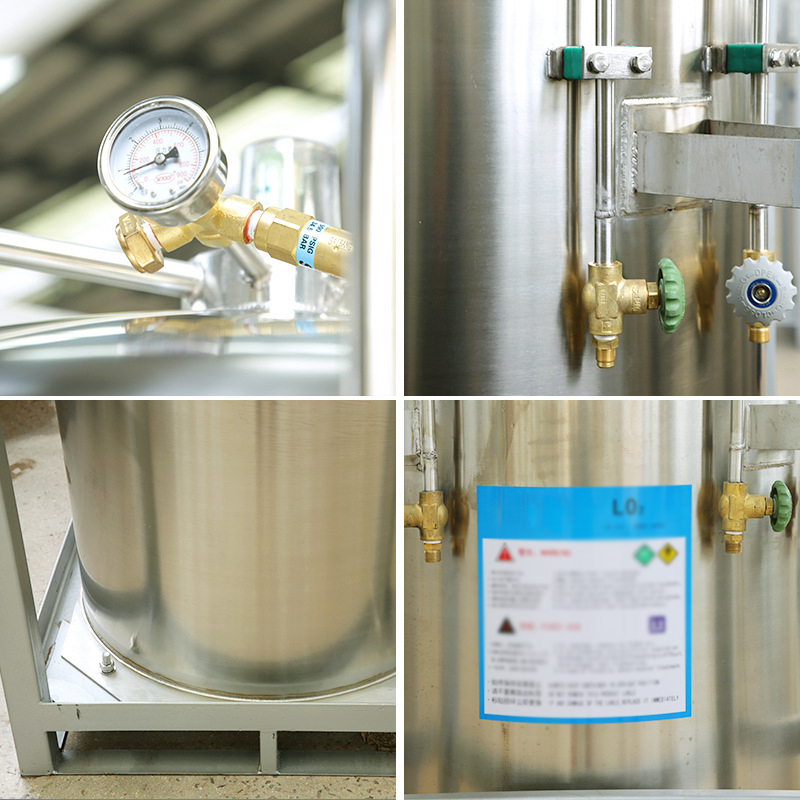
Benchtop laboratory flasks prioritize immediate access over long-term storage. A 1L open-top thermos offers minimal thermal protection. It may hold liquid nitrogen for only a few hours, making it suitable only for immediate pouring or short-duration bench experiments. A fully sealed 10L unit performs significantly better. It typically lasts around 30 days under strict static conditions. Working times for these units usually span one to two weeks, depending on how often technicians open them to retrieve small vials or cool specialized equipment.
These smaller units serve specific, short-term operational roles. Primary use cases include temporary transport between facilities, acting as cooling traps on high-vacuum systems, and supporting short-term benchwork requiring immediate cryogenic temperatures. Because they hold a small volume of liquid relative to their surface area, they are highly susceptible to ambient temperature changes. Operators handling these small flasks must follow strict procedures to maximize holding time:
Pre-chill the flask with a small amount of liquid nitrogen before filling it completely to reduce violent boiling.
Keep the insulated foam neck plug securely in place whenever not actively pouring or retrieving samples.
Store the flask away from direct sunlight, heating vents, or drafty corridors.
Never overfill the flask, as liquid contacting the warmer upper neck tube accelerates evaporation.
The 20L to 50L category balances portability with extended holding times. These units often boast an SHT of 60 to 120 days. They serve as the backbone for regional sample distribution, agricultural artificial insemination routes, and intermediate storage between bulk deliveries. A 35L unit, for example, provides enough thermal mass to survive a cross-country shipment while maintaining safe temperatures for biological samples.
Transporting cryogenic liquids demands structural reinforcements. These mid-range units feature strengthened neck tubes and robust outer shells to survive the vibrations and impacts of transit. Structural reinforcements inevitably impact thermal efficiency. Thicker neck materials or internal support struts create wider thermal bridges. This slightly increases the daily evaporation rate compared to stationary archival units. Buyers must accept this minor thermal penalty to gain transport durability. When evaluating mid-range units, check the empty weight and the static evaporation rate to find the right balance between portability and thermal performance.
Industrial operations require massive volume-to-surface-area ratios to maintain efficiency over long periods. A cryogenic 195l industrial dewar flask provides excellent holding dynamics. It suits medium-scale manufacturing processes, shrink-fitting metal components, and prolonged biological storage perfectly. The larger liquid mass inherently resists rapid temperature fluctuations. When you insert a room-temperature rack of samples into a 195L unit, the massive volume of surrounding liquid absorbs the heat with minimal overall boil-off compared to a smaller 30L tank.
Scaling up improves thermodynamic efficiency further. A high-vacuum 450l industrial dewar flask delivers exceptionally low daily evaporation rates. It functions optimally as a centralized laboratory supply vessel. The heavy-duty vacuum space minimizes heat ingress across a massive surface area. This ensures a stable liquid supply for high-demand distribution manifolds. These units often feature built-in pressure-building circuits and liquid withdrawal valves, allowing operators to pipe liquid nitrogen directly to secondary equipment without manually pouring or transferring the liquid.
Maximum passive efficiency requires maximum volume. A large-capacity 500l dewar flask achieves the highest volume-to-surface-area ratio available for standard movable cylinders. This geometry allows static storage spanning several months. The sheer mass of the liquid nitrogen acts as its own thermal buffer. These units require less frequent refilling, lowering long-term logistical overhead and reducing the labor hours spent managing cryogenic inventory. They are the standard choice for facilities that receive bulk liquid nitrogen deliveries only once a month.
Capacity Category | Typical Static Holding Time (SHT) | Estimated Working Time | Neck Diameter Impact | Primary Use Case |
|---|---|---|---|---|
1L - 10L (Small-Scale) | Hours to 30 Days | Hours to 14 Days | High impact; rapid boil-off when open | Benchwork, Vacuum Traps, Short Transport |
20L - 50L (Mid-Range) | 60 to 120 Days | 30 to 70 Days | Moderate impact; balanced for access | Sample Distribution, Intermediate Storage |
195L - 250L (Industrial) | 3 to 4 Months | 2 to 3 Months | Low impact due to high liquid mass | Manufacturing, Biological Repositories |
450L - 500L (High-Capacity) | 4 to 6+ Months | 3 to 4 Months | Minimal impact; highly stable thermal mass | Centralized Supply, Prolonged Archiving |
Vacuum integrity dictates the entire lifespan of the vessel. Buyers must rigorously evaluate manufacturer vacuum warranties. Standard industry warranties typically cover 3 to 5 years. A failing vacuum renders the unit completely useless. Evaporation rates will spike immediately upon vacuum degradation, turning a highly efficient storage tank into a rapid-boil hazard.
Premium units include chemical getters within the vacuum space. Metals naturally outgas microscopic molecules over time. Even microscopic amounts of hydrogen or oxygen outgassing from the stainless steel or aluminum walls will degrade the vacuum pressure. Chemical getters, such as palladium oxide, actively absorb these outgassed materials. They maintain the ultra-high vacuum environment for years. Always verify the inclusion of high-capacity getters during procurement. Without them, the vacuum will slowly soften, and your daily evaporation rate will creep higher year after year.
The neck tube represents the most vulnerable thermal point in any cryogenic design. It connects the ambient outer shell directly to the cryogenic inner vessel. This creates a mandatory thermal bridge. Manufacturers typically use G-10 fiberglass or specialized stainless steel alloys for the neck tube because these materials possess low thermal conductivity. Narrow necks maximize holding time by restricting heat ingress and minimizing the exposed surface area of the liquid.
Wide necks facilitate frequent sample manipulation. They allow rapid insertion of large inventory racks, square canister systems, and bulky biological samples. This convenience exponentially increases the evaporation rate. You must match the neck size to your specific operational requirement. Select a narrow neck (e.g., 50mm) for long-term archiving where you rarely access the samples. Choose a wide neck (e.g., 120mm or 216mm) only when daily sample retrieval demands it. Using a wide-neck unit for long-term static storage wastes liquid nitrogen and inflates your operational overhead.
Material choice impacts thermal performance, physical durability, and handling logistics. Aluminum offers a lightweight, highly portable solution. It serves as the standard material for biological storage and agricultural transport. Aluminum conducts heat faster than steel, requiring thicker neck tubes or specialized composite joints. However, its low weight makes manual handling significantly easier. Aluminum units are typically manufactured using a spinning process, eliminating longitudinal welds that could serve as weak points for vacuum leaks.
Stainless steel provides superior physical durability. It withstands heavy industrial use, forklift transport, and harsh manufacturing environments. Pressurized liquid withdrawal systems require stainless steel construction to handle the internal pressure safely. Steel possesses lower thermal conductivity than aluminum, allowing for thinner neck designs. This material choice increases upfront weight and requires mechanical lifting equipment for larger units, but it ensures decades of reliable service in demanding industrial applications.
Ambient conditions directly degrade holding times. High room temperatures force the vacuum insulation to work harder. Atmospheric pressure fluctuations alter the boiling point of the liquid. Placing units near HVAC vents, industrial ovens, or direct sunlight accelerates heat transfer. You must position storage vessels in climate-controlled, stable environments to achieve the manufacturer's stated evaporation rates.
Never store cryogenic vessels in wet or dirty areas. Moisture presents a severe operational hazard. Ambient humidity can condense and freeze around the cold neck opening. This creates dangerous ice plugs that seal the vessel. When an ice plug forms, the continuously evaporating nitrogen gas has nowhere to escape. Pressure builds rapidly inside the inner vessel until it ruptures catastrophically. Dirt and debris compromise lid seals, foul pressure relief valves, and damage the vacuum pump-down port. Optimal facility placement demands dry, clean, and temperature-stable zones.
If you suspect an ice plug is forming, follow these immediate operational steps:
Do not attempt to chip or smash the ice with a hard tool, as this can puncture the neck tube.
Evacuate non-essential personnel from the immediate area.
Use a flow of warm nitrogen gas or a specialized heated copper rod to slowly melt a vent hole through the ice.
Once vented, allow the ice to melt naturally or use a gentle heat gun, keeping the heat source moving to avoid damaging the fiberglass neck.
Review your facility's humidity controls to prevent future occurrences.
Liquid nitrogen presents severe asphyxiation risks. The expansion ratio is massive. One liter of liquid expands to 24.6 cubic feet (0.7 cubic meters) of gas at room temperature. A sudden spill, a tipped vessel, or a rapid boil-off event quickly displaces room oxygen. This creates a lethal, oxygen-deficient atmosphere without warning, as nitrogen gas is colorless, odorless, and tasteless.
Strict safety compliance is non-negotiable. Storage areas mandate active mechanical ventilation systems capable of multiple air changes per hour (ACH). You must install oxygen monitoring sensors at low elevations, as cold nitrogen gas is denser than air and will pool near the floor. Proper pressure relief valves and burst discs prevent catastrophic over-pressurization in sealed systems. Ignoring these protocols invites fatal facility accidents and severe regulatory penalties.
Operators must routinely identify failing units before they compromise valuable inventory. Visual inspections provide the first warning signs. Sweating or frost accumulation on the outer shell indicates a vacuum breach. Sudden, unexplained spikes in boil-off rates confirm insulation failure. A healthy unit remains completely dry and room-temperature on the outside. If you touch the outer shell and it feels ice-cold, the vacuum has failed.
Tracking liquid levels accurately is critical for maintenance. Do not rely solely on wooden dipsticks, as inserting a warm stick causes unnecessary boil-off and introduces moisture. Instead, weigh the smaller units or use ultrasonic level sensors for larger industrial tanks. Vacuum degradation requires an economic assessment. Standard aluminum lab units are typically replaced once the vacuum fails. The repair costs exceed the replacement value. Conversely, industrial-scale stainless steel units offer different options. Specialists can often re-pump the vacuum on large vessels through the dedicated pump-down port. This maintenance extends the lifespan of high-value industrial assets and restores their original thermal efficiency.
A vessel's holding time is never a static guarantee. It remains a dynamic variable dependent on capacity, engineering quality, and operational behavior. Relying solely on manufacturer specifications leads to critical inventory failures. You must evaluate the thermodynamic realities of your specific workspace, match the equipment to your access frequency, and implement strict environmental controls.
To ensure optimal cryogenic storage performance, take the following actions:
Audit your current liquid nitrogen consumption rates to establish a baseline daily evaporation metric for your facility.
Review technical specification sheets to verify the exact neck diameter and match it to your daily sample retrieval frequency.
Install low-level oxygen depletion monitors and upgrade mechanical ventilation in all designated storage areas.
Implement a routine weighing schedule to track liquid levels accurately without introducing warm dipsticks into the vessels.
Consult with cryogenic equipment specialists to determine facility-specific sizing based on the reliability of your local liquid nitrogen delivery schedule.
A: SHT is an undisturbed theoretical maximum duration at standard temperature and pressure. It assumes the lid remains closed permanently. Working Time accounts for daily operational access, lid removal, sample insertion, and ambient environmental changes. Working time usually results in a much shorter duration, often calculated at roughly 60% of the SHT.
A: Depending on the daily evaporation rate and vacuum quality, a 500L unit can hold liquid nitrogen for several months under strict static conditions. However, frequent operational use, liquid withdrawal, and ambient temperature fluctuations will significantly reduce this theoretical maximum duration.
A: Common culprits include frequent lid removal, inserting warm samples, and high ambient room temperatures. A wide neck diameter also accelerates evaporation. If you notice external frost or sweating on the outer shell, it indicates a failing vacuum seal, which causes rapid boil-off.
A: The neck acts as the primary point of heat transfer between the ambient environment and the cryogenic interior. Wider necks allow more ambient heat to enter the vessel. This significantly increases the daily evaporation rate compared to narrow-neck designs built for long-term static archiving.
A: Some high-value industrial stainless steel vessels can be successfully re-pumped by cryogenic specialists to restore vacuum integrity. However, standard aluminum laboratory units are typically discarded and replaced once the vacuum fails, as repair costs usually exceed the price of a new unit.
A: Indoor storage mandates active mechanical ventilation and low-level oxygen depletion monitors. The area must be strictly free of moisture and dirt to prevent dangerous ice plugs. These protocols safely manage the massive 1:700 liquid-to-gas expansion ratio and prevent asphyxiation hazards.

 yongy0223@gmail.com
 +86-17693104145
 Lanzhou New Area, Lanzhou City, Gansu Province, on the second floor to the east of New Harbor Road, to the east of Building Materials Road No. 2, to the west of Qilian Mountain Avenue (Jingqi Road)


