


Views: 0 Author: Site Editor Publish Time: 2026-06-17 Origin: Site


Facility managers and engineers routinely hit a critical operational transition point. Small-scale gas storage suddenly creates severe logistical bottlenecks. This friction prompts an immediate re-evaluation of your existing infrastructure. Both storage options utilize vacuum-jacketed insulation. They hold extremely cold liquefied gases safely. However, their core engineering and maximum pressure capabilities differ fundamentally. Their lifecycle resource demands also present opposing realities. Choosing the wrong vessel often leads to excessive evaporation. It can also cause unmanageable logistical delivery delays. We provide a strictly technical and operational evaluation framework. This guide helps procurement and engineering teams determine the optimal solution. You will learn to evaluate options based on withdrawal rates. You will also assess safety compliance and overall scalability. This ensures you align equipment directly to facility demands.
Scale and Pressure: A dewar flask is typically a smaller, unpressurized (or very low-pressure) vessel for manual handling or localized use, whereas a cryogenic tank is a high-volume, pressurized system designed for continuous piped distribution.
Boil-Off Gas (BOG): Cryogenic tanks offer superior BOG management for long-term storage, while dewars experience higher relative evaporation rates due to frequent physical access.
Total Cost of Ownership (TCO): Dewars have lower initial CapEx but higher per-liter gas delivery OpEx. Tanks require site preparation but dramatically reduce ongoing bulk gas costs.
Application: Dewars fit laboratories and small medical clinics; a liquid gas cryogenic tank is required for industrial manufacturing, bulk medical supply, and heavy energy sectors.
You must understand the distinct structural choices behind each vessel. Engineers design a dewar flask as an open-neck or loosely stoppered container. These non-pressurized vessels feature vacuum-insulated double walls. Typical capacities range from 5 to 50 liters. Specialized liquid cylinders can reach beyond 200 liters. We see specific structural limitations here. The design relies primarily on multi-layer insulation (MLI). It wraps the inner vessel in reflective foil layers. This stops radiant heat transfer effectively. However, the system lacks robust pressure-building circuits. You cannot easily automate gas flow. Users must manually decant the liquid product. This manual handling introduces thermal instability.
Conversely, a cryogenic tank represents a completely different engineering tier. We define it as a stationary or heavy-transport double-walled vessel. Capacities scale massively to meet industrial demands. Microbulk setups start around 1,000 liters. Heavy industrial bulk storage exceeds 100,000 liters. The architecture incorporates advanced mechanical elements. The outer jacket uses thick carbon steel. The inner vessel utilizes high-grade stainless steel.
Here are the primary components of bulk architecture:
Internal pressure-building vaporizers convert liquid into usable gas automatically.
Advanced telemetry systems provide real-time level and pressure monitoring.
Safety relief valve manifolds vent dangerous pressure spikes safely.
Vacuum-jacketed piping connections ensure seamless facility-wide distribution.
Robust trunnion mounts support the massive weight of the filled inner vessel.
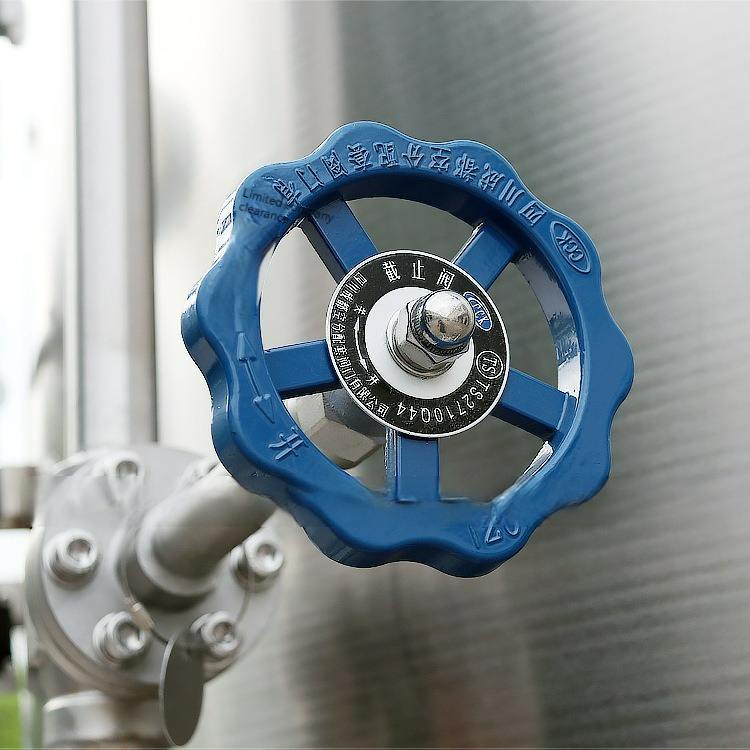
Pressure ratings dictate operational throughput entirely. A modern liquid gas cryogenic tank operates as a registered ASME-coded pressure vessel. They typically sustain operating pressures from 150 to over 500 psi. This high pressure allows for automated liquid-to-gas conversion. It pushes the gas through facility pipelines seamlessly. You do not need secondary mechanical pumping systems. The internal pressure does the work. Portable alternatives contrast sharply against this capability. They generally operate near atmospheric pressure. You cannot rely on them for high-pressure pipeline feeds.
Thermal efficiency determines your evaporation losses. We call this Boil-Off Gas (BOG). Let us compare static evaporation rates. Bulk storage units utilize expanded perlite insulation. They also employ advanced vacuum geometries between their double walls. This engineering achieves mathematically predictable, ultra-low BOG rates. You retain more usable product over extended periods.
Withdrawal patterns heavily impact this thermal efficiency. Portable units lose significant thermal stability during routine use. Operators frequently open them. They move them across facility floors constantly. Every physical interaction introduces ambient heat into the system. This drastically increases the relative evaporation rate. The liquid boils away faster.
Operational Performance Differences | ||
Performance Metric | Small Portable Vessel | Bulk Storage Vessel |
|---|---|---|
Maximum Pressure Capacity | Near atmospheric (up to ~20 psi) | 150 to 500+ psi (ASME coded) |
Boil-Off Gas (BOG) Rate | High relative to volume | Ultra-low and highly predictable |
Thermal Insulation Type | Multi-layer insulation (MLI) | Expanded perlite and high-grade vacuum |
Distribution Method | Manual decanting or low-flow | Automated high-pressure piping |
You must match your equipment directly to operational throughput. Over-specifying wastes valuable site space. Under-specifying stalls your production line continuously.
When should you specify the smaller option? They remain ideal for decentralized point-of-use operations. Biological sample preservation facilities rely on them heavily. University laboratories use them for small-scale experiments. Small-batch cryotherapy clinics prefer their manageable footprint. They prove optimal for restricted environments. Many facilities lack the physical footprint for bulk installations. They may also lack regulatory clearance for large piped systems. Portable units provide the perfect stopgap in these scenarios. You can maneuver them through standard laboratory doorways easily.
Continuous, high-volume demand requires a drastically different approach. You must specify a bulk system for heavy industrial tasks. Laser cutting requires uninterrupted gas flows to prevent metal slag. Hospital piped oxygen networks demand absolute reliability. Food freezing operations consume immense volumes of coolant daily. Any drop in flow ruins entire product batches.
Heavy-duty applications demand specific, robust configurations. Consider an LNG storage cryogenic tank as a prime example. These energy installations require massive energy density. They must maintain continuous high-capacity flow constantly. Stringent vaporization rates remain absolutely non-negotiable. Small containers cannot sustain this extreme level of thermal and mechanical stress. The sheer volume required dictates a massive stationary solution.
Equipment Application Chart | ||
Facility Use Case | Recommended Solution | Primary Justification |
|---|---|---|
University Research Lab | Small Portable Unit | Low volume demand, decentralized use, indoor constraints. |
Dermatology Clinic | Small Portable Unit | Manual decanting needed, highly localized application. |
Industrial Laser Cutting | Bulk Storage System | High pressure required, continuous pipeline feed essential. |
Regional Hospital Network | Bulk Storage System | High daily volume, strict life-safety reliability standards. |
Facility readiness determines how quickly you can deploy infrastructure. Bulk installations require significant civil engineering work. You must pour reinforced concrete pads. These pads must support extreme weight loads safely. You need secure safety fencing around the perimeter. Engineers must calculate safe distances to property lines. They must separate the installation from combustible materials. You must also ensure adequate truck access. Heavy bulk delivery vehicles require wide turning radiuses.
Portable containers demand far less site preparation. They require proper indoor ventilation. You must install oxygen depletion monitors in the storage rooms. However, you avoid major structural facility changes. You do not need civil engineering permits.
Safety and regulatory compliance present distinct challenges. Indoor handling carries specific risks. We look strictly at EHRS (Environmental Health and Radiation Safety) guidelines. Personnel must wear appropriate PPE at all times. Face shields and cryo-gloves remain mandatory. Manual decanting introduces serious asphyxiation risks in confined spaces. Liquid expands massively when converting to gas. This quickly displaces breathable oxygen.
Bulk installations follow entirely different regulatory frameworks. You must secure pressure vessel certifications before operation. Inspectors require routine safety valve testing logs. Your installation must comply strictly with international piping codes. Technicians must inspect the vacuum integrity annually.
Keep these best practices in mind during implementation:
Always verify floor load limits before moving portable units indoors.
Install dual oxygen sensors in any room housing liquefied gases.
Secure appropriate zoning permits before pouring concrete for bulk pads.
Map out delivery truck routes to avoid facility traffic bottlenecks.
Financial evaluation extends far beyond the initial purchase order. You must balance CapEx against long-term OpEx trade-offs. The break-even point becomes a critical operational metric. When does your current setup become inefficient? Frequent delivery schedules carry high operational expenses. Delivery logistics consume significant labor hours. Eventually, these logistics costs eclipse the upfront capital requirements of a bulk installation. You must calculate this crossover point accurately. A bulk system carries high installation costs. However, it drastically reduces your ongoing delivery expenditures over its lifespan. You order gas in massive, efficient quantities.
Sourcing the right equipment requires rigorous vendor evaluation. Selecting a reliable cryogenic tank manufacturer dictates your long-term success. You must evaluate several key factors during procurement. Check the quality of their factory vacuum testing. Ensure they guarantee the availability of replacement parts. Look for modern telemetry integration capabilities. Review their post-installation service agreements closely.
We recommend specific actions during the procurement phase. You should request verified BOG performance data upfront. Demand material certifications for all pressure-bearing components. These documents validate the manufacturer's engineering claims. Do not accept unverified thermal performance claims. Poor insulation quality leads to massive product loss over time.
Avoid these common sourcing mistakes:
Failing to account for facility growth when sizing the vessel.
Ignoring the proximity of authorized service technicians.
Overlooking the integration capabilities of existing telemetry systems.
The choice between a portable vessel and a bulk system is rarely a lateral choice. Your volume demand strictly dictates the correct path. Your required pressure parameters play an equal role. Long-term operating budgets ultimately finalize the decision. Deciding correctly prevents operational bottlenecks and wasted capital.
Take these actionable next steps to ensure operational efficiency:
Audit your current monthly gas consumption across all departments.
Calculate the evaporation losses stemming from your existing manual network.
Consult directly with your gas suppliers regarding bulk delivery logistics.
Hire qualified engineers for a comprehensive site sizing assessment.
A: Standard models cannot support pipeline pressure. Liquid cylinders offer low-pressure capabilities for localized applications. However, they completely lack the structural integrity for facility-wide distribution. They simply cannot match the sustained pressure and high flow rates of a dedicated bulk system.
A: A well-maintained bulk installation typically lasts 20 to 30 years or more. Their stationary nature protects them from physical damage. Portable units face constant physical wear. Their vacuum degrades faster from constant handling. Expect a functional lifespan of 5 to 15 years for portable models.
A: Engineers generally apply a standard rule-of-thumb metric. If your facility consistently exceeds several hundred liters per week, upgrading becomes economically viable. High weekly consumption creates logistical bottlenecks. A bulk installation stabilizes your supply chain and immediately reduces delivery-related operational expenses.

 yongy0223@gmail.com
 +86-17693104145
 Lanzhou New Area, Lanzhou City, Gansu Province, on the second floor to the east of New Harbor Road, to the east of Building Materials Road No. 2, to the west of Qilian Mountain Avenue (Jingqi Road)


