


Views: 0 Author: Site Editor Publish Time: 2026-06-10 Origin: Site


Boil-off gas and liquid loss create massive financial and operational stakes in cryogenic storage. Every hour heat penetrates a vessel, you lose valuable product to the atmosphere. Operational efficiency heavily depends on minimizing these daily thermal leaks. However, the storage duration of a vessel is never a single fixed number. It remains a dynamic variable. Thermodynamics, equipment engineering, and daily operational behavior constantly manipulate this duration. Understanding this physical reality separates successful inventory management from constant supply shortages. We introduce a practical framework for evaluating real-world holding times. You will learn how to analyze daily evaporation rates and thermal barriers. This approach helps buyers make highly informed procurement decisions. You can move past relying solely on ideal-condition spec sheets. Instead, you will build a resilient, highly efficient storage infrastructure tailored to actual facility demands.
Static vs. Dynamic: Manufacturer holding times (Static) rarely match real-world operational times (Dynamic/Working).
Evaporation is Inevitable: All tanks experience a Normal Evaporation Rate (NER); efficiency is about minimizing, not eliminating, this rate.
Sizing Matters: Oversizing a tank for low-volume usage leads to higher proportional evaporation waste.
Vacuum Integrity is Critical: A tank's lifespan and holding efficiency rely heavily on the quality of its vacuum insulation and maintenance schedule.
A major disconnect often exists between laboratory expectations and manufacturer specifications. Buyers frequently read a product manual, see a multi-month holding duration, and procure equipment based on those exact numbers. This misunderstanding easily leads to severe under-procurement. Facilities run out of essential gases much faster than anticipated. To prevent this scenario, you must clearly separate laboratory ideals from daily facility realities.
Static Holding Time (SHT) serves as the theoretical maximum duration. It measures how long a vessel holds cryogenic liquid under perfect environmental conditions. SHT assumes zero external operational interference. You do not open the access lid. You do not insert ambient-temperature samples. You do not withdraw liquid product. Manufacturers use SHT strictly as a baseline engineering metric. It proves the thermal integrity of the vacuum insulation before shipping.
Working or Dynamic Holding Time tells a completely different story. It defines the actual operational duration on your production floor. This metric factors in frequent lid openings and routine product dispensing. Inserting warm materials introduces immediate ambient heat into the extreme cold environment. Each user interaction degrades the internal temperature profile. The system must inevitably boil off liquid to re-stabilize its internal atmosphere.
As a general rule, expect a significant drop from static laboratory metrics. Working time usually hovers between 50% to 60% of static time. High-frequency usage or poor handling can push this ratio even lower. You should always calculate daily consumption requirements using these dynamic estimates to avoid sudden dry-outs.
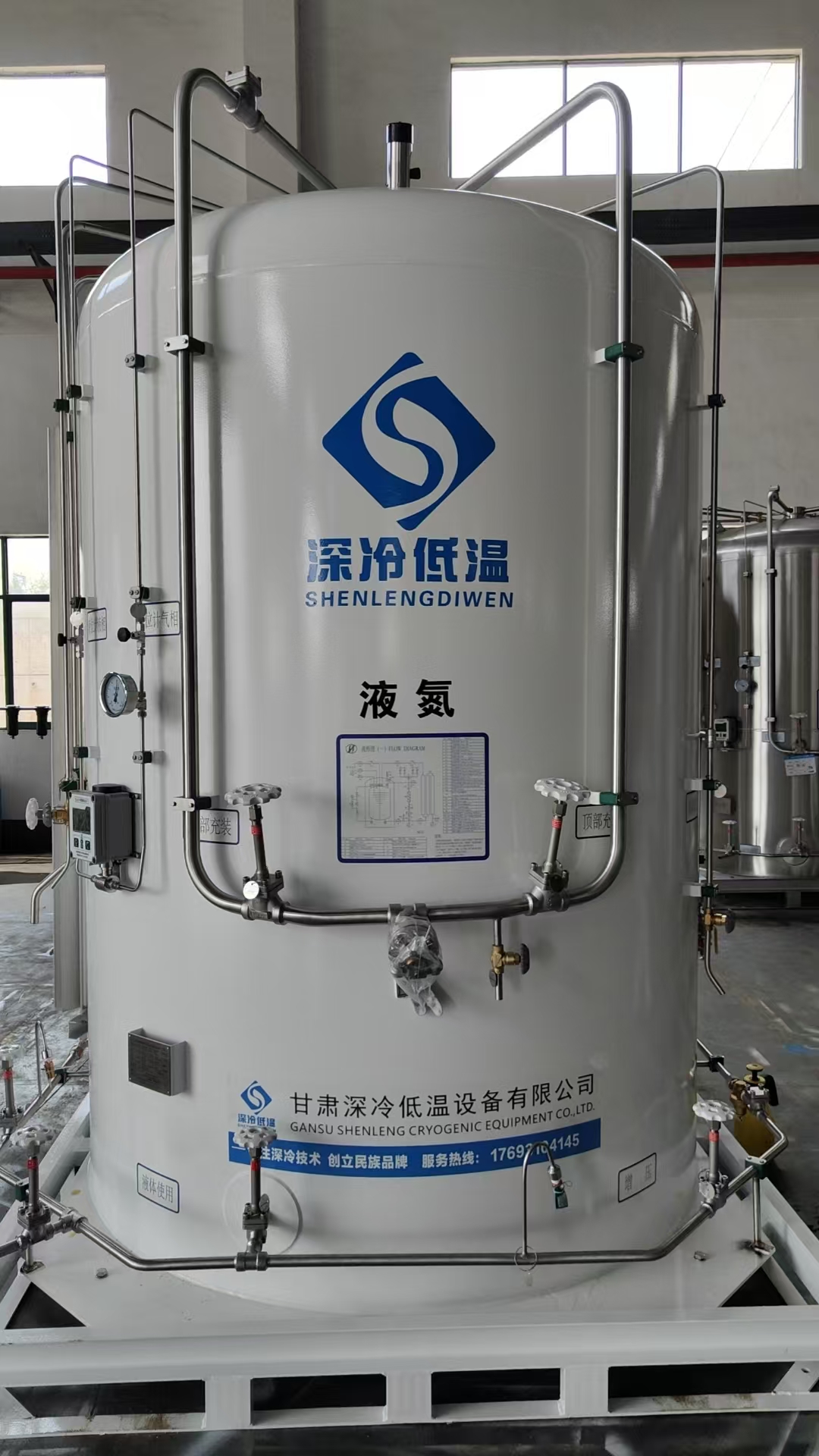
Storage duration scales dramatically alongside vessel size and fluid volume. Small micro or portable dewars usually hold between 5L and 50L. These compact units typically maintain liquids for a few weeks up to several months statically. However, they show extreme vulnerability to frequent lid openings. Their small thermal mass allows rapid heat penetration during routine sample retrievals.
Scaling up, a mid-size to large liquid gas cryogenic tank holds roughly 100L to 1,000L. These robust vessels can maintain liquids for several months under static conditions. Their thicker insulation layers handle ambient temperature swings much better than portable dewars. They serve perfectly for medium-draw industrial processes.
Bulk storage solutions exceeding 3,000L offer entirely different operational dynamics. These massive installations are capable of indefinite storage. This infinite retention only happens if facility consumption consistently outpaces the internal normal evaporation rate. The system naturally vents gas as you draw liquid.
Gas properties also heavily dictate these holding dynamics. Different elemental fluids possess unique boiling points and latent heat values. A liquid oxygen cryogenic tank holds fluids at -183°C. It experiences different thermal gradients compared to liquid nitrogen at -196°C. Liquid helium proves even more volatile at an extreme -269°C. Lower boiling points require far more aggressive insulation technologies to achieve similar holding times.
Vessel Category | Volume Range | Typical Static Holding Time | Estimated Dynamic Holding Time |
|---|---|---|---|
Portable Dewars | 5L - 50L | 3 - 10 Weeks | 1.5 - 5 Weeks |
Mid-Size to Large Industrial | 100L - 1,000L | 3 - 6 Months | 1.5 - 3 Months |
Bulk Storage Tanks | 3,000L+ | Months (NER dependent) | Indefinite (if usage outpaces NER) |
Thermodynamics never pause. Equipment engineers must utilize precise mechanical designs to fight continuous ambient heat penetration. The thermal efficiency of any modern storage system relies entirely on four critical design variables.
Multi-Layer Insulation (MLI) & Vacuum Quality: Engineers build an annular space between the inner pressure vessel and the outer shell. They fill this gap using alternating layers of highly reflective aluminum foil and low-conductivity spacer materials. Pulling a deep vacuum in this space virtually eliminates convective and conductive heat transfer.
Neck Tube Design: The neck tube represents the primary physical thermal bridge connecting the ultra-cold interior to the warm outside world. Narrow and exceptionally long neck tubes severely reduce downward heat leaks. Unfortunately, this narrow design also physically slows down liquid dispensing rates and restricts sample access.
Ambient Temperature & Environment: External surroundings directly impact the outer vessel shell temperature. Facility climate control plays a major protective role here. Direct sunlight baking an outdoor unit forces the internal vacuum to work much harder against continuous thermal radiation.
Normal Evaporation Rate (NER): Manufacturers calculate NER as the percentage of total liquid volume lost per day. It serves as the ultimate empirical benchmark for system efficiency. A lower NER indicates superior thermal retention and better manufacturing tolerances.
Purchasing the right equipment requires strictly aligning facility demands with mechanical capabilities. You want to avoid maintaining excess capacity while simultaneously preventing constant operational shortages. Proper alignment eliminates systemic waste entirely.
You must first align daily fluid consumption against overall vessel capacity. The decision logic remains quite simple but highly effective. Choose a size where your normal operational usage actively outpaces the daily evaporation rate. This exact alignment achieves near-zero wasted boil-off. If you consume 5% of your product daily but the vessel only evaporates 1%, you effectively waste zero gas to the atmosphere.
Choosing a highly reputable cryogenic tank manufacturer remains crucial for long-term success. Vendors vary widely regarding internal build quality and engineering tolerances. Consider these specific criteria during your initial vendor vetting process:
Vacuum Warranty Length: Longer warranties indicate higher manufacturer confidence in long-term annular seal integrity.
Pressure Test Standards: Request documented proof of factory hydrostatic or pneumatic pressure tests.
Regulatory Compliance: Ensure strict adherence to ASME, ISO, or regional pressure vessel safety codes.
Material Selection: Stainless steel construction offers superior durability and high corrosion resistance. Aluminum construction provides lighter transport weights and excellent thermal retention for portable units.
Telemetry and IoT Integration: Modern industrial facilities need continuous remote monitoring systems. These digital tools track differential pressure, monitor physical liquid levels, and instantly send alerts for anomalous gas spikes.
Even the best engineering specifications fail under poor daily operational practices. Several severe field risks actively destroy thermal efficiency. These variables drain expensive inventory much faster than expected.
Vacuum degradation stands as the leading cause of premature equipment failure. Industrial metals slowly release trapped molecules over time. This outgassing gradually destroys the annular vacuum. You might notice heavy external sweating or thick frost buildup. These visual cues signal a severe, immediate breach in insulation integrity.
Improper filling procedures introduce massive thermal shock to the system. Pumping sub-zero liquids directly into a warm inner vessel causes violent, immediate boil-off. The system sacrifices huge amounts of expensive liquid just to cool the internal walls. Operators must follow strict pre-cooling protocols to mitigate this violent thermal shock.
Unmaintained valves and fittings create silent, invisible micro-leaks. Pressure relief valves often seat improperly after venting excess gas. A faulty seal lets ultra-cold gas escape constantly. These continuous micro-leaks drastically reduce total holding times without triggering obvious alarms.
To secure your cryogenic tank investment, facilities must adopt strict risk mitigation strategies. Implement aggressive baseline preventative maintenance schedules. Conduct annual vacuum integrity testing to catch subtle outgassing early.
Implementation Risk | Visual / Operational Indicator | Mitigation Strategy |
|---|---|---|
Vacuum Outgassing | External sweating, heavy frost on the outer shell | Annual vacuum integrity testing, professional re-pumping |
Improper Filling Protocols | Violent venting, massive immediate liquid loss | Strict multi-stage pre-cooling before full liquid transfer |
Valve / PRV Micro-Leaks | Hissing sounds, continuous slow pressure drops | Routine seal inspections, proactive valve replacement |
Holding time relies on a careful balance of physics and facility behavior. You cannot expect static manufacturer metrics to perfectly match rugged daily operations. Achieving maximum efficiency means matching precise equipment engineering with strict operational workflows.
To move forward successfully, take these action-oriented steps. First, audit your current daily liquid consumption thoroughly. Second, track your actual working holding times to find hidden evaporation losses. Finally, consult a trusted vendor to model your exact dynamic requirements. Proper sizing and proactive maintenance ensure you only pay for the gas you actually use.
A: A high-quality industrial vessel typically exhibits a Normal Evaporation Rate between 0.5% and 2% per day. The exact percentage depends heavily on the total scale and insulation type. Superior multi-layer vacuum insulation easily keeps this evaporation rate near the lower end.
A: The most obvious signs remain highly visual. You will notice excessive external condensation or thick frost forming on the outer shell. Operationally, you will experience a sudden, drastic drop in holding time. The system will vent gas continuously as liquid boils off rapidly.
A: Yes. Keeping a vessel full dramatically increases its total thermal mass. A larger volume of cold liquid maintains temperature stability much better than a nearly empty container. It resists ambient heat penetration more effectively, extending the overall working holding duration significantly.

 yongy0223@gmail.com
 +86-17693104145
 Lanzhou New Area, Lanzhou City, Gansu Province, on the second floor to the east of New Harbor Road, to the east of Building Materials Road No. 2, to the west of Qilian Mountain Avenue (Jingqi Road)


