


Views: 0 Author: Site Editor Publish Time: 2026-06-24 Origin: Site


Deploying a cryogenic tank involves incredibly high stakes for any facility. Sub-optimal installation often results in excessive boil-off gas (BOG) losses. It can also create severe safety hazards and lead to costly regulatory compliance failures. Bridging the gap between procuring capital equipment and integrating it safely poses a major challenge. Facility managers must navigate complex engineering standards to integrate these storage vessels into live industrial, medical, or research environments. Without a highly detailed plan, minor logistical errors easily cascade into major operational roadblocks. Operational downtime caused by improperly configured storage systems creates cascading delays across the entire supply chain. This definitive guide provides a clear, step-by-step roadmap for your site preparation. You will learn compliant installation methods and strict safety protocols to protect your team. We will also show you exactly how to select the right manufacturing partner for long-term operational success.
Site readiness dictates success: Proper foundation engineering and logistical route planning prevent 80% of installation delays.
Compliance is continuous: Adherence to EIGA/OSHA/ASME standards applies not just to the hardware, but to ongoing operation and safe filling procedures.
Gas-specific requirements matter: A liquid oxygen cryogenic tank demands drastically different footprint clearances and material compatibility compared to inert gas storage.
Vendor capabilities extend beyond the build: Long-term operational value heavily depends on the manufacturer’s post-installation telemetry, maintenance, and training support.
How do usage patterns dictate tank selection? You must carefully match equipment specifications to actual facility consumption before you plan the installation. This prevents costly operational bottlenecks later.
Start by calculating the maximum allowable working pressure (MAWP). You need to align the MAWP and vaporization requirements directly to your peak draw rates. Undersized vaporizers cause severe pressure drops during high-demand periods. These pressure drops starve downstream equipment of required gas flows. For instance, laser cutting applications demand massive, instantaneous bursts of nitrogen gas. If your vaporizer cannot handle this rapid phase change, the entire system freezes up. Conversely, oversized tanks lead to stagnant liquid. Stagnant liquid generates excessive BOG losses as environmental heat slowly enters the system. We recommend analyzing historical flow data in standard cubic feet per hour (SCFH). This helps you balance peak demand against standard operational periods.
Handling a standard liquid gas cryogenic tank storing nitrogen or argon differs greatly from managing reactive gases. Material compatibility remains paramount across all pipework and valving. A liquid oxygen cryogenic tank requires stringent hydrocarbon-free cleaning protocols. Even microscopic trace amounts of oil, grease, or organic solvents can trigger catastrophic combustion events in oxygen-rich environments. Facilities must use specialized ultraviolet light inspections to verify absolute cleanliness before operation.
Evaluate horizontal versus vertical configurations carefully. Vertical tanks save valuable floor space in cramped industrial zones. However, horizontal tanks often suit environments where strict height restrictions exist. They also accommodate locations where delivery vehicle access remains highly constrained by overhead pipe racks.
Best Practice: Always model the delivery truck turning radius using 3D CAD software when selecting the final tank orientation.
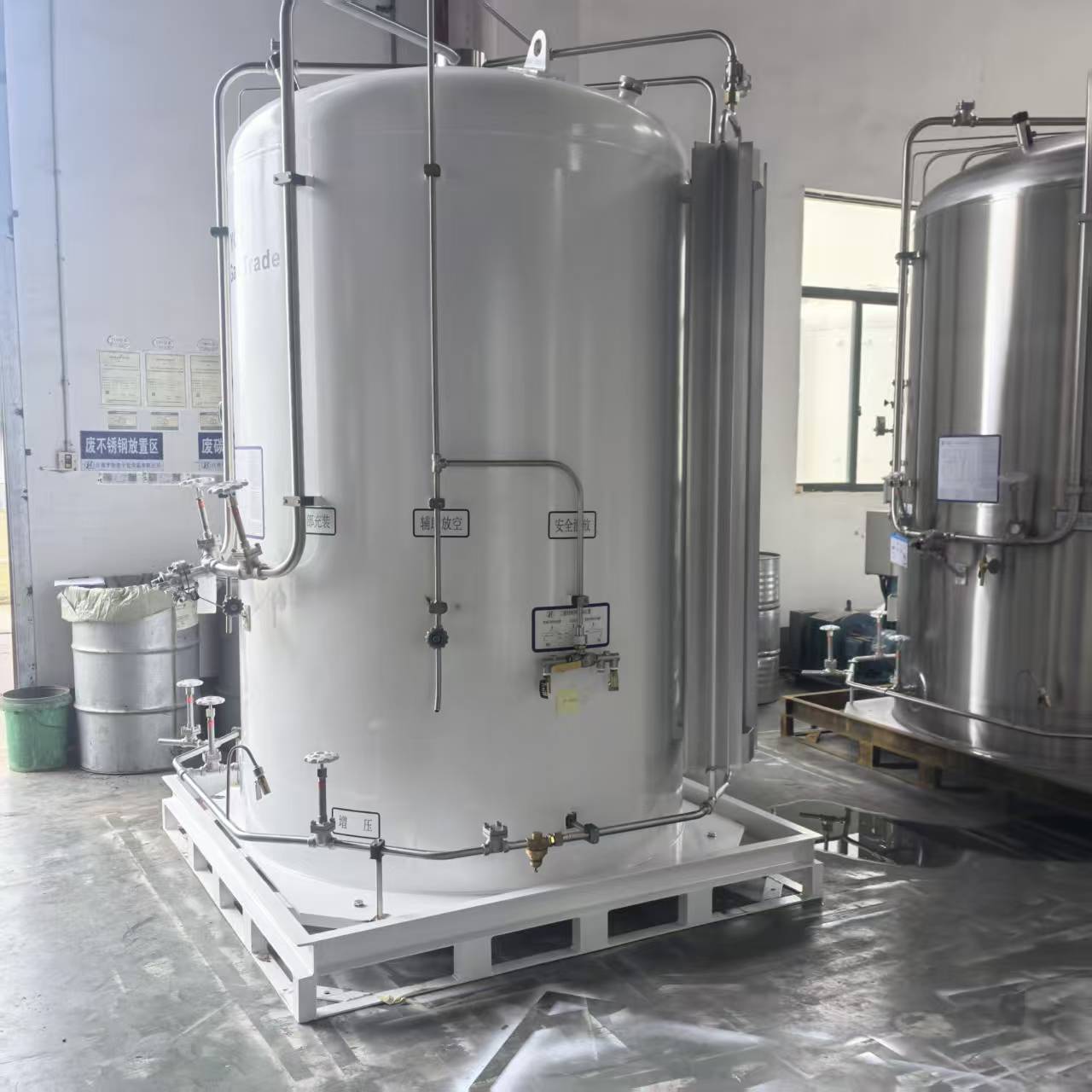
This stage represents a critical risk-mitigation period. Facility managers must apply concrete evaluation criteria to ensure safe, compliant deployment. Rushing site preparation almost always guarantees significant installation delays.
Concrete pad thickness must support the vessel's full operating weight when completely filled with dense liquid. Engineers perform thorough soil load-bearing assessments before pouring any concrete. They must look for soft clay or high-water tables that require deep pilings. Standard concrete pads simply crack under the localized weight of a fully loaded vessel. They also evaluate seismic zone anchoring requirements according to local building codes. High seismic areas require deeply embedded rebar cages. Settling foundations easily compromise rigid cryogenic piping connections, causing dangerous stress fractures over time.
Mandated distances separate the vessel from property lines, electrical transformers, and combustible structures. Poorly ventilated static areas introduce extreme asphyxiation dangers. Dense gases like argon or nitrogen displace oxygen quickly. They settle in low-lying trenches or sumps. You must design open-air enclosures to promote rapid gas dispersion. Avoid placing equipment near low-lying pits or basement stairwells where cold gases naturally flow.
Heavy transport logistics demand precise route planning. Planners factor in turning radii for multi-axle delivery trailers. They calculate massive crane placement clearances. Identifying overhead obstructions remains vital. Trees, active power lines, and existing pipe racks frequently delay placement if ignored during the initial site survey.
Navigating local fire marshal approvals and municipal zoning laws prevents legal standstills. You must submit comprehensive site plans showing all separation distances. Here is a quick environmental audit checklist for your site:
Confirm local fire marshal separation distance requirements based on NFPA guidelines.
Verify structural engineering stamps for the concrete foundation design.
Assess proximity to subterranean drains where cold, dense gas might pool dangerously.
Secure local highway transport permits for oversized loads well in advance.
Implementation reality requires meticulous engineering. We avoid easy claims because safe deployment takes incredible precision and patience.
Phase 1: Rigging and Placement: Crane operators follow strict, engineered lift plans. They use specialized nylon rigging slings to prevent structural stress on the outer carbon steel jacket. Load leveling ensures the vessel sits perfectly plumb on its foundation. Technicians secure the heavy-duty anchor bolts carefully. They avoid placing undue tension on the delicate inner vessel support structures.
Phase 2: Piping and Vaporizer Integration: Teams connect the vacuum-jacketed transfer lines next. You must use thermal expansion joints and certified cryogenic valves throughout the manifold. Cryogenic fluids cause severe material contraction. For instance, stainless steel pipes shrink significantly when cooled to -196°C. Rigid piping without engineered expansion loops will eventually fracture under extreme thermal cycling.
Phase 3: System Purging and Leak Detection: Moisture inside the piping system causes dangerous ice blockages. Technicians purge all internal lines using warm, dry nitrogen gas. This step is completely mandatory to remove all atmospheric moisture before introducing extreme cold. Furthermore, they perform vacuum integrity testing using a helium mass spectrometer. Technicians achieve optimal vacuum levels by pulling the annular space down below 10 microns. This highly sensitive process ensures the perlite insulation performs exactly as engineered after rough highway transport.
Phase 4: The Initial Cooldown: Operators introduce cryogenic liquids using a highly phased approach. Rapid cooling causes violent thermal shock. Slow, controlled liquid introduction prevents structural fracturing of the internal piping. Technicians monitor valve frost patterns closely to ensure gradual temperature equilibrium.
Authoritative compliance protects both personnel and massive capital investments. You must adhere to strict guidelines governing daily operations and routine gas transfers.
Transferring liquid from delivery trucks requires rigid adherence to standard operating procedures. Drivers and facility operators must establish proper electrical grounding before attaching any hoses. Proper grounding requires verified resistance levels below 10 ohms to safely dissipate static charges. Static electricity poses a massive ignition risk. Pressure equalization prevents sudden fluid surges that damage internal baffles. Avoiding over-pressurization ensures the long-term structural integrity of the inner stainless steel vessel.
Primary and secondary pressure relief valves (PRVs) safeguard the entire system from boiling liquid expanding vapor explosion risks. Burst discs act as the final failsafe against catastrophic over-pressurization if the mechanical PRVs freeze shut. Routine calibration of these safety devices serves as a non-negotiable compliance metric. Facility managers must log every inspection date.
Baseline requirements for personal protective equipment go beyond basic safety glasses. Operators need full face shields, specialized cryo-gloves, and heavy-duty protective aprons. You must institutionalize a strong "Do's and Don'ts" safety culture.
Common Mistake: Allowing untrained personnel to operate manual vent valves without wearing appropriate cryo-gloves, leading to immediate severe cold burns.
Written protocols must address suspected vacuum loss immediately. Rapid frost build-up on the outer vessel indicates severe internal insulation failure. Teams must know exactly how to isolate the tank and manage localized leaks safely.
Summary of Critical Cryogenic Safety Equipment | ||
Safety Equipment Component | Primary Operational Purpose | Mandatory Inspection Frequency |
|---|---|---|
Dual PRV Manifold System | Prevents over-pressurization during high BOG events | Annually (requires certified calibration) |
Rupture / Burst Disc | Acts as ultimate failsafe if mechanical PRVs freeze or fail | Visual: Daily / Replace: Every 3-5 Years |
Thermal Expansion Joints | Absorbs extreme piping contraction during cooldown phases | Monthly visual check for stress cracks |
Cryo-Gloves & Face Shield | Protects operators from severe frostbite and splashing hazards | Before every gas transfer operation |
Help your technical buyers evaluate vendors based on long-term operational value, rather than just upfront capital cost. Choosing a fabricator solely on the lowest bid often leads to massive operational headaches later.
Always check for authentic ASME "U" stamp credentials on the manufacturer's data reports. Verify active ISO 9001 quality management systems. Regional directive compliance, such as the Pressure Equipment Directive (PED) in Europe, ensures the vessel meets stringent local safety laws. Reputable vendors willingly provide these certificates during the initial proposal phase.
Evaluate a cryogenic tank manufacturer based on documented Normal Evaporation Rates (NER). Avoid making procurement decisions based solely on vague marketing claims. Validated NER data directly impacts your daily gas loss rates. High-quality perlite insulation combined with a deep molecular vacuum yields a significantly lower NER.
Integrating IoT sensors offers massive operational advantages for modern facilities. These smart systems provide real-time liquid level tracking directly to your smartphone or control room. Instead of relying on manual dipstick readings or outdated analog gauges, your staff receives push notifications when liquid levels drop below 20%. They allow continuous remote pressure monitoring. Smart telemetry enables predictive maintenance alerts before critical failures occur. This prevents sudden gas run-outs during peak production shifts.
Assess service level agreement terms carefully before signing contracts. Look for guaranteed availability of OEM replacement parts. Ensure the vendor offers mobile vacuum re-pumping services to restore insulation performance years down the line. Evaluate their operator training programs. Shortlisting logic dictates that you look for long-term engineering partners, not just basic metal fabricators.
Successful cryogenic storage relies heavily on a strict triad. You need precision engineering, meticulous site preparation, and an unwavering commitment to safety protocols. Rushing the site foundation or ignoring gas-specific clearances almost guarantees future operational failures. By enforcing rigorous safety standards, you protect your personnel and extend the overall lifespan of your capital equipment.
We encourage you to move beyond theoretical planning right now. Initiate a professional site audit to identify hidden logistical hurdles before any heavy equipment arrives. Proactive planning saves countless hours of delayed installation time.
Contact our engineering team today for a comprehensive site assessment and a custom cryogenic storage solution perfectly tailored to your operational demands.
A: The physical placement of the vessel usually takes only a few days. However, comprehensive site preparation, foundation pouring, and permitting often take weeks or months. You should plan your project timeline around local municipal approval processes and concrete curing times.
A: Regulations vary by jurisdiction, but standard fire codes require strict separation distances. Generally, you must maintain at least 50 feet of clearance from highly combustible structures. We strongly advise consulting your local fire marshal early in the planning phase.
A: Operators should perform visual checks daily to spot frost or leaks. Pressure relief valves require annual inspections and calibration. Furthermore, technicians must conduct periodic vacuum checks based on the specific service level agreements provided by the manufacturer.
A: Yes, but the process involves heavy logistical planning. You must completely empty and warm the vessel. Moving it requires extensive purging, specialized crane rigging, and rigorous re-certifying procedures. The foundation at the new site must also undergo complete structural engineering approval.

 yongy0223@gmail.com
 +86-17693104145
 Lanzhou New Area, Lanzhou City, Gansu Province, on the second floor to the east of New Harbor Road, to the east of Building Materials Road No. 2, to the west of Qilian Mountain Avenue (Jingqi Road)


