| Application Overview
The DYS15FM is a dedicated cryogenic pressure-building regulator engineered for liquefied natural gas (LNG) vehicle fuel tanks and stationary cryogenic storage vessels. Unlike conventional pressure-reducing regulators that lower downstream pressure, the DYS15FM functions as a dome-loaded back-pressure sensing device that actively builds and maintains vapor-space pressure within the cryogenic container.
The core mechanism employs a bronze diaphragm as the pressure-sensing element, coupled with a dual stainless steel spring stack and a PTFE dynamic seal. When the container pressure falls below the calibrated set point, the spring stack drives the poppet open, permitting liquid-phase cryogen to flow from the tank bottom through an external vaporizer and return as gas into the ullage space—thus restoring operating pressure. Once the target pressure is achieved, the diaphragm overcomes spring force and reseats the poppet, halting the pressure-building cycle.
Three factory-set pressure variants (FM1: 145 PSIG / FM2: 250 PSIG / FM3: 350 PSIG) with overlapping continuous adjustment ranges cover the full spectrum of LNG tank operating pressures from 30 to 450 PSIG. The M27×2 threaded inlet and outlet provide direct compatibility with LNB tank interface standards, while the integrated locknut prevents field drift of the set screw.
All wetted components—brass body and bonnet, bronze diaphragm, PTFE seal, and stainless steel springs—are selected for sustained ductility and corrosion resistance at −196°C. The unit is cleaned, degreased, and oxygen-service certified per CGA G-4.1, enabling deployment in LOX/LIN/LAR applications without risk of hydrocarbon autoignition. Compliance with TSG23 and GB/T34530.1 ensures full regulatory conformity for both domestic Chinese and international end-users.
| Working Principle
The DYS15FM operates on a force-balance principle between the upper control spring and the sensed container pressure acting on the bronze diaphragm.
Closed State (Tank Pressure ≥ Set Point): When the cryogenic container's vapor pressure meets or exceeds the calibrated set point, this pressure is transmitted through the outlet port into the diaphragm chamber beneath the bronze diaphragm. The upward pneumatic force on the diaphragm exceeds the downward spring preload, lifting the diaphragm assembly and allowing the lower spring to seat the poppet against the valve orifice. Flow through the pressure-building circuit is blocked, and the tank maintains steady-state pressure.
Open State (Tank Pressure < Set Point): When container pressure falls below the set point—due to liquid withdrawal or heat leak reduction—the downward spring force overcomes the diminished diaphragm lift. The upper spring pushes the diaphragm and connected stem downward, unseating the poppet from the orifice. Cryogenic liquid then flows from the tank bottom sump through the regulator into the ambient vaporizer, where it phase-changes to gas and returns to the tank ullage space. This net mass addition raises tank pressure.
Modulating Region: As tank pressure approaches the set point, the diaphragm balances against the spring force in a proportional band. The poppet assumes an intermediate lift position, throttling flow to match the pressure decay rate. This proportional control characteristic prevents overshoot and hunting, maintaining pressure within a narrow band around the set point.
Locknut Mechanism: The adjusting screw atop the bonnet compresses the upper spring to set the reference force. Once calibrated—either at the factory or in the field—the locknut is tightened against the bonnet to mechanically lock the screw position, eliminating drift from vehicle vibration or thermal cycling.
The dual-spring configuration (upper main spring + lower return spring) provides hysteresis control: the upper spring dominates the opening threshold, while the lower spring ensures positive reseating upon pressure recovery.
|
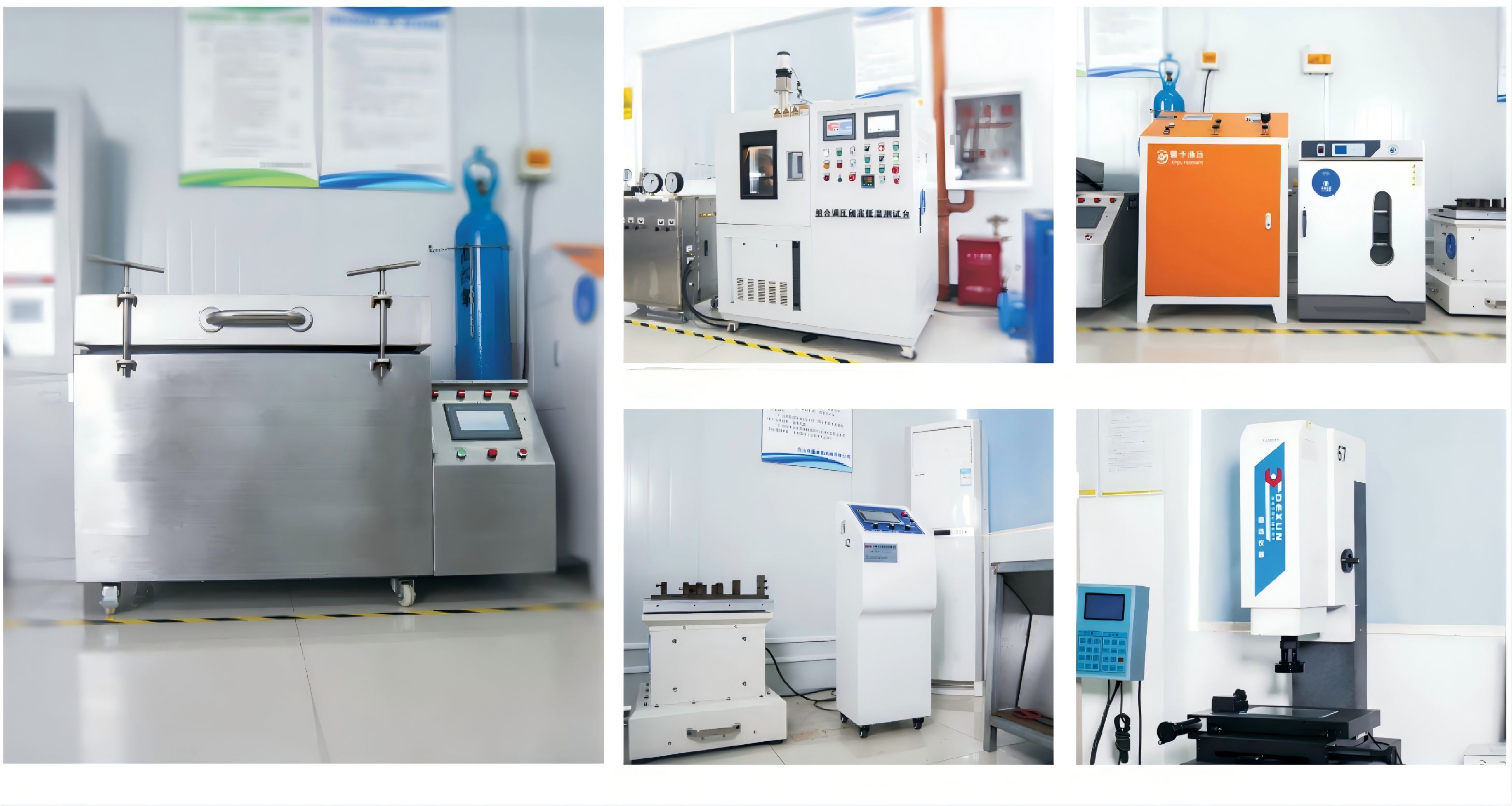
Factory Shoot
1: What is the difference between a pressure-building regulator and a pressure-reducing regulator?
A: A pressure-reducing regulator lowers a high inlet pressure to a stable lower outlet pressure—it is downstream-referenced. A pressure-building regulator (technically a back-pressure regulator) is upstream-referenced: it opens when the sensed upstream (tank) pressure drops below its set point, allowing flow through a vaporizer to rebuild tank pressure, and closes when pressure recovers. The DYS15FM is specifically a pressure-building type for cryogenic service. Using a standard pressure-reducing regulator in a pressure-building circuit will result in either no flow or uncontrolled flow, as the sensing logic is inverted.
2. How do I select between FM1, FM2, and FM3?
A: Selection is governed by the target operating pressure of the LNG tank:
FM1 (30–320 PSIG): Suitable for low-to-mid pressure tanks and systems where the tank design pressure is below 250 PSIG. Offers the widest adjustment span.
FM2 (145–350 PSIG): General-purpose mid-range, covering most standard LNG vehicle tanks with operating pressures between 200–300 PSIG.
FM3 (300–450 PSIG): High-pressure applications, such as high-saturation LNG tanks or systems with elevated holding-time requirements.
Note that FM3 has a minimum cracking pressure of approximately 300 PSIG and cannot be adjusted below this threshold—attempting to do so will unseat the spring from its guide. Select the model whose adjustment range brackets your target pressure plus a 15–20% margin for cold-start compensation.
3. Why is the diaphragm made of bronze instead of stainless steel?
A: Bronze (C51000 phosphor bronze) is selected for the diaphragm because of its uniquely favorable combination of properties for this cycling application: (a) exceptionally high fatigue strength—a diaphragm in a pressure-building regulator may cycle tens of thousands of times over its service life as tank pressure oscillates around the set point; (b) low elastic hysteresis, which translates to tight pressure control repeatability; (c) excellent ductility retention at −196°C, unlike many stainless steel sheet alloys that can undergo martensitic transformation and embrittlement. Stainless steel diaphragms in cryogenic cycling service are prone to work-hardening and stress-corrosion cracking, particularly in LNG environments with trace H₂S.
4. Is the DYS15FM suitable for liquid oxygen (LOX) service?
A: Yes. The DYS15FM is cleaned, degreased, and certified per CGA G-4.1 specifically for oxygen service. This means all hydrocarbon-based machining fluids, greases, and surface contaminants have been removed to a level that eliminates the risk of autoignition upon contact with high-pressure gaseous or liquid oxygen. The brass/bronze body materials are also non-sparking, providing an additional safety layer. For LOX applications, verify that the end-user's oxygen cleanliness maintenance procedures align with CGA G-4.1 post-installation protocols.
5. What is the purpose of the locknut, and when should I adjust it?
A: The locknut mechanically locks the adjusting screw position after the desired set pressure is calibrated. In LNG truck applications, road vibration and thermal cycling can gradually back out an unsecured adjusting screw, causing set-point drift and potentially tripping the tank's safety relief valve or starving the engine of fuel pressure. The locknut should only be loosened during deliberate recalibration and must be retightened afterward. Factory-set units ship with the locknut torqued to specification; do not loosen it unless a pressure change is required.
6.Can the DYS15FM directly replace an existing DYS series regulator?
A: Yes. The DYS15FM is explicitly designed to be form-factor interchangeable with existing DYS series cryogenic regulator units. The M27×2 thread, 96 mm width, and overall footprint are maintained. However, verify the following before replacing: (a) the target pressure setting of the replacement unit matches the tank's design operating range—the DYS15FM three-model range is wider than earlier DYS variants, so ensure you are not selecting an FM3 for a 150 PSIG tank; (b) if the existing installation does not have a locknut, confirm there is adequate wrench clearance above the bonnet for the locknut's additional height; (c) if the previous unit was not CGA G-4.1 cleaned and the application involves oxygen, purge and verify cleanliness before commissioning.


 yongy0223@gmail.com
 +86-17693104145
 Lanzhou New Area, Lanzhou City, Gansu Province, on the second floor to the east of New Harbor Road, to the east of Building Materials Road No. 2, to the west of Qilian Mountain Avenue (Jingqi Road)