| Application Overview
By the fifth round of DJ61F-40P documentation, the GN series completes the product matrix puzzle. The first four rounds covered deep-cryogenic liquid-phase (P1/P/D) and standard gas-phase (G/D). The GN series fills the compact gas-phase cell — a smaller, lighter, lower-Cv gas-phase valve platform operating in the same −40°C temperature zone.
The GN series spans six sub-models, from DJ-15GN to DJ-50GN, Cv from 3.6 to 43. Compared to the G/D series, GN is more compact at every bore: DJ-15GN body OD Φ80 (G series Φ100), DJ-25GN flange thickness B=8 mm (G series B=12.7), DJ-50GN face-to-face L=140 mm (G series L=146). These differences are not random — they point to a different flange standard system. The G/D series flange dimensions (B=12.7/16) are closer to ASME B16.5 150# flange thickness, while GN's B=8/10 is closer to the Chinese standard HG/T 20592 PN16/PN25 flange series. The GN series is very likely a gas-phase valve designed for the Chinese-standard flange system, while the G/D series targets the ANSI standard.
"Intensified PTFE/PCTFE seat" is a feature description unique to the GN series. All four previous series listed the sealing element as simply PCTFE; GN explicitly states PTFE/PCTFE composite. This "intensified" designation suggests not a simple material substitution but a structural design: PTFE as the elastic matrix providing initial seal and cold-contraction compensation, PCTFE as the hard sealing face providing bubble-tight seal and wear resistance. PTFE at −40°C still retains some elasticity (though less than at room temperature), while PCTFE at −40°C has sufficient hardness and good creep resistance — the composite leverages the strengths of both. This design is rational in the −40°C zone because PTFE has not yet entered its embrittlement range (PTFE embrittlement temperature is below −100°C); its elasticity is still usable.
The GN series' medium range is "vaporized gas" — same as the G/D series, a gas-phase service valve, not applicable to liquefied deep-cryogenic media. Temperature range −40°C to +85°C, pressure 580 PSI, all-stainless body/bonnet/bonnet nut, bolted connection, socket/butt weld ends — consistent with the G/D series. The differences: GN is more compact, has lower Cv, a PTFE/PCTFE composite seat, and a different flange standard system.
| Working Principle
The engineering motivation behind the compact design
The GN series' reason for existence is not "better than G/D" but "smaller, cheaper, and sufficient for specific scenarios." The G/D series' flange thickness B=12.7/16 corresponds to the ASME B16.5 150# flange standard — the international ANSI flange system, the default choice in export projects and foreign EPC-led LNG terminals. However, a large number of domestic small-to-medium LNG vaporization stations, industrial gas filling stations, and BOG recovery units use the Chinese-standard flange system (HG/T 20592 PN16/PN25), whose flange thickness is thinner (DN25~40 PN16 flange thickness ~8 mm) and flange OD smaller.
If the G/D series flange thickness is 12.7 mm while the site's Chinese-standard flanges are only 8 mm thick — the two flange thicknesses don't match, causing problems with weld-end alignment and bevel design. The GN series uses B=8/10 flange thickness to directly match the Chinese-standard flange system, solving this interface in compatibility.
Another effect of compactification is reduced Cv. DJ-15GN Cv=3.6, 28% lower than DJ-15G's Cv=5. This is not a design flaw — in small vaporization stations, gas-phase line diameters are typically designed for economic flow velocity; a DN15 gas line may actually need only Cv=2~3, and a Cv=5 valve in this scenario is "over-specified." An over-specified valve operating in a partially open position has unstable throttling characteristics, detrimental to control precision. The Cv=3.6 GN series can run fully open on DN15 gas lines, with more linear throttling characteristics.
The intensified PTFE/PCTFE composite seat
"Intensified PTFE/PCTFE" is a first in the DJ61F-40P family. All four previous series listed the sealing element as simply PCTFE — a fluoroplastic with high hardness, good creep resistance, and excellent dimensional stability at low temperature. PCTFE retains usable mechanical properties at −196°C, making it the preferred material for deep-cryogenic valve seals. But PCTFE has a drawback: it is much harder than PTFE at room temperature, requiring higher closing force for initial seal, and its elastic recovery is inferior to PTFE.
The GN series' operating temperature floor is −40°C — at this temperature, PTFE has not entered its embrittlement zone (PTFE glass transition ~−110°C, embrittlement below −100°C), still retaining some elasticity and cold-contraction compensation capability. The PTFE/PCTFE composite seat design logic: PTFE as the elastic matrix provides initial seal and cold-contraction compensation upon valve closure; PCTFE as the hard sealing ring embedded in the PTFE matrix provides bubble-tight seal and wear resistance. PTFE handles "compression"; PCTFE handles "sealing" — a clear division of labor.
This composite structure offers two advantages over pure PCTFE in the −40°C zone: first, PTFE's elasticity reduces initial closing torque — the handwheel does not need to overcome pure PCTFE's high compression force; second, PTFE's cold-contraction compensation is superior to PCTFE — PTFE's linear expansion coefficient ~120 × 10⁻⁶ /°C vs PCTFE's ~70 × 10⁻⁶ /°C; PTFE contracts more upon cooling, which actually helps maintain sealing-face contact stress. Within the −40°C to +85°C range, PTFE's elasticity remains usable — this is the materials-science basis for the GN series' composite seat choice.
Six-model dimensional analysis
The GN series has only six models, no DN65. Cv progression: 3.6 → 7.8 → 13.2 → 16.2 → 26.3 → 43. Adjacent model Cv ratios range from 1.6 to 2.2 — wider than the G/D series' 1.4~1.9. This means each adjacent model pair in the GN series has a larger flow gap, making "skip-grade" selection more likely.
DJ-20GN Cv=7.8 and DJ-25GN Cv=13.2 differ by 1.7× — if the line needs Cv≈10, DJ-20GN is undersized and DJ-25GN oversized, with no middle option. This is not a problem unique to GN (G/D's DJ-20D Cv=9 and DJ-25G Cv=14 differ by 1.56×, also no middle option), but GN's overall Cv span is smaller (3.643 vs G/D's 575), so each Cv step occupies a larger proportion of the full range.
DJ-32GN Cv=16.2 and DJ-25GN Cv=13.2 differ by only 1.23× — the closest Cv pair in the entire series. DJ-32GN's existence is more about matching DN32 pipe diameter than providing an independent flow increment.
Body OD step pattern
GN series D (body OD) steps: DN1520 use Φ80, DN2532 use Φ100, DN40 uses Φ125, DN50 uses Φ140. This step pattern differs from the G/D series — G/D uses Φ100 uniformly for DN1525 and Φ125 uniformly for DN3265. GN uses the smaller Φ80 body for DN15~20 and the larger Φ140 body for DN50.
The Φ80 body on DN1520 indicates smaller body casting blanks — directly reducing material cost and casting tooling cost. For volume production of small-to-medium gas-phase valves, saving 1015% body material cost per unit is a meaningful figure in total manufacturing cost.*
|
Factory Shoot
1: The GN and G/D series are both −40°C gas-phase valves — how to choose between them?
A: The core decision dimension is flange standard. GN series flange thickness B=8/10 mm, corresponding to Chinese standard HG/T 20592 PN16/PN25 flange system. G/D series flange thickness B=12.7/16 mm, corresponding to ANSI standard ASME B16.5 150# flange system. If your piping flanges are Chinese-standard, choose GN; if ANSI-standard, choose G/D. The two series have different D1 (bolt circle diameter) and D2 (flange OD) at the same bore — bolt holes won't align, they are not interchangeable. If the flange standard is uncertain, check body OD D: GN series DN15~20 D=Φ80, G/D series Φ100 — this is the most intuitive distinguishing feature. Φ80 body means Chinese-standard flange system.
2. "Intensified PTFE/PCTFE" vs pure PCTFE seat — which is better?
A: There is no absolute "better," only "better suited for which temperature zone." In the −40°C zone, the PTFE/PCTFE composite seat is better than pure PCTFE — PTFE's elasticity reduces closing torque, cold-contraction compensation is stronger, and sealing-face contact stress is more stable through cold cycles. In the −198°C zone, pure PCTFE is better — PTFE below −100°C is already embrittled, elasticity lost; the PTFE matrix in the composite seat becomes the weak link at deep-cryogenic temperatures. So the GN series uses the composite seat, while P/P1/D series use pure PCTFE — this is not a cost trade-off but a temperature-zone adaptation. If someone used a PTFE/PCTFE composite seat on a −198°C deep-cryogenic valve, that would be a design error.
3. The GN series has no DN65 — what if my gas-phase line is DN65?
A: The GN series maxes out at DN50 (Cv=43). If the gas line needs a DN65 valve, two options: Choose the G/D series DJ-65D (Cv=75) — provided your piping flanges are ANSI-standard. If flanges are Chinese-standard, DJ-65D's B=16 mm flange thickness doesn't match Chinese-standard DN65 PN16 flange thickness (1012 mm); a transition flange or custom weld end is needed. Use GN series DJ-50GN with a reducer — if the line's actual required Cv does not exceed 43, the DN65 pipe diameter may have been selected for economic flow velocity, and actual flow demand is not large. A DN50 valve + DN65×DN50 reducer solves the problem, at the cost of an additional reducer fitting and extra welding work.
4. GN series Cv is lower than G/D — does this mean GN has worse flow capacity?
A: Lower Cv does not mean "worse"; it means "less flow at the same pressure drop." If the line's design flow is inherently small (e.g., small vaporization station gas lines), DJ-15GN Cv=3.6 is more suitable than DJ-15G Cv=5 — because a Cv=5 valve at low flow requires partial closure for throttling, and the partially closed flow path is irregular, prone to vibration and noise. A Cv=3.6 valve can run fully open with a regular flow path and more stable flow. Lower Cv is a natural consequence of compact design — smaller body, narrower flow passage, smaller flow area. For small-bore lines matching the Chinese-standard flange system, this Cv range is appropriate.
5. Can the GN and G/D series share body castings?
A: No. GN series body OD D differs from G/D — DN1520 D=Φ80 vs Φ100, DN2532 D=Φ100 vs Φ100 (same at this bore), DN40 D=Φ125 vs Φ125 (also same), DN50 D=Φ140 vs Φ127 (different). So DN25 and DN40 body castings may be shared between the two series, but DN15/20/50 castings are independent. From a production management perspective, GN and G/D share the disc/seal/stem sub-assembly (DN15~25 bore range) and standard parts like packing and gaskets. The differentiated parts are body castings and bonnet assemblies.
6.The GN series handwheel is blue — intentional differentiation or random?
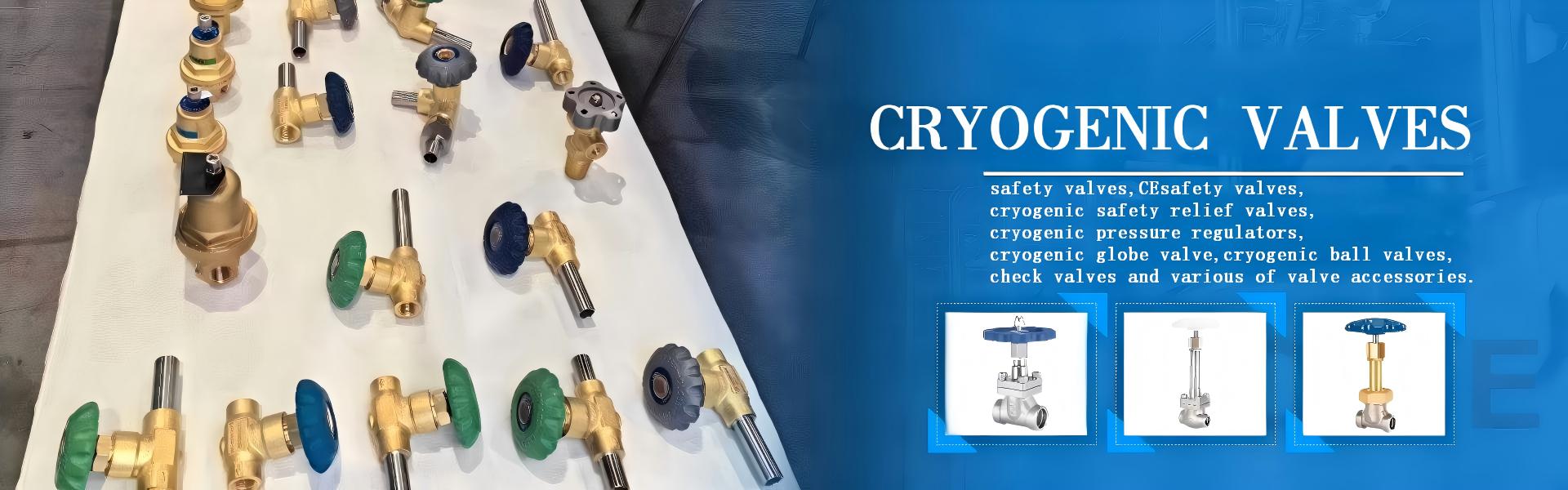
A: In the image, the GN series handwheel is blue, while the G/D series (previous rounds' images) has silver/aluminum natural-color handwheels. Blue handwheels in industrial valves are commonly used to identify gas service — an industry convention though not a mandatory standard. Blue handwheels allow field operators to visually identify gas-phase valves at a glance, preventing misinstallation of gas-phase valves on liquid-phase lines (liquid-phase valves typically use silver or gray handwheels). Both GN and G/D series are gas-phase valves, but GN's blue handwheel may serve as an additional visual identifier for quick recognition in Chinese-standard flange system piping.


 yongy0223@gmail.com
 +86-17693104145
 Lanzhou New Area, Lanzhou City, Gansu Province, on the second floor to the east of New Harbor Road, to the east of Building Materials Road No. 2, to the west of Qilian Mountain Avenue (Jingqi Road)